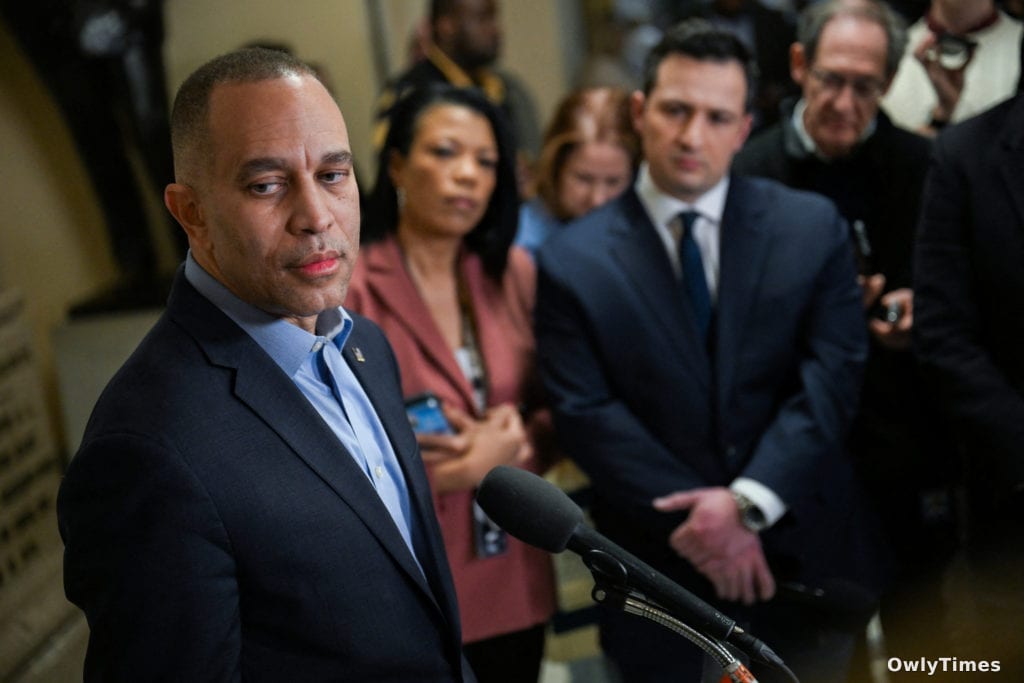

The move by Hakeem Jeffries to force a vote on a war powers resolution regarding Iran isn’t simply a reaction to escalating tensions in the Middle East; it’s a calculated attempt to exploit a widening fracture within the Republican party regarding the scope of executive authority in foreign policy, and to reassert Congressional relevance in matters of war. The strategic calculus here isn’t about if military action against Iran is imminent, but about who controls the decision-making process – a power struggle that’s been simmering since the post-9/11 expansion of presidential war powers. The resolution, while unlikely to pass in its current form, serves as a pressure point, forcing Republicans to publicly align with either a hawkish foreign policy traditionally associated with the party, or a more restrained approach increasingly favored by a vocal isolationist wing.
The Erosion of Congressional Authority & The Iran Question
The core of the resolution aims to prevent “any U.S. action against Iran without approval from Congress,” a seemingly straightforward demand that belies decades of legislative erosion regarding war powers. The 1973 War Powers Resolution was itself a response to perceived overreach by Richard Nixon during the Vietnam War, intended to limit the President’s ability to commit U.S. forces to armed conflict without Congressional consent. However, successive administrations – both Democratic and Republican – have largely circumvented the law, arguing national security imperatives necessitate swift, decisive action. This has created a precedent where Congress is often informed of military actions after they’ve begun, rather than being meaningfully involved in the decision-making process. The current situation with Iran, marked by proxy conflicts and heightened regional instability following the October 7th attacks, provides a critical test case for reasserting Congressional authority.
This article draws on reporting from PBS.
Who Benefits and Who Loses from a Forced Vote?
The immediate beneficiaries of this push are Jeffries and the House Democrats, who can portray themselves as the defenders of Congressional oversight and responsible foreign policy. Even if the resolution fails, the vote itself forces Republicans into uncomfortable positions. Moderate Republicans, particularly those representing districts with significant Iranian-American populations, will face pressure to support the resolution, potentially clashing with party leadership. The more conservative faction, aligned with figures like Donald Trump, generally favors a more assertive stance against Iran and may resist any attempt to limit the President’s options. This internal division is precisely what Democrats are hoping to exploit. Joe Biden’s administration, while publicly maintaining a cautious approach, also stands to benefit from the debate. A Congressional vote, even a failed one, provides political cover for any future decisions regarding Iran, demonstrating a degree of shared responsibility. The clear loser is the principle of clear lines of authority. The resolution’s success hinges on a level of bipartisan cooperation that has become increasingly rare in Washington.
Historical Echoes: From Tonkin Gulf to Iraq
The current standoff echoes historical precedents where Congress ceded authority to the executive branch under the guise of national security. The Gulf of Tonkin Resolution in 1964, passed in the wake of disputed incidents with North Vietnam, granted Lyndon B. Johnson broad authority to escalate U.S. involvement in the Vietnam War. That resolution, later widely discredited, became a symbol of unchecked presidential power. Similarly, the 2002 Authorization for Use of Military Force (AUMF) in Iraq, passed with broad bipartisan support, provided the legal justification for the invasion of Iraq and subsequent military operations in the region. Critics argue that this AUMF has been repeatedly stretched and reinterpreted to justify military actions far beyond its original scope. The current effort to constrain action against Iran is, in essence, an attempt to avoid repeating these historical patterns of Congressional abdication. The difference now is the heightened awareness of these precedents, fueled by decades of scholarship and public debate.
The Republican Fracture & The Speaker’s Dilemma
The internal Republican divisions are further complicated by the ongoing struggle for control within the party. Mike Johnson, the House Speaker, faces a delicate balancing act. He must appease the conservative base while also navigating the demands of moderate Republicans and the potential for a bipartisan coalition to override his objections. A failed attempt to block the vote on the war powers resolution could be interpreted as a sign of weakness, emboldening Democrats and further fracturing the Republican caucus. The number of Republicans willing to publicly break with leadership on this issue will be a key indicator of Johnson’s control. As of Friday, the exact number of Republicans supporting the bipartisan effort remains unclear, but sources indicate it’s enough to force a vote under House rules. This isn’t simply about Iran; it’s about the future of Congressional power.
The political chess move to watch next isn’t whether the resolution passes, but how Mike Johnson manages the floor debate and the subsequent vote. Will he attempt to amend the resolution to appease his caucus, potentially weakening its intent? Or will he allow a straight up-or-down vote, risking a public display of Republican disunity? The answer will reveal much about the balance of power within the House, and the future of Congressional oversight of foreign policy.





