
The $200 Billion Signal: Trump’s War Strategy and the Fracturing GOP
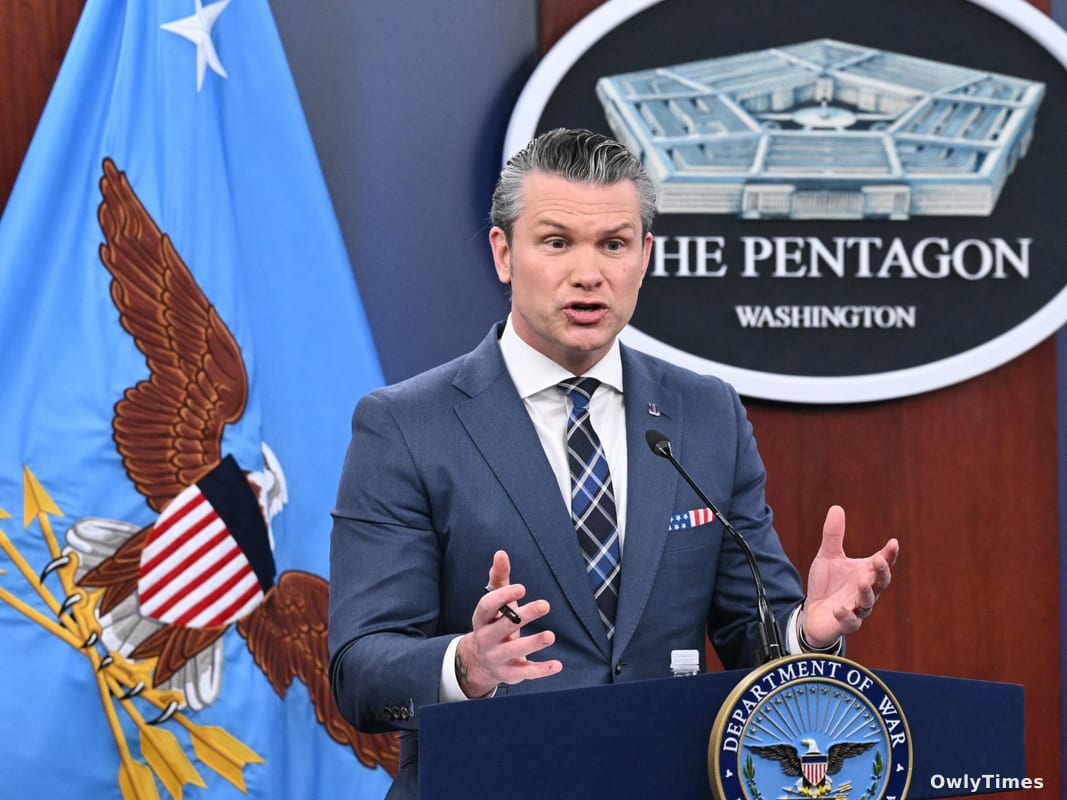
The request for an additional $200 billion to fund military operations against Iran isn’t simply about escalating conflict; it’s a calculated power play by the Trump administration to redefine the parameters of congressional oversight and force a reckoning within the Republican Party. While framed as a necessity to “kill bad guys,” as Defense Secretary Pete Hegseth bluntly stated, the sheer scale of the request – potentially exceeding even initial estimates – is designed to test the limits of congressional authority and exploit existing fissures over foreign policy spending. The timing, coming on top of the $150 billion already allocated through last year’s tax cuts, suggests a deliberate strategy to normalize increasingly large, off-budget military expenditures.
Source material: Al Jazeera.
The immediate question is who benefits and who loses. Trump clearly benefits from consolidating executive power in foreign policy, circumventing traditional checks and balances. The defense industry, predictably, stands to gain enormously, poised to receive a windfall from replenishing depleted stockpiles and fulfilling new orders. However, the costs are distributed far more widely. American taxpayers bear the financial burden, while the potential for escalation and prolonged conflict introduces significant geopolitical risks. Within the US political landscape, the request creates a direct conflict between the President and a growing number of fiscal conservatives within his own party, as well as nearly the entire Democratic caucus. Betty McCollum’s pledge to not offer a “rubber stamp” underscores the brewing resistance.
This move echoes historical precedents of wartime funding requests used to reshape domestic political dynamics. The Korean War, for example, saw President Truman leverage the perceived national security threat to expand executive authority and push through controversial domestic policies. Similarly, the Vietnam War became a focal point for escalating tensions between the executive branch and Congress, ultimately contributing to a decline in public trust and a re-evaluation of the war powers resolution. Trump’s approach, however, differs in its explicit disregard for pre-emptive congressional authorization, relying instead on the argument that the US is “very much on track” and that he, Trump, will decide when to stop – a statement that effectively diminishes Congress’s constitutional role.
The $200 billion figure itself is strategically ambiguous. Hegseth’s acknowledgement that “that number could move” is not a concession to negotiation, but a signal that the administration intends to leverage the request as a bargaining chip. The justification offered by Trump – blaming support for Ukraine and citing a “volatile world” – is a deliberate attempt to broaden the scope of the request beyond the immediate conflict with Iran, framing it as a necessary investment in overall US military readiness. This tactic is further underscored by his downplaying of the war’s impact on military supplies, claiming it could be “ended in two seconds” if desired, a statement that belies the already reported 7,000+ targets struck across Iran.
The internal contradictions within the Republican Party are particularly revealing. While House Speaker Mike Johnson has signaled support, his willingness to review the details suggests a degree of caution. The tension between the party’s traditional hawkish stance on national security and its growing embrace of fiscal conservatism creates a vulnerability that Democrats are poised to exploit. The fact that Trump is simultaneously blaming his predecessor, Joe Biden, for the need for increased spending highlights the partisan nature of the request and its attempt to deflect responsibility for the escalating costs of the conflict. The deployment of A-10 Warthogs in the Strait of Hormuz and AH-64 Apaches in Iraq, as detailed by General Dan Caine, demonstrates the widening geographic scope of the operation, further increasing the potential for unintended consequences and escalating costs.
The political chess move to watch next isn’t whether Congress approves the full $200 billion, but how they attempt to constrain the administration’s authority. Will Democrats and moderate Republicans coalesce around a demand for a clear, defined military strategy with measurable objectives? Or will the request be fragmented into smaller, more palatable funding packages, effectively allowing the war to continue without meaningful oversight? The answer will reveal not only the fate of this particular funding request, but the future balance of power between the executive branch and Congress in an era of increasingly assertive presidential foreign policy.





