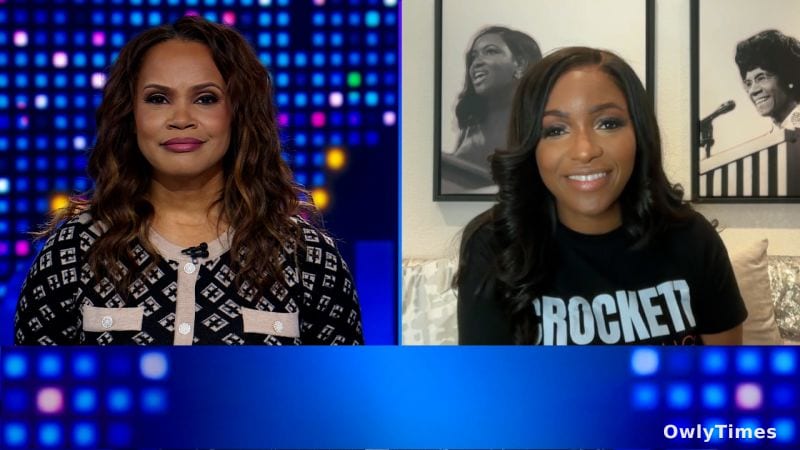

The Calculus of Defiance: Crockett’s Gambit in the Texas Senate Race
Jasmine Crockett’s recent pushback against assertions she cannot flip Texas blue isn’t simply a matter of wounded pride; it’s a calculated move to reshape the narrative surrounding the state’s political viability and, crucially, to consolidate power within the Democratic Party. The core strategic calculation here is to preemptively discredit any post-election excuses for failure, shifting the focus from candidate shortcomings to systemic factors – namely, turnout – and thereby protecting Crockett’s standing within a party increasingly anxious about its future in the South. This isn’t about convincing skeptics now; it’s about controlling the post-mortem analysis should the race fall short.
This piece references the CNN report.
The “Texas is not that red” argument is a familiar refrain, but its deployment by Crockett is particularly pointed. Historically, Democrats have framed Texas as a slowly-but-surely trending blue state, relying on demographic shifts and suburban growth. However, recent election cycles have demonstrated the enduring strength of the Republican base and the difficulty of mobilizing consistent Democratic turnout. Crockett’s assertion, coupled with her emphasis on early voting numbers, attempts to redefine the baseline expectation. She’s signaling that a close race isn’t an upset, but a demonstration of the state’s evolving political landscape – and that any shortfall is a failure of organization, not a fundamental flaw in the strategy. Who benefits? Crockett, by establishing herself as a pragmatic voice capable of reading the state’s political tea leaves. Who loses? Potential rivals within the Democratic Party who might otherwise capitalize on a perceived failure to gain influence.
Crockett’s focus on “kitchen-table issues” – costs, healthcare – is a deliberate attempt to counter the Republican emphasis on cultural issues. This echoes a strategy employed by Bill Clinton in the 1990s, who successfully navigated a politically polarized environment by focusing on economic concerns and appealing to moderate voters. Clinton’s “It’s the economy, stupid” mantra, while simplistic, underscored the importance of prioritizing tangible issues over ideological battles. However, the parallel isn’t perfect. Clinton operated in a different media landscape and faced a different set of cultural anxieties. The current environment is characterized by a heightened level of polarization and a greater emphasis on identity politics, making it more difficult to bridge the divide. The risk for Crockett is that focusing solely on economic issues could alienate progressive voters who prioritize social justice concerns.
The emphasis on energy from “young women” is a key demographic indicator. While Texas has traditionally been a conservative state, younger voters, particularly women, have shown a greater willingness to support Democratic candidates. This trend was evident in the 2018 and 2020 elections, where Democratic candidates made significant gains in urban and suburban areas. However, translating enthusiasm into actual votes remains a challenge. Texas has historically low voter turnout rates, particularly among young people. Crockett’s campaign must overcome this hurdle by effectively mobilizing this crucial demographic. The data on early voting, while encouraging, needs to be viewed with caution. Early voting numbers can be misleading, as they don’t necessarily indicate overall turnout. It’s possible that increased early voting is simply a shift in voting behavior, rather than an increase in overall participation.
Looking ahead, the critical chess move to watch isn’t whether Crockett wins or loses, but how the Democratic Party responds to the outcome. If she loses despite a strong turnout effort, will the party rally around her narrative of systemic challenges, or will there be a blame game? More importantly, will the party invest in a sustained, long-term effort to build a stronger Democratic infrastructure in Texas, or will it once again treat the state as an afterthought? The answer to that question will determine whether Texas remains a Republican stronghold or whether it truly begins to emerge as a competitive battleground state. The next signal will be the allocation of resources for down-ballot races in 2026 – a clear indication of whether the party believes Crockett’s assessment of Texas’s potential.





