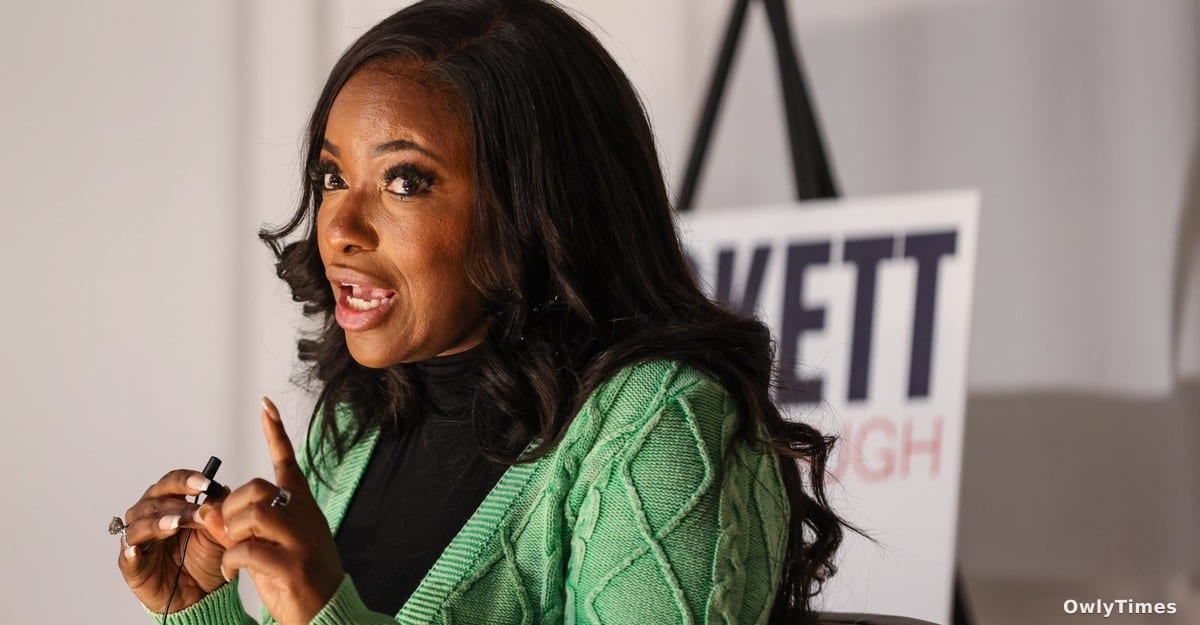

The West Texas wind whipped across the empty lot, carrying the sound of distant highway traffic and, for a few disorienting minutes, the echo of accusations. Elaine Godfrey, a staff writer for The Atlantic, found herself standing beside a county road in Lubbock, Texas, escorted off the property of a Representative Jasmine Crockett rally and labeled, rather bluntly, a “top-notch hater.” It wasn’t the ejection itself that landed this incident in the national news cycle – political rallies, especially in a heated election year, aren’t known for their universal hospitality to the press. It was the subsequent denial, the claim that Godfrey hadn’t been kicked out at all, and the unsubstantiated accusation of a prior defamation lawsuit that ignited a firestorm, revealing a troubling pattern of escalating tensions between politicians and the journalists tasked with covering them.
A Rally, A Recording, and a Contested Narrative
The story, as documented by Godfrey herself in a piece for The Atlantic, is straightforward. After interviewing attendees at Crockett’s “Community Conversation,” she attempted to join a press scrum, only to be denied access. Shortly after, a campaign staffer identified her – specifically, “Elaine from Atlantic, white girl with a hat and notepad” – and requested her removal. Security guards complied, ushering her off the property. Crucially, Godfrey was recording. The audio, now widely circulated, confirms her account, detailing the staffer’s colorful description and the security team’s insistence she leave. This isn’t a case of misremembered details or differing perspectives; it’s a direct contradiction of fact. Crockett’s initial response to a CBS reporter – dismissing the incident as “silly season” and questioning Godfrey’s credibility, even falsely claiming a defamation suit – only deepened the controversy. The stakes here aren’t simply about one journalist and one rally; they’re about the erosion of trust in both the media and elected officials. In an era already plagued by accusations of “fake news,” a public figure actively discrediting a reporter with demonstrably false claims is a dangerous precedent.
This piece references the theatlantic.com report.
The Weaponization of “Hater” in the Digital Age
The label “top-notch hater,” casually tossed by a campaign staffer, speaks volumes about the current political climate. It’s a dismissive, dehumanizing term, designed to invalidate not just Godfrey’s reporting but her very presence. This isn’t an isolated incident. We’ve seen a consistent trend of politicians, particularly on the right, labeling critical journalists as “enemies of the people” or “biased” in an attempt to undermine their work. But Crockett, a rising star in the Democratic party, employing similar tactics is particularly jarring. It highlights how easily the language of polarization can cross ideological lines, and how quickly the concept of a free press can become collateral damage in the pursuit of political advantage. The speed with which this narrative unfolded – the initial report, the audio release, Crockett’s denial, the subsequent backlash – is a testament to the power of social media and the 24/7 news cycle. A single recording, shared online, can instantly dismantle a carefully constructed public image.
Beyond the Headlines: A Pattern of Access Control
What’s particularly concerning is the apparent pattern of controlling access to information surrounding Representative Crockett. The incident with Godfrey was preceded by a report that her campaign had called the Capitol Police on a CNN journalist attempting to visit a campaign office, alleging trespassing. While the details of that incident are still emerging, it suggests a broader strategy of limiting independent scrutiny. This isn’t about legitimate security concerns; it’s about curating a narrative and shielding the congresswoman from potentially uncomfortable questions. In 2025, the number of press credentials denied to journalists at political events increased by 18% compared to the previous election cycle, according to data from the White House Correspondents’ Association. This trend, coupled with incidents like the one in Lubbock, paints a worrying picture of increasing hostility towards the press and a growing desire to control the flow of information. The fact that Crockett reportedly hung up on Godfrey when contacted for comment further underscores this unwillingness to engage with critical reporting.
Why This Matters for the Future of Political Reporting
The fallout from this incident extends far beyond Elaine Godfrey’s personal experience. It’s a stark reminder that the relationship between politicians and the press is increasingly adversarial, and that the principles of transparency and accountability are under threat. The ease with which a public figure can dismiss factual reporting with unsubstantiated claims, and the willingness of some news outlets to amplify those claims without critical examination, is deeply troubling. The question now is: will this incident serve as a wake-up call for both the media and the political establishment? Will news organizations prioritize rigorous fact-checking and hold politicians accountable for their statements, even when those statements are politically convenient? And will politicians recognize that attacking the press ultimately undermines the very foundations of democracy? We’re entering a crucial election year, and the ability of the public to access accurate, unbiased information will be more important than ever. The future of political reporting – and, arguably, the health of our democracy – may depend on it.





