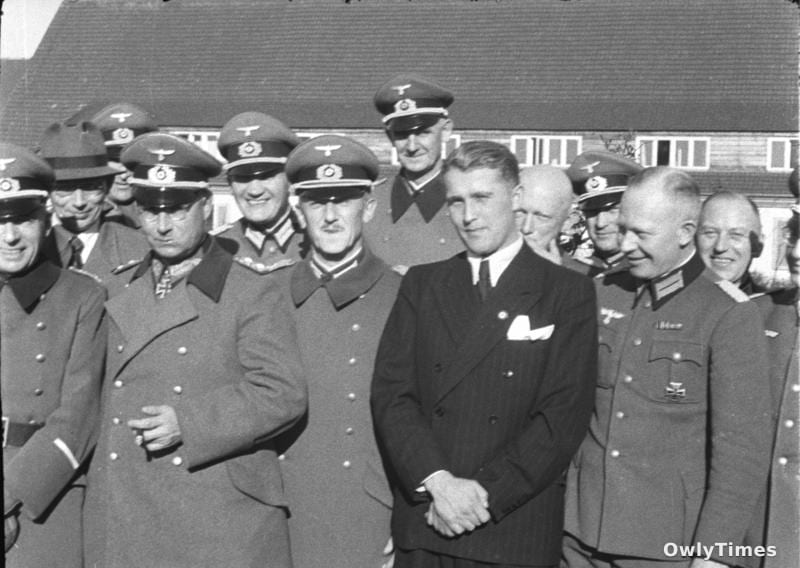

The history of technological advancement during wartime is often framed through the lens of battlefield dominance, but a closer look at the logistical machinery behind the front lines reveals a more calculated, data-driven strategy. When Allied forces crossed the English Channel in June 1944 to initiate the D-Day invasion, the operation was not merely an exercise in infantry movement. Tucked closely behind the advance battalions were 10,000 specialized intelligence officers, a contingent known as the T-Forces. Their presence signals a pivotal shift in how military powers viewed the acquisition of human capital and intellectual property as a primary objective of combat.
The Systematic Harvesting of Intellectual Assets
The T-Forces operated with a singular, high-stakes directive: to secure the minds behind the Axis powers' technical capabilities. By targeting munitions experts, technicians, and high-level German scientists, the Allies aimed to systematically dismantle the intellectual infrastructure of the German war machine. The scope of this mission extended to the identification of French scientists who had collaborated with the Nazi regime, effectively creating a dragnet designed to capture both the creators and the blueprints of advanced weaponry.
The immediate output of this intelligence gathering was the establishment of a facility colloquially and officially known as the Dustbin. This internment camp served as a processing center for a significant number of captured scientists and engineers. Rather than being treated as typical prisoners of war, these individuals were subjected to rigorous debriefing sessions. The methodology was clear: extract the technical knowledge locked within these experts to bridge the gap in Allied capabilities as quickly as possible.
Challenging the Narrative of Technical Parity
Popular accounts of the period often suggest that the Allies were uniformly ahead in every theater of development, yet the deployment of the T-Forces points to a different reality. The strategic impetus for this massive intelligence operation was rooted in the widespread belief among Allied planners that German military hardware—specifically their tanks, jet aircraft, and rocketry—was inherently superior to their own. This acknowledgment of a technical deficit forced the Allies to prioritize the rapid acquisition of German expertise as a shortcut to parity.
The mission, however, carries inherent limitations that historians and scientists must consider when evaluating its success. While the T-Forces were highly effective at securing physical research materials and personnel, the transfer of knowledge from a captive, often coerced scientist to an Allied military authority is rarely seamless. The "Dustbin" served its purpose as a clearinghouse, but the actual utility of the data extracted depended on the ability of Allied researchers to replicate highly complex, specialized industrial processes under the pressure of an ongoing conflict.
The Long-Term Trajectory of Scientific Intelligence
The significance of the T-Forces lies in how they redefined the spoils of war. By treating scientific research as a tactical asset on par with territory or resource control, the Allied command institutionalized the practice of intelligence-led scientific capture. This approach fundamentally altered the post-war landscape of international research and development.
The next reading of how these early intelligence-gathering models influenced modern military-academic partnerships will be found in the ongoing declassification of administrative records from the post-1944 period. As more archival documents regarding the interrogation reports from the Dustbin continue to emerge, researchers will gain a clearer picture of which specific technical insights directly informed Allied engineering projects in the final months of the conflict. This will ultimately reveal the extent to which the T-Forces' rapid intervention accelerated the end of the war by turning the enemy’s own innovation against them.