
The escalating health crisis within U.S. immigration detention centers isn’t simply a matter of overcrowded facilities; it’s a systemic failure to uphold basic medical standards, compounded by political maneuvering that actively obstructs oversight and care. While headlines focus on record detainee numbers under the Trump administration – a surge from roughly 40,000 in November 2023 to a record 73,000 in mid-January – the more insidious story is the erosion of healthcare access for a profoundly vulnerable population. The situation isn’t merely a consequence of increased volume, but a deliberate dismantling of safeguards meant to ensure humane treatment and appropriate medical attention, raising serious questions about legal and ethical obligations.
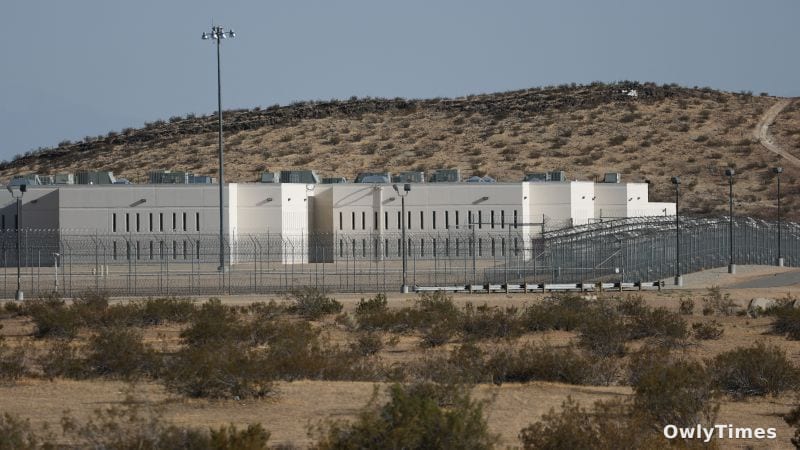
The case of Fernando Viera Reyes, 51, exemplifies this breakdown. Reyes required a biopsy to investigate potential prostate cancer when he was taken into ICE custody in California’s Mojave Desert. Months passed, despite reported blood in his urine – a critical indicator of potential cancer spread – before he even received the screening test, and as of early February, results remained pending. Kyle Virgien, a lawyer with the American Civil Liberties Union’s National Prison Project involved in the lawsuit against the federal government, succinctly captures the stakes: “It may have gone from very treatable to metastasized.” This isn’t an isolated incident, but a symptom of a broader pattern where delays and denials of care are potentially transforming manageable conditions into life-threatening emergencies.
The core of the problem lies in ICE’s apparent inability – or unwillingness – to adhere to its own established standards. These standards, revised last year, mandate medical, dental, and mental health screenings upon arrival, daily sick calls, 24/7 emergency care, and comprehensive preventative services. However, a review of over 200 pages of detainee lawsuits, independent research, and congressional investigations reveals consistent violations. The agency’s website claims to “uphold health care standards” through the ICE Health Services Corps (IHSC), with assistant director Stewart Smith asserting the provision of “required health care delivery for detained aliens.” Yet, the reality on the ground, as documented by lawmakers like Kelly Morrison (D-Minn.), paints a starkly different picture. Morrison, a practicing physician, described a facility at Fort Snelling with “no medical policy and ‘no real’ on-site medical care,” characterized by a lack of basic necessities and chaotic, dangerous conditions.
This piece references the CNN report.
This isn’t simply a matter of inadequate resources, though overcrowding undeniably exacerbates the issue. The Trump administration actively weakened oversight mechanisms, notably by cutting staff and effectively shuttering most operations of the DHS Immigration Detention Ombudsman office – an agency specifically designed to “independently examine immigration detention to promote safe, humane conditions.” Simultaneously, a protracted dispute over claims processing for off-site medical care created a critical bottleneck. The Department of Veterans Affairs previously handled these claims, but Congressional Republicans criticized the arrangement, leading to a termination of the contract in October. While a new vendor, Acentra Health, has been retained, claims processing is not expected to resume until April 30, leaving detainees potentially without access to essential treatments like dialysis, prenatal care, and cancer therapies. The ICE website acknowledges that many detainees “may not have received recent or reliable medical treatment” prior to custody, framing detention as an opportunity for care, but the current system demonstrably fails to deliver on that promise.
The political dimensions of this crisis are increasingly apparent. Democratic lawmakers are demanding autopsy reports for detainees who have died in custody, publicly accusing ICE of denying care, and seeking information regarding specific deaths, such as that of Geraldo Lunas Campos, 55, whose death in custody was ruled a homicide by the El Paso County Medical Examiner’s Office following restraint by law enforcement. The House Democrats on the Homeland Security Committee report 53 deaths in ICE or CBP custody since President Trump took office, a figure contested by DHS, which maintains higher standards than many U.S. prisons. This discrepancy highlights a fundamental tension: the agency’s public pronouncements versus the documented experiences of those within its custody. The ongoing impasse over the 2026 Department of Homeland Security spending bill, with Democrats insisting on reining in ICE, underscores the deep partisan divide surrounding immigration policy and the health consequences of that divide.
The recent measles outbreak at the Dilley Immigration Processing Center in South Texas, and subsequent cases in Florence, Arizona, further illustrates the public health risks posed by these conditions. Senator Chris Murphy (D-Conn.) accused the administration of denying him access to Dilley to conceal the outbreak, while Representative Jasmine Crockett (D-Texas) denounced the care provided to a five-year-old boy at the facility. These incidents aren’t isolated; they represent a systemic vulnerability to communicable diseases within overcrowded and under-resourced detention centers. Public disapproval of the administration’s handling of immigration is mounting, with nearly 60% of voters expressing dissatisfaction according to a recent Siena University/New York Times poll.
Looking ahead, the immediate priority must be restoring reliable claims processing for off-site medical care and ensuring that detainees have timely access to necessary treatments. However, a more fundamental shift is needed: a commitment to independent oversight, transparent reporting of health outcomes, and a reevaluation of the policy of prolonged detention itself. The question isn’t simply whether ICE can provide adequate healthcare, but whether the current system of detention is compatible with providing adequate healthcare. Will the upcoming claims processing resumption in April truly resolve the backlog and restore access, or will it be another temporary fix masking a deeper, systemic failure? The health and lives of vulnerable individuals depend on a clear answer.





