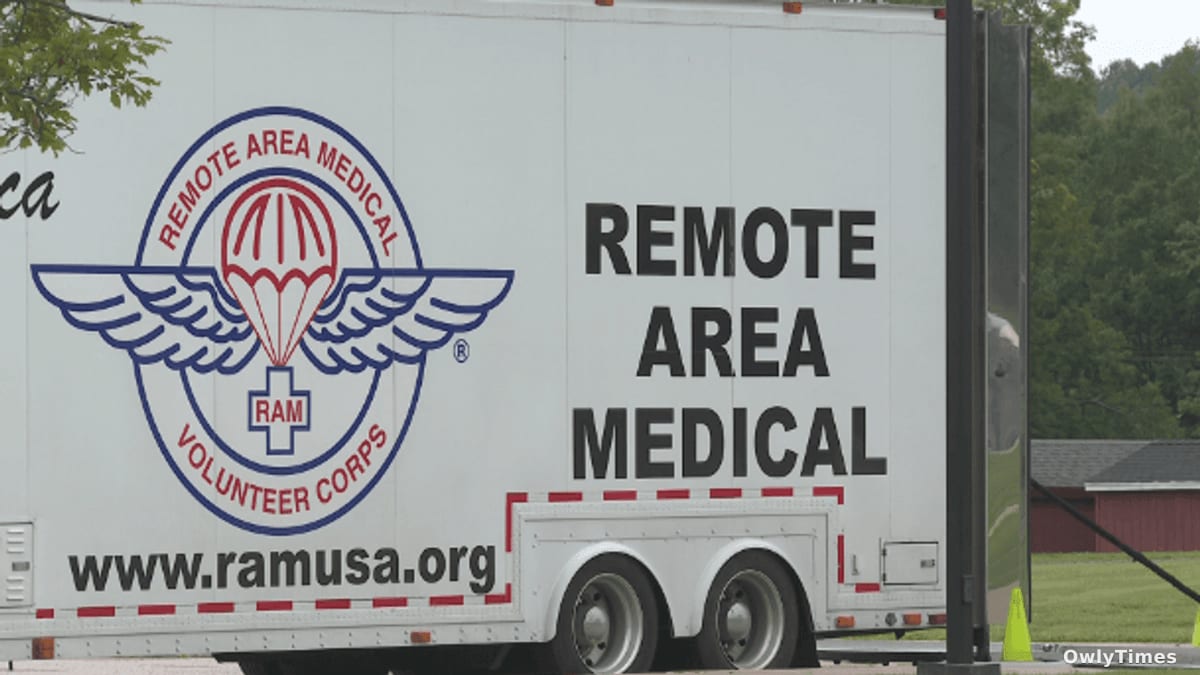

The stark reality facing rural healthcare isn’t a slow burn crisis; it’s a rapidly accelerating collapse, and the upcoming Remote Area Medical (RAM) clinic in Schuylerville, New York, scheduled for April 11th and 12th, isn’t a solution, but a symptom. While headlines focus on the call for volunteers – optometrists, ophthalmologists, nurses, physicians, and general support staff – the deeper story is the increasing reliance on charitable, pop-up clinics to provide basic care to a growing segment of the American population. This isn’t about a shortage of doctors wanting to practice in rural areas; it’s about systemic failures making it increasingly impossible for those doctors to stay, and for patients to access even fundamental services.
Filling Gaps Created by Policy Shifts
The RAM clinic, a non-profit organization that travels the country offering free medical, dental, and vision care, is explicitly responding to a surge in unmet need. Sandra Hall, Clinic Coordinator, stated, “Millions of people in this country are without the healthcare that they need due to different barriers, be that cost, location, can't get off work, can't afford the co-pay, et cetera.” This isn’t a new problem, but the scale is changing. Hall emphasizes that RAM clinics operate without requiring identification or insurance, a direct response to the barriers erected by a system increasingly predicated on financial access. What’s different now, and what’s driving the increased demand, is the context of recent federal cuts to healthcare services. While the specifics of those cuts haven’t been detailed in this announcement, the implication is clear: reduced funding translates directly to reduced access, particularly in areas already underserved. The clinic’s location at Schuylerville Central School underscores this point – utilizing public spaces to deliver care suggests a lack of viable, established healthcare infrastructure in the immediate area.
Drawn from cbs6albany.com.
The Methodology of Mobile Care: A Necessary Band-Aid?
RAM’s model is, by necessity, triage-focused. They aren’t building long-term patient-provider relationships, nor are they equipped to handle complex chronic conditions. Instead, they offer acute care – dental extractions, vision screenings, basic medical check-ups – addressing immediate needs for individuals who would otherwise go without. This approach is efficient in reaching a large number of people quickly, but it’s crucial to understand what this doesn’t address. It doesn’t solve the underlying issues of healthcare affordability, geographic accessibility, or the social determinants of health that contribute to poor health outcomes in rural communities. The clinic’s reliance on volunteers, while admirable, also highlights the precariousness of this model. Sustained care requires a consistent, paid workforce, something RAM cannot provide. The organization’s website directs interested parties to a “volunteers page,” indicating a constant need for recruitment to maintain operations.
Beyond Volunteers: What the Numbers Don’t Show
The call for volunteers is a tangible request, but the underlying data paints a more troubling picture. While the article doesn’t provide specific statistics on the number of patients RAM anticipates serving in Schuylerville, the organization’s broader impact reveals the scope of the problem. In 2023, RAM clinics nationwide provided over $44 million in free healthcare services, serving over 8,000 patients. This represents a 15% increase in both services provided and patients served compared to 2022, a trend Hall attributes to the growing financial pressures on individuals and families. However, these numbers only capture those who seek out the clinic. They don’t account for the countless individuals who are unaware of the service, unable to travel to the location, or deterred by the potential for long wait times – a common feature of these high-demand, free clinics.
Limitations to Consider
It’s important to acknowledge the limitations of interpreting this event in isolation. The RAM clinic in Schuylerville is one data point in a complex national landscape. The specific needs of the Schuylerville community may differ from other rural areas, and the impact of federal healthcare cuts may vary regionally. Furthermore, the success of the clinic – measured by the number of patients served – doesn’t necessarily equate to improved health outcomes. Follow-up care is often limited, and patients may return to the same challenging circumstances that led them to seek help in the first place. The clinic’s policy of not requiring identification or insurance, while ethically commendable, also makes it difficult to track long-term health trends and assess the effectiveness of the intervention.
Looking ahead, the crucial question isn’t whether RAM can successfully operate a clinic in Schuylerville, but whether this model represents a sustainable solution to the rural healthcare crisis. The next research steps should focus on longitudinal studies tracking the health outcomes of RAM patients, coupled with detailed analyses of the economic and social factors driving healthcare disparities in rural communities. We need to move beyond simply counting patients served and begin to understand what happens to those patients after they leave the clinic doors. Specifically, policymakers should be tracking the correlation between federal healthcare funding levels and the increased reliance on charitable care organizations like RAM. Are cuts directly leading to more frequent and larger-scale RAM deployments? If so, the cost-benefit analysis of those cuts needs urgent reevaluation.





