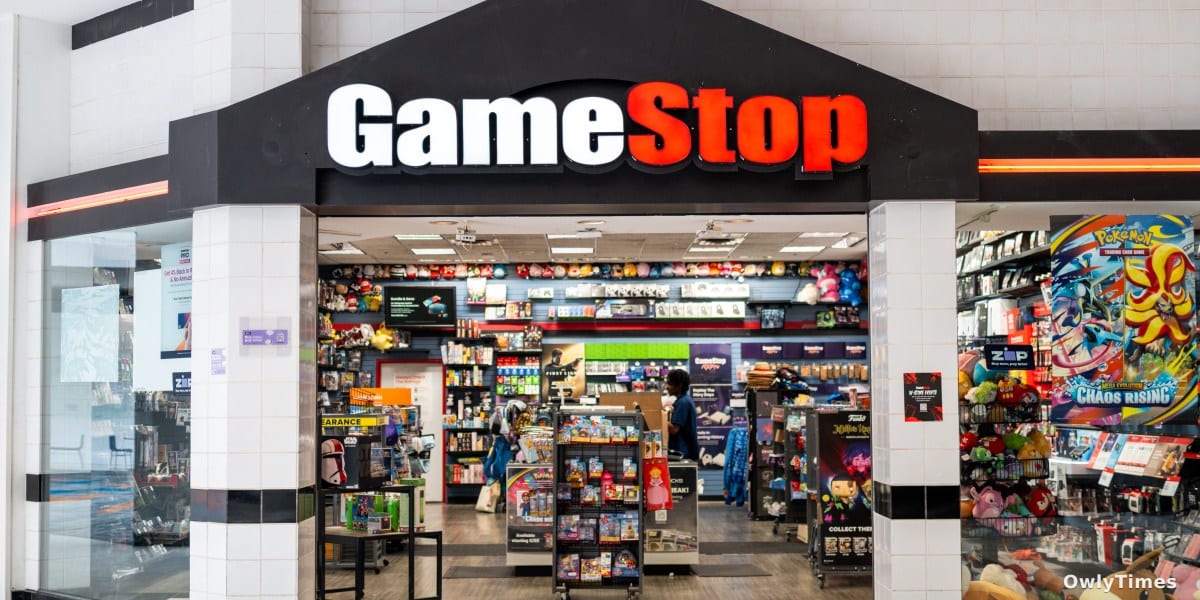

A 46% premium on a target company’s pre-announcement share price is rarely a sign of strategic strength; in the case of GameStop’s unsolicited bid for eBay, it is the hallmark of a "minnow" attempting to swallow a "whale." By targeting an acquisition price of $55.5 billion—or $125 a share—GameStop CEO Ryan Cohen is initiating a maneuver that echoes the most cautionary tale in modern corporate history: the 2000 merger of AOL and Time Warner. Follow the money, and the structural parallels become impossible to ignore. Just as Steve Case once used an inflated internet-era stock to capture a legacy media giant, Cohen is attempting to leverage a high-flying, meme-fueled valuation to pivot away from a core business facing terminal decline.
The mechanics of this bid reveal a precarious financial architecture. GameStop has already accumulated a 5% stake in eBay, a buying spree that began on February 4th and likely fueled the recent upward pressure on eBay’s stock. However, the initial $55.5 billion offer is almost certainly a starting point. Hedge fund manager Michael Burry—who famously anticipated the 2008 financial crisis—has already modeled a more aggressive $65 billion counter-bid. If the price moves to $131 per share to secure the board’s approval, GameStop would be paying a 70% premium over eBay’s price prior to the accumulation of Cohen’s 5% stake.
The most dangerous variable in this equation is the sheer scale of equity dilution required to fund the transaction. With a pre-bid market cap of only $11.9 billion, GameStop is significantly smaller than eBay, which holds a $46.2 billion valuation. To cover the $37.5 billion equity portion of a $65 billion deal, GameStop would be forced to issue approximately 1.42 billion new shares. Given that the company currently has 448 million shares outstanding, this would trigger a 300%-plus increase in total share count. Under this structure, eBay shareholders would effectively seize control, owning 60% of the combined entity, rendering the "acquisition" a reverse takeover in all but name.
The debt burden further compounds the risk. Cohen has secured a $20 billion loan commitment from TD Securities, but with GameStop’s own cash reserves sitting at $9 billion as of January 31, 2026, the company would still need to source an additional $8.5 billion to bridge the gap. Even at an optimistic interest rate of 6.0%, the combined annual interest expense would hit roughly $1.2 billion. When weighed against the combined earnings of $2.418 billion from the last four quarters, the new entity’s pro-forma profits would be slashed to approximately $1.1 billion.
At a $50 billion valuation, this new GameStop would trade at a price-to-earnings (PE) ratio of 45. For comparison, that places the company at a 36% premium over Amazon’s multiple of 33 and edges out Nvidia at 42. While Cohen promises to revitalize eBay with an "entrepreneurial mindset" and convert GameStop’s 1,600 retail locations into fulfillment hubs, the fundamental math suggests a company launching with thin margins and extreme leverage.
Ultimately, the cautionary precedent of AOL-Time Warner remains the most relevant benchmark. In that deal, the combined entity began life at a 82-times earnings multiple, only to watch its valuation collapse by 76% by the time Time Warner divested from AOL in 2009. Cohen admitted in a recent CNBC interview that GameStop has been in a "difficult position" and "should have gone bankrupt many times over." Investors should watch the next reading of eBay’s share price relative to the $125 bid floor; if the market begins to discount the deal’s likelihood, it will indicate that shareholders are finally waking up to the risks of a debt-heavy, high-dilution expansion.





