
$7.7 Billion Question: Ryan Cohen’s Buffett Play and the Future of Corporate Accountability
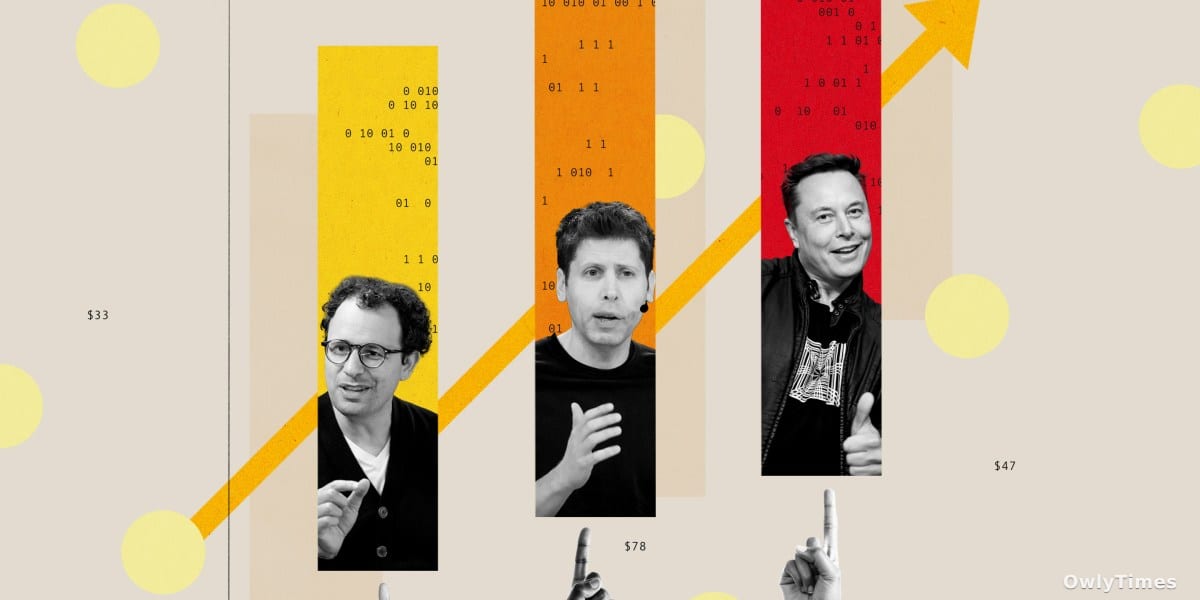
$7.7 billion. That’s the current market capitalization of GameStop as of today, February 20, 2026, a figure inextricably linked to the audacious turnaround strategy of its CEO, Ryan Cohen. But Cohen isn’t just focused on stock price; a recent, unusually direct post on X, channeling the spirit of Warren Buffett, reveals a deeper ambition: a fundamental restructuring of corporate governance. Follow the money, and you’ll find Cohen isn’t simply trying to save GameStop, he’s attempting to redefine the relationship between corporate leadership and shareholder value, a move that could ripple across the entire market.
Reporting from Business Insider informs this analysis.
Cohen’s “Hollow Men” post, a scathing critique of directors, executives, and managers who prioritize personal gain over company performance, isn’t a spontaneous outburst. It’s a calculated move, echoing decades of Buffett’s own criticisms of “parasitic” corporate bureaucracy. Buffett, who recently relinquished his CEO role at Berkshire Hathaway, has long lamented the lack of “skin in the game” among corporate leaders – directors who don’t own stock, executives who collect bonuses regardless of performance, and managers who deflect blame with expensive consultants. The timing is crucial. While GameStop’s stock has seen volatility, it remains significantly elevated from pre-2021 levels, giving Cohen the leverage to push for systemic change. This isn’t about altruism; it’s about maximizing long-term shareholder value, a principle Buffett has championed for over sixty years.
The core of Cohen’s argument, and Buffett’s before him, is a simple one: misalignment of incentives. Consider the typical independent director, compensated handsomely for minimal risk. According to a 2024 study by the Corporate Governance Research Initiative, average director compensation for S&P 500 companies reached $300,000 annually, with a significant portion tied to meeting attendance requirements rather than demonstrable performance improvements. This creates a system where directors are incentivized to maintain the status quo, avoiding conflict with management to secure future board seats. Cohen’s call for an “owner’s mentality” – where leaders treat shareholder money as their own – directly challenges this dynamic. He’s essentially arguing for a return to the principles of agency theory, where managers act in the best interests of their principals (shareholders).
Michael Burry, of “The Big Short” fame and a GameStop shareholder, acknowledged Cohen’s approach, noting his “rougher edges” compared to Buffett but praising his “more modern” execution. This is a key observation. While Buffett’s critiques have been consistent, his methods have often been subtle, relying on shareholder letters and quiet exits from poorly governed companies. Cohen, however, is leveraging social media and direct confrontation, a tactic more suited to the current media landscape. He’s also demonstrating a willingness to put his own money on the line, holding a roughly 9% stake in GameStop and forgoing a salary as CEO – a stark contrast to the exorbitant compensation packages awarded to many corporate executives. In 2025, GameStop’s executive compensation totaled $12.5 million, a figure Cohen is actively seeking to recalibrate through performance-based incentives.
However, Cohen’s strategy isn’t without contradictions. While advocating for an “owner’s mentality,” he recently agreed to a compensation package potentially worth tens of billions if he meets ambitious market-value and profit milestones. This, ironically, resembles the very type of performance-based pay he’s criticizing when applied to other executives. Furthermore, his decision to invest in Bitcoin, while potentially lucrative, deviates from Buffett’s famously conservative investment philosophy. These moves suggest Cohen is blending Buffett’s principles with a more aggressive, tech-savvy approach, attempting to modernize the concept of value investing for the 21st century.
What this means for your wallet: Watch closely for changes in GameStop’s board composition and executive compensation structure. If Cohen succeeds in aligning incentives with shareholder value, it could set a precedent for corporate governance reform, potentially leading to increased accountability and improved returns for investors across the market. But if his efforts are met with resistance from entrenched interests, GameStop’s current valuation – and the promise of a Buffett-style turnaround – could quickly unravel. The question isn’t just whether Cohen can save GameStop, but whether he can ignite a broader movement towards a more equitable and responsible corporate landscape. Will other CEOs take note and demand more “skin in the game” from their own leadership teams? That’s the $7.7 billion question.