
Beyond the Headline: What Frequent Ejaculation Reveals About Prostate Cancer Prevention
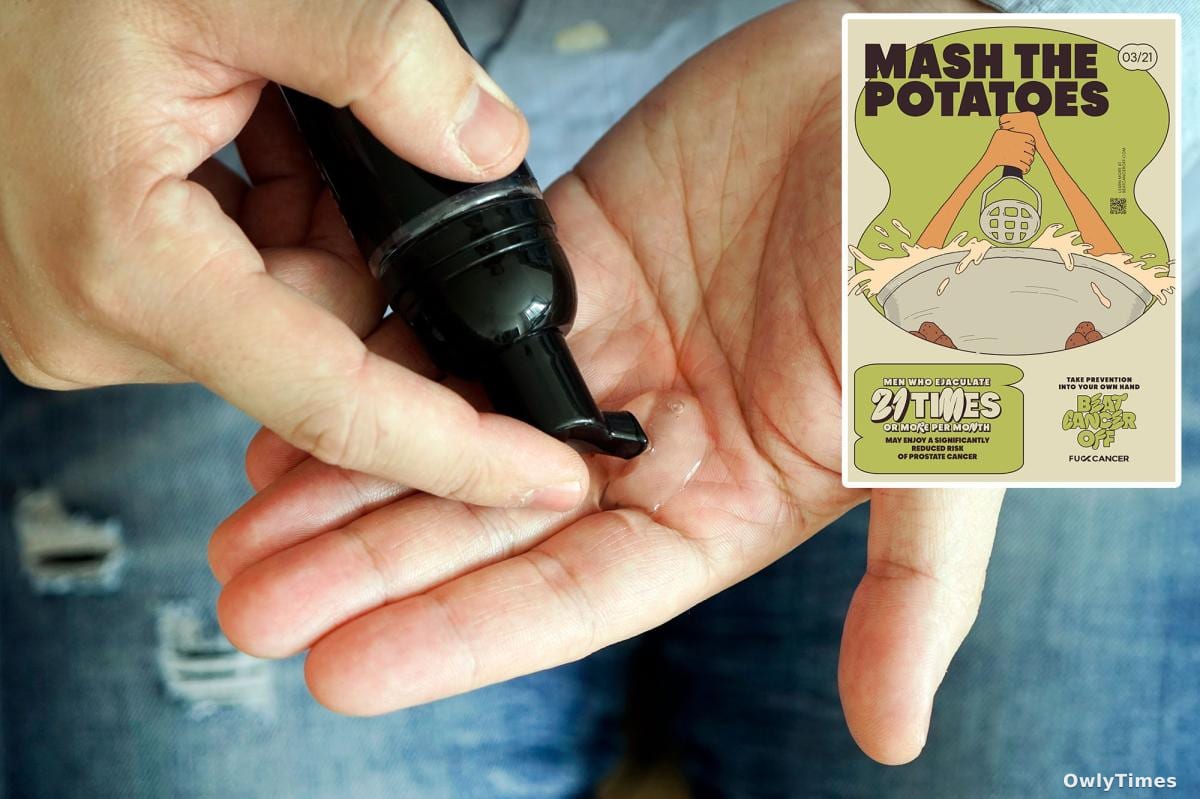
The internet is alight with a rather…direct health message: ejaculate at least 21 times a month to potentially lower your prostate cancer risk. While the phrasing is grabbing attention, and the campaign from the nonprofit FCancer is intentionally provocative, the underlying science is a nuanced story of observational data, statistical analysis, and a critical need for men to engage proactively with their health. It’s not about a “magic number,” but about a pattern observed over decades of research that deserves careful consideration – and, crucially, doesn’t replace standard medical care.
Source material: the New York Post.
The claim of a 22% risk reduction stems from data collected over nearly four decades, beginning in 1986, by a team led by Lorelei Mucci, a professor of epidemiology at the Harvard T.H. Chan School of Public Health. Their ongoing study, tracking the health and lifestyles of over 50,000 men, revealed a correlation: those reporting 21 or more ejaculations per month exhibited a 19-22% lower incidence of prostate cancer compared to those with less frequent activity. This finding, while statistically significant, is often misconstrued as a causal relationship. It’s vital to understand that the study demonstrates an association, not proof that ejaculation prevents cancer. The researchers themselves emphasize that “21 or more” isn’t a biological threshold, but a point at which the statistical benefit became apparent within their dataset. Even men ejaculating eight times a month showed some reduction in risk, suggesting a dose-response relationship, but one that requires further investigation.
Prostate cancer is a significant public health concern, affecting roughly 1 in 8 men in the United States, according to the American Cancer Society, and ranking as the second-leading cause of cancer-related death in men after lung cancer. This makes even a potential 22% risk reduction a noteworthy finding, but it’s crucial to contextualize it. A 22% reduction in relative risk doesn’t translate to a 22% reduction in absolute risk. For example, if 100 men are diagnosed with prostate cancer, this finding suggests that, if the association is causal, we might expect to see around 18 fewer diagnoses in a similar group who ejaculated frequently. This is a meaningful difference, but it’s not a guarantee of protection. The precise biological mechanisms behind this observed association are still being explored, with theories ranging from “flushing out” carcinogens to reducing inflammation and influencing gene expression.
Yael Cohen, co-founder of FCancer, acknowledges the campaign’s deliberately attention-grabbing nature. “We use humor because it sticks,” she told The Post. However, she stresses that the ultimate goal is to encourage men to discuss their prostate health with a physician and to undergo appropriate screening. This is a critical point. The campaign isn’t advocating for increased sexual activity as a replacement for medical advice, but as a potential adjunct to a comprehensive preventative health strategy. The campaign’s success hinges on its ability to translate complex scientific findings into a conversation men are willing to have, breaking down the stigma often associated with discussing sexual health and cancer risk.
Limitations to Consider: Observational Data and Individual Variability
Despite the compelling data, several limitations must be acknowledged. This research is observational, meaning researchers observed existing behaviors and outcomes, rather than assigning men to specific ejaculation frequencies in a controlled experiment. This introduces the possibility of confounding factors – other lifestyle variables (diet, exercise, genetics, etc.) that could independently influence both ejaculation frequency and prostate cancer risk. While the researchers attempted to control for these factors statistically, it’s impossible to eliminate their influence entirely. Furthermore, self-reported data, as used in this study, is subject to recall bias and social desirability bias. Men may underreport or overreport their ejaculation frequency, potentially skewing the results. Finally, the study population was predominantly Caucasian, raising questions about the generalizability of the findings to men of different ethnicities.
The Importance of Screening and Proactive Health Management
Dr. Mucci explicitly supports the FCancer campaign, viewing it as a valuable tool for encouraging men to engage with their prostate health. She emphasizes that the research “focused on ejaculation frequency, regardless of the specific activity that leads to it,” meaning the benefit isn’t tied to partnered sex versus masturbation. However, she reiterates the importance of regular prostate cancer screenings, understanding individual risk factors, and consulting with a physician. This is the core message: frequent ejaculation, if it plays a protective role, is likely just one piece of a larger puzzle. The campaign’s clever framing – “beat cancer off, literally” – is designed to get men to the doctor, not to replace the doctor with self-treatment.
Looking ahead, researchers need to move beyond observational studies to investigate the underlying biological mechanisms driving this association. Randomized controlled trials, while ethically challenging to design and implement, would provide the strongest evidence for a causal relationship. These trials would involve randomly assigning men to different ejaculation frequency groups and tracking their prostate cancer incidence over time. Additionally, further research is needed to determine whether the observed benefit varies based on age, ethnicity, genetic predisposition, and other individual factors. The question isn’t simply if frequent ejaculation is protective, but for whom and under what circumstances. Will future studies reveal specific biomarkers that identify men who might benefit most from this potentially simple, and surprisingly accessible, preventative measure? That’s the next play we should all be watching for.





