
The rising incidence of prostate cancer in Louisiana, particularly stark when contrasted with national averages, isn’t simply a matter of better detection. It’s a signal that something about the environmental or lifestyle factors within the state is actively increasing risk, and the granular parish-level data now available demands a deeper investigation than simply urging men to get screened. While headlines tout a new drug offering an eight-month extension to life expectancy, the more pressing story is the widening geographic disparity in who develops this disease in the first place.
Louisiana’s Uneven Burden: A Parish-by-Parish Breakdown
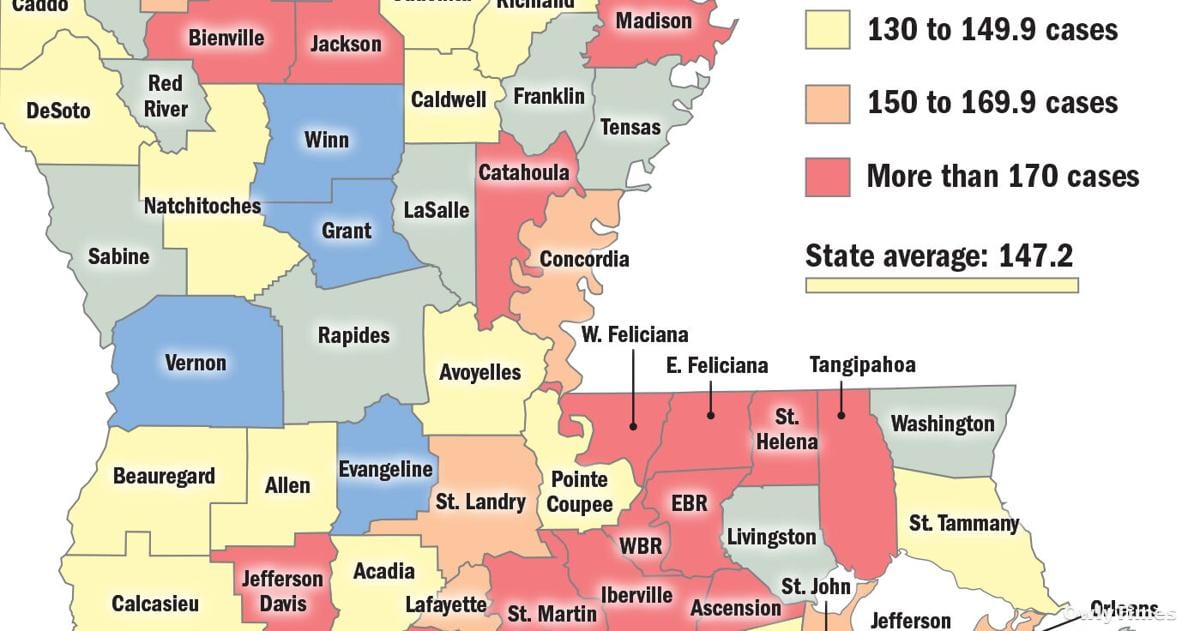
Prostate cancer is projected to affect 333,830 American men in 2026, with an estimated 36,320 deaths, according to the American Cancer Society. Nationally, this translates to roughly 116 new cases per 100,000 people annually. However, Louisiana dramatically exceeds this average, currently reporting 147.2 cases per 100,000 – a figure that has been consistently climbing since 2014, as documented by the National Cancer Institute. What’s truly striking is the internal variation within Louisiana itself. Data from 2018-2022 reveals a nearly two-fold difference between the parishes with the lowest and highest incidence rates. West Feliciana Parish leads the state with a rate of 218.6 cases per 100,000, while Cameron Parish reports only 101 cases per 100,000. This isn’t a subtle difference; it suggests localized risk factors are powerfully at play. The ten parishes with the highest rates – including Iberville, Bienville, and East Baton Rouge – all cluster along the Mississippi River corridor, a region with a history of industrial activity and agricultural runoff.
This article draws on reporting from NOLA.com.
Beyond Screening: Understanding the Data’s Nuances
The immediate reaction to rising cancer rates is often to promote increased screening. And while regular PSA (prostate-specific antigen) testing and digital rectal exams are crucial for early detection, focusing solely on screening misses a critical point: why are some communities experiencing such disproportionately higher rates of disease development? The data presented represents an average across all stages of prostate cancer, meaning it isn’t simply that more advanced cases are being identified in certain parishes. The sheer number of new diagnoses is higher. Dr. [Baton Rouge doctor’s name]’s statement regarding the new drug extending life expectancy by eight months is important for those already diagnosed, but it doesn’t address the upstream issue of prevention. An eight-month extension is a meaningful benefit, but it’s arguably more impactful to prevent the cancer from developing in the first place. The current focus feels reactive rather than proactive.
Limitations to Consider: Data and Demographics
It’s essential to acknowledge the limitations of this data. Parish-level incidence rates don’t automatically equate to causation. Correlation does not equal causality. Differences in access to healthcare, socioeconomic factors, and demographic variations (age, race, family history) could all contribute to the observed disparities. For example, if a parish has a significantly older population, a higher cancer rate might be expected simply due to age being a primary risk factor. However, even when accounting for these variables, the Louisiana rates remain alarmingly high. Furthermore, the data relies on accurate reporting and consistent diagnostic practices across all parishes, which isn’t always guaranteed. The data also doesn’t break down cancer aggressiveness – a more aggressive form of the disease will naturally impact survival rates differently.
The Next Steps: Environmental Factors and Targeted Research
The most crucial next step is a comprehensive epidemiological study focused specifically on Louisiana’s high-incidence parishes. This study must move beyond simply documenting the rates and actively investigate potential environmental and lifestyle factors. Are there specific pollutants present in the Mississippi River corridor? Are there dietary patterns common in these areas that could contribute to increased risk? Are there genetic predispositions within these communities that, combined with environmental factors, create a synergistic effect? The National Cancer Institute should prioritize funding for this research, and the Louisiana Department of Health should collaborate with local communities to collect detailed data on potential risk factors. We need to understand why these disparities exist before we can effectively address them. The question isn’t just whether a new drug can extend life by eight months, but whether we can prevent the need for that drug altogether in the first place – and, crucially, why some communities are facing this battle at a far higher rate than others. Looking ahead, residents of Louisiana, particularly those in the parishes with the highest incidence rates, should be aware of these trends and advocate for increased research and preventative measures within their communities.