
Is the global energy crisis actually a turning point, or just another spike in a long history of price shocks? While headlines scream about geopolitical instability and dwindling supplies, the real story here isn't the war in the Strait of Hormuz – it’s the quiet revolution already underway in countries like Pakistan and Nepal, proving that energy independence isn’t a pipe dream, but a practical outcome of embracing solar, batteries, and electric vehicles. We’ve been told for decades that renewables are about saving the planet, but the current crisis is revealing a far more immediate benefit: they’re about keeping the lights on, and the economy moving, when the fossil fuel spigot gets turned off.
The closure of the Strait of Hormuz, coupled with Qatar’s LNG shutdown, is a stark illustration of how vulnerable the world remains to disruptions in oil and gas. But Jan Rosenow, energy and climate professor at Oxford University, points out this isn’t a random event. “That’s not a coincidence,” she says, “It’s a deliberate strategy to move away from [imported oil] and electrify.” The numbers tell the tale: over half of new car sales in China are now electric, and in Nepal, that figure exceeds 70%. This isn’t just about environmental virtue signaling; it’s about shielding citizens from the brutal volatility of global fuel markets. As Kingsmill Bond, an analyst at Ember, succinctly puts it, “It’s an energy security solution and it’s a cost solution.”
Original reporting: NPR.
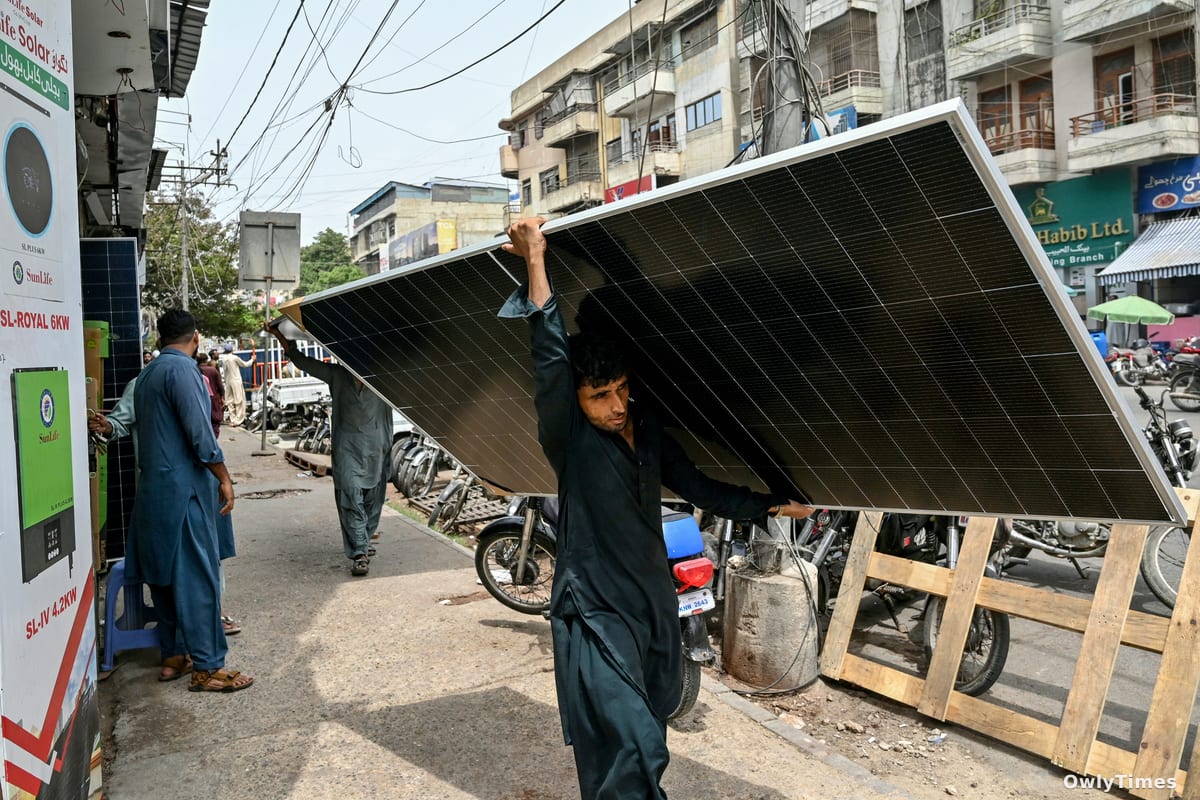
Pakistan, surprisingly, is emerging as a case study in resilience. While still reliant on fossil fuels for transportation, the country has imported a staggering 41 GW of solar panels from China since 2023 – enough to power millions of homes. To put that in perspective, Pakistan’s total power generation capacity from all sources (coal, gas, nuclear) was only 46 GW in 2024. Nabiya Imran, at the Pakistani think tank Renewables First, explains that this rapid adoption of solar and batteries acts as a “hedge…against these price shocks that the fossil fuel markets are very vulnerable to globally.” The Pakistani government has even resorted to closing schools and implementing work-from-home orders to reduce fuel consumption, but the widespread availability of solar power is softening the blow. This isn’t just a climate story; it’s a story about risk management.
The lessons from the Ukraine war, initially downplayed by some, are now becoming painfully clear. Following Russia’s invasion in 2022, Europe scrambled to replace Russian gas, with some opting for LNG from the US and Qatar. Kingsmill Bond calls this a “mistake,” as evidenced by the current crisis. While Spain and Portugal doubled down on renewables, reducing their reliance on gas, others are now facing the consequences of doubling down on a different kind of dependency. The current situation is forcing a reevaluation, with European politicians increasingly advocating for a renewed commitment to renewable energy.
This shift isn’t happening in a vacuum. The volatility in fossil fuel prices – oil exceeding $100 a barrel, double-digit percentage increases in Asian and European gas prices since the war began – is driving countries to reconsider their energy strategies. Paasha Mahdavi, associate professor of political science at the University of California, Santa Barbara, notes that many nations are “tired and sick of this volatility in pricing, the squeeze they can't really do anything about.” The fundamental appeal of solar is brutally simple: once you have the panels, the fuel is free. As Bond points out, “Once you've got your gas fire power station, you have to pay every day for the gas that you burn in it.” And with a stroke, this latest conflict has dramatically amplified the voices advocating for a solar-powered future.
But the transition isn’t uniform. Countries in Latin America and Africa are still grappling with the decision between investing in traditional fossil fuel infrastructure or embracing renewables. The choice is no longer simply about environmental responsibility; it’s about economic security. The question isn’t if the world will move towards renewables, but how quickly. My prediction? Watch for a surge in “solar plus storage” projects in developing nations over the next 18 months. The countries that aggressively pursue this path won’t just be mitigating climate change – they’ll be building a buffer against the next geopolitical shock, and positioning themselves as the economic winners of a world increasingly powered by the sun.