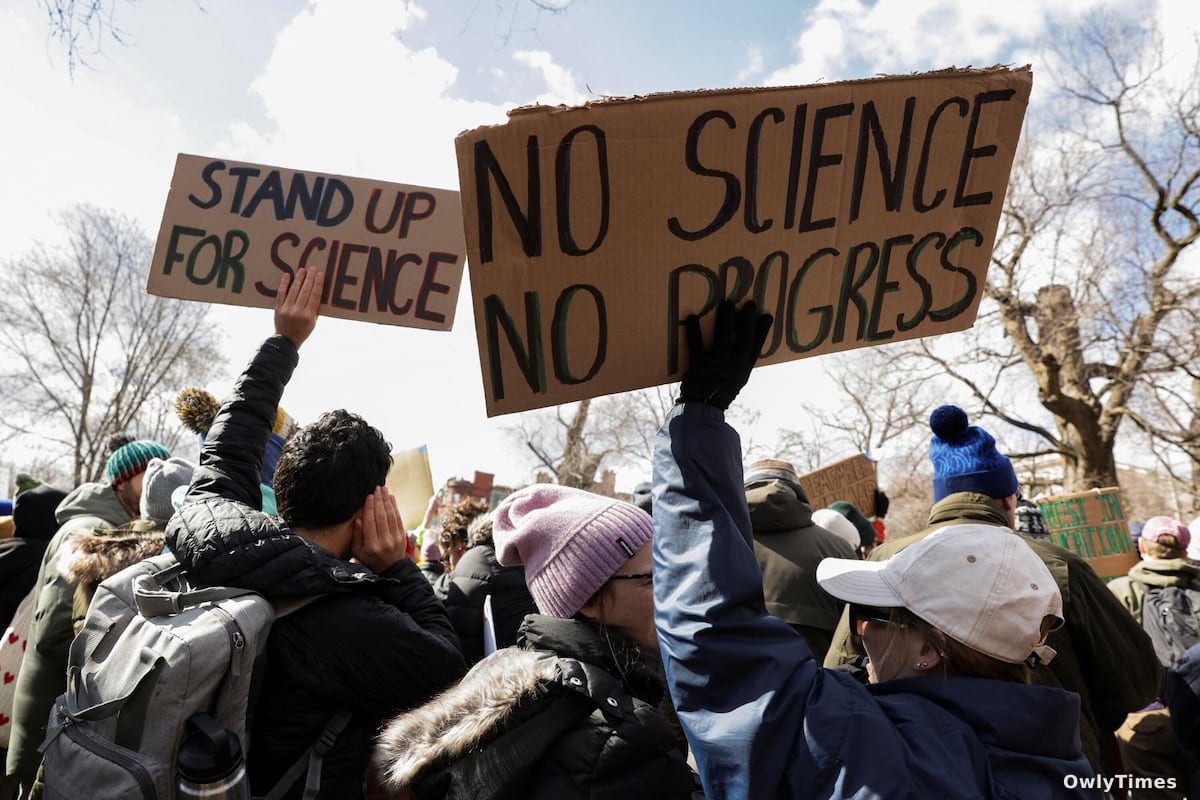

The coordinated European effort to recruit American scientists isn’t simply a humanitarian response to perceived political interference in U.S. research – it’s a calculated power play to reshape the global scientific landscape, leveraging a moment of American self-inflicted vulnerability. While framed as “safe havens” for researchers fleeing budget cuts and restrictions under the Trump Administration, initiatives like France’s Safe Place for Science and the European Commission’s Choose Europe for Science program represent a strategic realignment, one that directly challenges the post-World War II dominance of the United States in scientific innovation. The sheer volume of applications – nearly 900 to Safe Place for Science alone, even after the initial deadline – reveals a deeper erosion of confidence than official Washington seems willing to acknowledge.
The genesis of this shift lies in the perceived weaponization of science during the Trump years. Éric Berton, president of Aix-Marseille University (AMU), launched Safe Place for Science on March 7, 2025, anticipating repercussions for colleagues facing political pressure. But the program’s success wasn’t merely about anticipating trouble; it was about capitalizing on a growing exodus. The timing is critical. While budget cuts certainly played a role, the catalyst for many, like Alka Patel, a researcher specializing in South Asia, was a climate of escalating political repression before the 2024 election. Patel, who left the U.S. with her family, cited the “extremely violent repression of students” demonstrating on her campus at the University of California as a turning point, a signal that academic freedom itself was under threat. This wasn’t a spontaneous decision; Patel had been planning her departure for three years, a testament to a sustained erosion of trust.
Source material: english.elpais.com.
The European response wasn’t haphazard. Ursula von der Leyen, President of the European Commission, swiftly announced the €500 million Choose Europe for Science program in May 2025, demonstrating a coordinated, continent-wide strategy. Germany followed suit with the Global Minds Initiative Germany and the Meitner-Einstein Programme, and the Max Planck Society launched the Max Planck Transatlantic Programme. The numbers confirm the impact: residence permits granted to U.S. citizens in Germany rose by 32% between January and September 2024 and 2025, a significant jump indicating a deliberate influx of talent. Austria’s APART-USA initiative further underscores the pan-European ambition. Who benefits and who loses here is starkly defined. Europe gains access to highly skilled researchers, bolstering its scientific capacity and prestige, while the U.S. risks a debilitating brain drain, potentially ceding leadership in critical fields.
This isn’t the first instance of a nation strategically attracting talent from a perceived rival. The historical parallel to the influx of European scientists to the United States during the rise of Nazism in the 1930s is striking. Just as the U.S. benefited from the emigration of physicists like Albert Einstein and mathematicians fleeing persecution, Europe is now positioning itself as a sanctuary for researchers disillusioned with the American political climate. However, the current situation differs in a crucial respect: the U.S. isn’t facing an external threat forcing emigration, but rather internal policies driving it. This makes the loss self-inflicted, and therefore potentially more damaging. The fact that some applicants to French programs used encrypted messaging, fearing identification, speaks to a level of anxiety not seen since the McCarthy era.
The long-term implications extend beyond individual researchers. Programs like Safe Place for Science and Choose Europe for Science aren’t simply offering temporary refuge; they’re designed to integrate scientists into the European research ecosystem. The three-year programs, coupled with pathways to funding from the European Research Council (ERC), aim to create lasting ties. Mehran Mostafavi, Vice President of Research at Paris-Saclay University, highlights the process: after an initial period, scientists present their projects to the ERC for potential five-year funding extensions. This isn’t a temporary fix; it’s a strategic investment in Europe’s future scientific leadership. Alka Patel’s acceptance of a position at the CNRS, the French National Centre for Scientific Research, exemplifies this successful integration.
The political chess move to watch next isn’t whether Europe will continue to attract American scientists – it already is. The critical question is whether the Biden Administration will respond with a substantive effort to reverse the damage, not just through increased funding, but through a demonstrable commitment to protecting academic freedom and restoring trust in the scientific enterprise. Will they address the underlying political anxieties that are driving researchers away, or will they allow Europe to solidify its position as the new global center for scientific innovation? The answer will determine whether the current brain drain is a temporary setback or a permanent shift in the balance of scientific power.





