
The sudden chill emanating from the Federal Communications Commission isn’t about indecency or misinformation – it’s about access, and the calculated leveraging of a decades-old regulation to reshape the media landscape ahead of the 2024 election. The FCC’s investigation into ABC’s The View for airing an interview with Texas politician Robert Francis “Beto” O’Rourke, coupled with Stephen Colbert’s preemptive cancellation of a similar interview, isn’t a spontaneous enforcement of broadcast standards. It’s a demonstration of power, a warning shot fired across the bows of late-night and daytime talk shows, and a strategic maneuver to reassert control over political messaging in an era of fragmented media. The core issue isn’t the content of the interviews themselves, but the invocation of the “equal time” rule, a relic of the 1930s that demands broadcasters provide equal opportunity for opposing viewpoints.
The Equal Time Rule’s Unexpected Resurgence
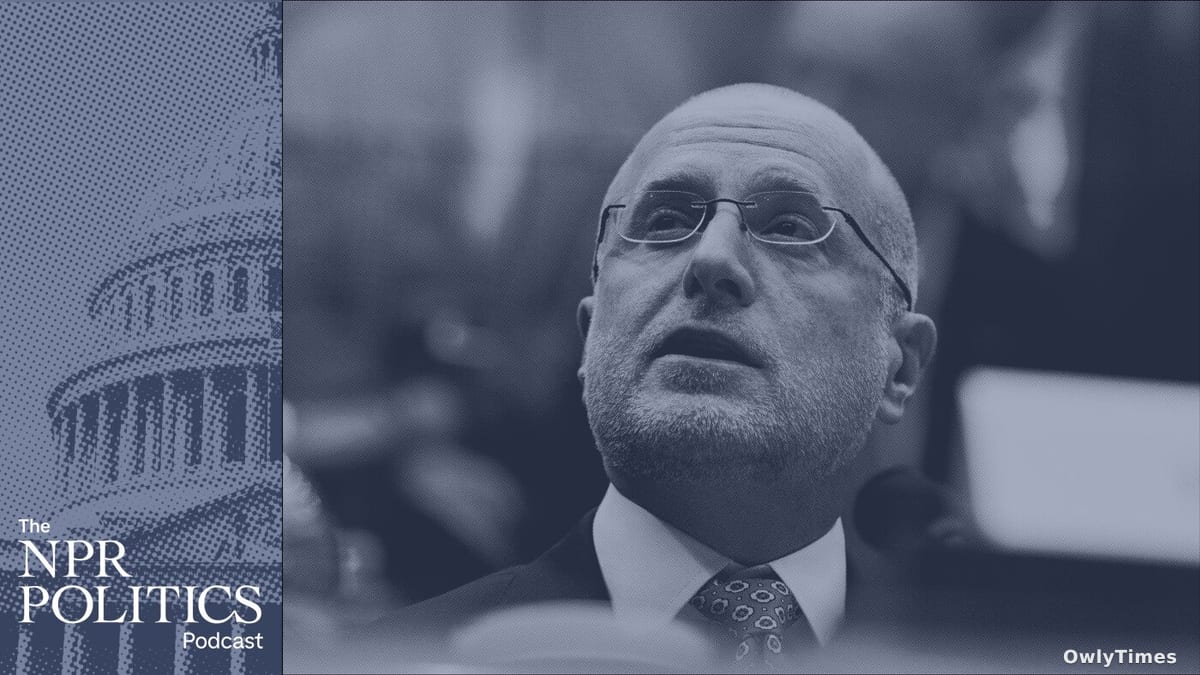
The “equal time” rule, formally Section 315 of the Communications Act of 1934, was originally intended to prevent broadcasters from using their platforms to overtly favor one candidate over another. In a pre-cable, pre-internet world where a handful of networks dominated the flow of information, the logic was sound: denying a candidate access to a broadcast audience constituted a form of editorializing. However, its application today, as discussed by NPR’s Miles Parks, David Folkenflik, and Domenico Montanaro on the NPR Politics Podcast, feels less like upholding fairness and more like a blunt instrument wielded to stifle political discourse. The rule hasn’t been a major factor in presidential campaigns since the 1980s, but the current FCC, under the leadership of Jessica Rosenworcel, is signaling a willingness to enforce it with renewed vigor. This isn’t a legal shift – the rule remains on the books – but a political shift in how it’s interpreted and applied. The timing, just months before the primaries, is the critical element.
Drawn from NPR.
Who Benefits and Who Loses in This Regulatory Climate?
The immediate losers are clearly networks like ABC and CBS (home to The Late Show with Stephen Colbert), which now face the prospect of either granting equal time to all declared candidates – a logistical nightmare – or avoiding substantive political interviews altogether. This disproportionately impacts candidates with less name recognition and fundraising capacity, who rely on these platforms for exposure. Beto O’Rourke, in this instance, became a test case, his appearance on The View triggering the FCC scrutiny. But the larger losers are voters, who are potentially deprived of diverse perspectives and in-depth discussions about the issues. The beneficiaries are those who already control the narrative: candidates with established media presences, those who can bypass traditional broadcast channels through social media and direct-to-consumer platforms, and, arguably, the FCC itself, which gains a renewed sense of relevance and authority. The podcast’s contributors noted the chilling effect this could have on political coverage, with networks potentially self-censoring to avoid FCC intervention.
A Historical Echo of Fairness Doctrines
The current situation bears a striking resemblance to the debates surrounding the “fairness doctrine,” another FCC regulation that required broadcasters to present controversial issues of public importance in a balanced and honest manner. The fairness doctrine, repealed in 1987, was criticized for being overly broad and susceptible to political manipulation. While the equal time rule is narrower in scope, focusing specifically on candidate access, the underlying principle – government regulation of political speech – is the same. The repeal of the fairness doctrine is often credited with the rise of partisan talk radio and the proliferation of opinionated programming. Ironically, the current FCC’s actions could have a similar effect, driving political discourse further into echo chambers as networks retreat from potentially contentious interviews. The podcast, produced by Casey Morell and Bria Suggs, and edited by Rachel Baye, with Muthoni Muturi as executive producer, highlights this historical parallel, suggesting a cyclical pattern of regulatory intervention and unintended consequences.
The Next Move: A Petition for Reconsideration?
The FCC’s actions aren’t simply about enforcing a dusty regulation; they’re about signaling a willingness to actively shape the media environment. The question now is whether the networks will challenge this enforcement. A formal petition for reconsideration, arguing that the equal time rule is outdated and unconstitutional in the context of modern media, is a distinct possibility. However, such a petition would likely be a lengthy and costly legal battle, with no guarantee of success. More immediately, the political chess move to watch is whether the FCC will extend this scrutiny to cable news networks. While the equal time rule technically applies only to broadcast television and radio, a broader interpretation – perhaps arguing that cable networks have a similar public interest obligation – could dramatically expand the FCC’s reach and fundamentally alter the landscape of political media. Will Jessica Rosenworcel push the boundaries of the FCC’s authority, or will this be a limited enforcement action designed to send a message? The answer will reveal the true strategic intent behind this sudden resurgence of a forgotten rule.





