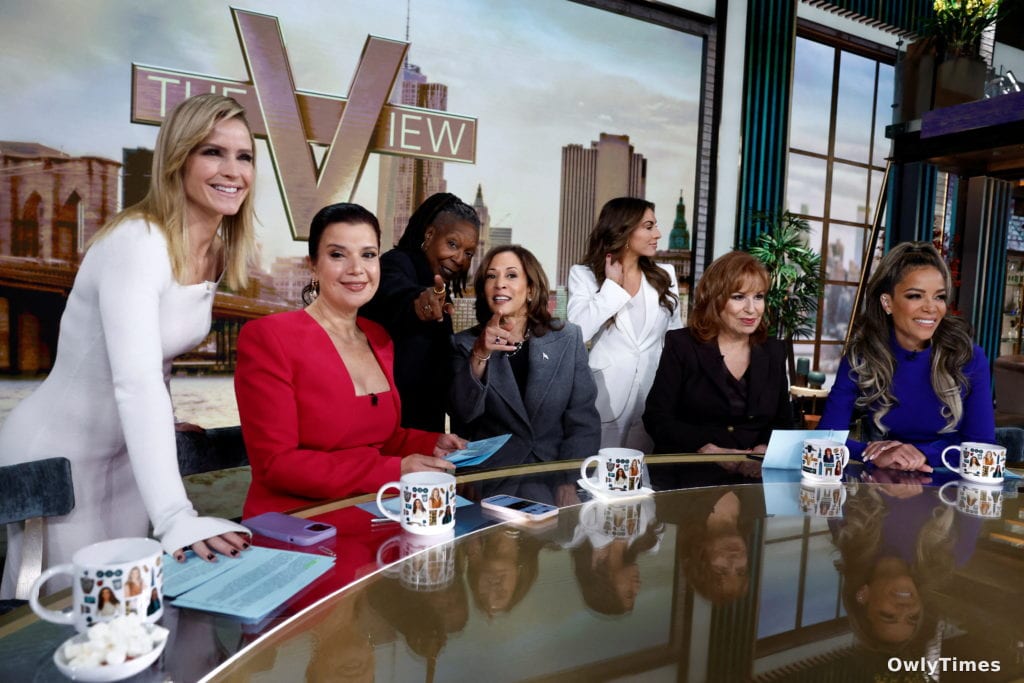

The Strategic Chill on Talk Television
The Federal Communications Commission’s investigation into ABC’s “The View” isn’t about upholding media fairness; it’s a calculated pressure tactic designed to reshape the landscape of political discourse ahead of the 2026 midterms. Brendan Carr’s confirmation of an “enforcement action” – delivered with a pointed lack of detail – signals a willingness to weaponize broadcast regulations, specifically the equal-time rule, against programs perceived as leaning left. The timing, coinciding with CBS pulling James Talarico’s appearance on Stephen Colbert’s show due to similar concerns, isn’t coincidental. It’s a demonstration of the FCC’s reach and a warning to other networks.
Drawn from PBS.
The equal-time rule, enshrined in Section 315 of the Communications Act of 1934, requires broadcasters to offer equal opportunities to legally qualified political candidates. Historically, it was intended to prevent stations from overtly favoring one candidate, but its application has been uneven and often limited to clearly defined news segments. The current FCC’s focus on daytime and late-night talk shows – traditionally considered entertainment, not news – represents a significant expansion of the rule’s scope. This isn’t a legal clarification; it’s a political redefinition. Who benefits and who loses here is starkly clear: conservative media outlets, largely exempt due to their framing as opinion-based programming, gain a competitive advantage while liberal-leaning shows face increased scrutiny and potential legal challenges.
The precedent for this kind of regulatory pressure isn’t distant. The Trump administration similarly sought to leverage the FCC against media organizations critical of the president, though those efforts were largely symbolic. However, the current investigation differs in its directness and the explicit targeting of specific programs. The January guidance issued by the FCC, raising questions about the “bona fide” interview program exemption, laid the groundwork for this action. This guidance wasn’t a response to widespread complaints; it was a proactive move to create ambiguity and open the door for enforcement. The fact that both Talarico and Jasmine Crockett, both Democratic Senate candidates in Texas, have appeared on “The View” is less the issue and more the justification for the investigation – a convenient case study to demonstrate the FCC’s resolve.
The implications extend beyond “The View” and “The Late Show.” The chilling effect on political interviews is already palpable. Networks, facing the prospect of costly legal battles and potential fines, will likely become more cautious about hosting candidates, particularly those from one party. This self-censorship will inevitably limit the public’s access to diverse perspectives and potentially skew the information landscape. The argument that this is about fairness rings hollow when considered alongside the FCC’s relative inaction regarding partisan rhetoric on conservative talk radio. The $78.8 billion broadcast television industry, according to 2025 revenue figures, is now facing a new layer of regulatory risk, and the cost of compliance – both financial and editorial – will be substantial.
The FCC’s actions aren’t simply about enforcing a decades-old law; they’re about controlling the narrative. The agency is attempting to redefine the boundaries of political speech in the broadcast sphere, effectively silencing voices it deems unfavorable. The next political chess move to watch is whether Brendan Carr will push to formally narrow or eliminate the “bona fide” interview program exemption. If he does, expect a wave of lawsuits and a fundamental shift in the way political candidates engage with talk television. The question isn’t whether the FCC will succeed in its legal arguments, but whether it can successfully intimidate networks into self-regulation before the midterms.





