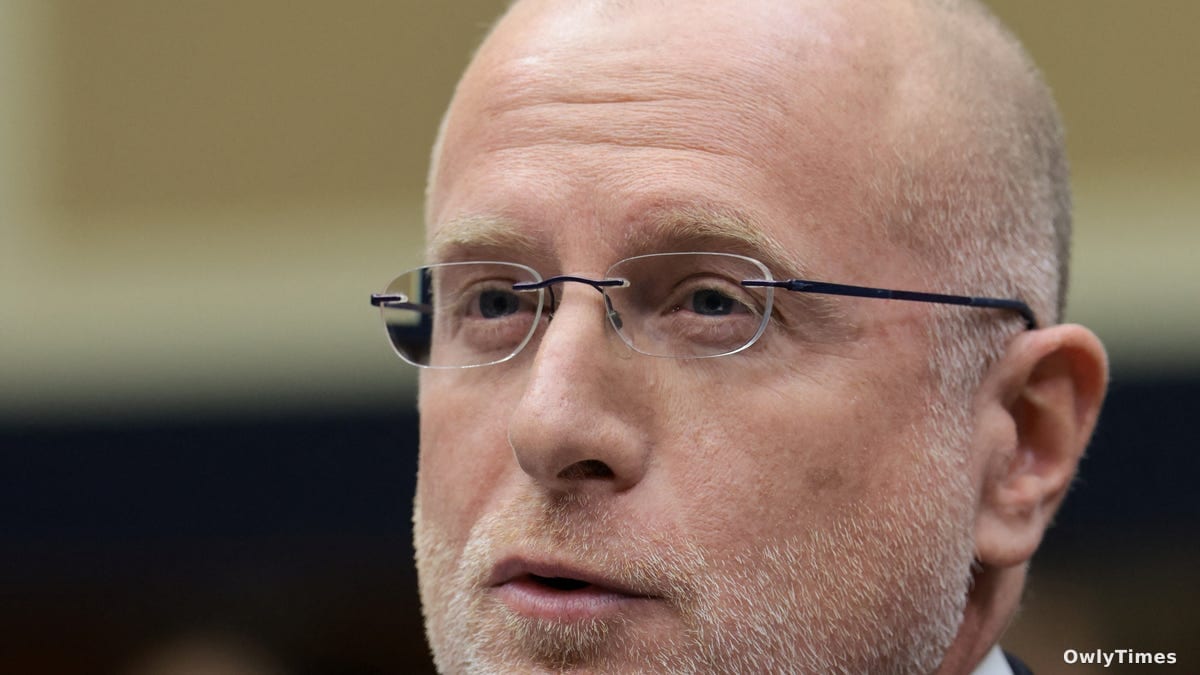

Is the future of your local news dependent on whether it flatters the current administration? That’s the unsettling question raised by recent threats from Federal Communications Commission (FCC) Chair Brendan Carr, who suggested broadcasters could lose their licenses over coverage of the Iran conflict deemed unfavorable by President Trump. The real story here isn't about accurate reporting on damaged aircraft – it’s about a chilling escalation in the attempt to weaponize regulatory power against a free press, and a preview of how easily the public’s access to information can be manipulated.
The immediate trigger was reporting by the Wall Street Journal detailing damage to five U.S. Air Force refueling planes in Saudi Arabia following Iranian strikes. Trump, predictably, dismissed the report as “fake news,” claiming four of the five planes sustained “virtually no damage” and were quickly repaired. He then accused outlets like the New York Times and Wall Street Journal of actively wanting the U.S. to lose any potential conflict. This outburst wasn’t an isolated incident; it followed a pattern of attacks on media he deems critical, and it’s the context that makes Carr’s subsequent statement so alarming. The FCC chair essentially echoed Trump’s sentiment, warning broadcasters to “correct course” before their license renewals, framing unfavorable coverage as a failure to operate in the “public interest.”
This article draws on reporting from USA Today.
This isn’t some abstract legal debate for media lawyers. License renewals are a critical lifeline for local television and radio stations. The FCC controls who gets to broadcast on the public airwaves, and the threat of non-renewal is a powerful form of coercion. Consider the implications for a small-town news station already struggling with declining ad revenue. Would they risk jeopardizing their existence by publishing a story that might displease the administration, even if it’s demonstrably true? The chilling effect is undeniable. Aaron Terr, director of public policy at The Foundation for Individual Rights and Expression, rightly called Carr’s comments “government censorship” and a violation of the First Amendment. It’s a point underscored by Governor Gavin Newsom, who labeled the FCC chair’s post “flagrantly unconstitutional.”
It’s also not a new tactic for Carr. He previously faced criticism for appearing to threaten ABC over comments made by Jimmy Kimmel about Charlie Kirk, and recently urged broadcasters to prioritize “patriotic, pro-America content” – a thinly veiled call for favorable coverage. This isn’t about ensuring journalistic standards; it’s about establishing a system where news is dictated by political expediency. The FCC’s mandate is to regulate the technical aspects of broadcasting, not to police the content itself. To suggest otherwise fundamentally misunderstands the role of a free press in a democratic society. In 2023, the idea of a government agency actively monitoring and potentially punishing news outlets for unfavorable coverage feels less like a dystopian fantasy and more like a dangerous precedent.
The long-term consequences extend beyond specific stories about Iran or individual late-night jokes. This sets a dangerous precedent for future administrations, regardless of party affiliation. If the FCC can be used as a tool to silence dissent, what’s to stop a future administration from targeting outlets critical of their environmental policies, economic agendas, or foreign policy decisions? The public’s ability to hold power accountable relies on access to diverse and independent sources of information. When that access is threatened, the very foundations of democracy are at risk.
Watch closely for the FCC’s actions during the next round of license renewals. Will Carr follow through on his threat, even subtly? And more importantly, will Congress intervene to clarify the FCC’s authority and protect the First Amendment rights of broadcasters? The answer to that question will determine whether your local news remains a source of independent information, or simply an echo chamber for the prevailing political narrative.





