
$2.3 Billion Reason Brokers Need to Do Their Homework
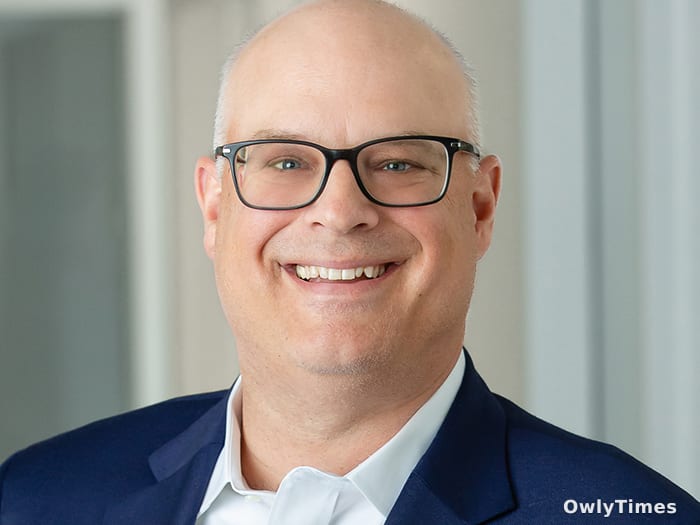
A $2.3 billion claim – that’s the potential exposure Westfield Specialty averted for a private equity client by challenging a narrow coverage interpretation from carriers lower in an insurance tower. This single instance, detailed in a recent conversation with Kevin Koehler, SVP and Head of Financial Institutions for Westfield Specialty, underscores a critical shift in the financial lines insurance market: the value of “additive” brokerage is no longer a differentiator, it’s a necessity. As a sponsor of the finance category in the 2026 Finance Power Broker® contest, Westfield is uniquely positioned to observe these dynamics, and Koehler’s insights reveal a growing premium placed on brokers who proactively understand and advocate for their clients, particularly in the face of increasingly complex risks.
The core of the issue, as Koehler explains, is a move away from transactional brokerage. While a broker securing a quote is a baseline expectation, the real leverage comes from brokers who actively facilitate the underwriting process. This means not just submitting applications, but providing detailed answers to nuanced questions, demonstrating a functional knowledge of the client’s business, and anticipating potential concerns. This isn’t merely about smoothing the process; it directly impacts pricing and coverage. In 2023, the average premium for financial institutions saw a 12.8% increase according to Marsh McLennan, driven in part by escalating cyber threats and regulatory scrutiny. Brokers who can demonstrably mitigate these risks for underwriters are positioned to negotiate more favorable terms, effectively shielding their clients from the full brunt of market hardening.
See the original riskandinsurance.com story for the full account.
The demand for this proactive approach is escalating alongside the emergence of new risks, most notably the rapid integration of Artificial Intelligence (AI). Koehler, fresh from the American Bankers Association risk management forum, highlighted AI as the dominant concern for risk managers across the financial sector – from banking to investment advisory firms. The issue isn’t simply the use of AI, but the transparency of its deployment and the potential for “model risk failure.” Regulators are rapidly formalizing their expectations around AI disclosure, and a failure to comply could result in significant financial and reputational damage. This regulatory pressure is translating into increased scrutiny from insurers, demanding detailed information about AI implementation and governance.
This heightened scrutiny is where the “additive” broker truly shines. Koehler’s team recently handled a claim where carriers below them had outright denied coverage, citing a narrow interpretation of the policy. By taking a “holistic approach” and analyzing the claim from an allocation perspective, Westfield was able to secure coverage for a significant portion of the loss, unlocking policy limits for the client and avoiding a costly legal battle. This wasn’t simply a matter of legal interpretation; it was a demonstration of understanding the client’s business and advocating for a reasonable outcome. The result? The client subsequently placed Westfield in a primary position on future policies, a testament to the value of proactive claims handling. This contrasts sharply with the 2022 claims landscape, where a report by Clyde & Co. found that 40% of financial institutions experienced disputes with insurers over coverage, often stemming from a lack of clarity in policy wording and insufficient due diligence by brokers.
However, the onus isn’t solely on brokers to understand emerging risks. Insurers are also adapting their products to address these challenges. Westfield Specialty, for example, recently introduced a bundled asset management policy that integrates first and third-party cyber coverage with traditional financial lines, creating a “one-stop shop” for SMEs. This is a strategic response to the growing recognition that cyber incidents are increasingly likely to trigger D&O claims, and that standalone cyber insurance remains underpenetrated in the SME market. This bundled approach, while offering convenience, also introduces potential complexities. Koehler specifically points to the need for clarity around derivative demand investigation coverage limits – often a sublimit – and entity investigations coverage, which isn’t always guaranteed and frequently requires a specific endorsement.
What this means for your wallet: Don’t assume your broker is doing enough. Ask specific questions about their understanding of your business, their approach to emerging risks like AI, and their ability to advocate for you with insurers. Scrutinize policy wording, particularly around sublimits and endorsements. The $2.3 billion saved by Westfield’s client isn’t an outlier; it’s a demonstration of the tangible value of proactive, informed brokerage. The question now is: are you paying for a transaction, or a partnership? And, more importantly, will you know the difference before a claim arises?




