
$3.25: The Price Tag of Instability in the Persian Gulf
$3.25. That’s the average increase, in US dollars, per barrel of crude oil futures immediately following the escalation of conflict in Iran on March 16th, a jump representing a 12% surge and signaling a far more profound economic disruption than even the initial shockwaves from the 2019 attacks on Saudi Arabian oil facilities. While geopolitical attention remains fixed on the immediate humanitarian crisis and potential for wider regional war, the financial implications – specifically, the inflationary pressures and investment freezes rippling through the Middle East and beyond – are already locking in consequences that will outlast any ceasefire. Cliff Kupchan, chairman of Eurasia Group, correctly points to the scale of the supply shock, but the story isn’t simply about oil; it’s about how this crisis is reshaping capital flows and accelerating pre-existing vulnerabilities in regional economies.
The Oil Shock and Its Secondary Effects
The immediate impact is, predictably, energy. The 12% spike in crude prices translates to roughly a $0.25 increase per gallon at the US pump, according to the Energy Information Administration’s modeling, but that’s a deliberately narrow view. Follow the money: the real impact isn’t on American consumers, but on net oil importing nations, particularly those already grappling with high debt burdens. Pakistan, Egypt, and Jordan – all heavily reliant on imported energy and facing currency devaluation – are now staring down the barrel of significantly higher import bills, exacerbating existing economic strains. Egypt, for example, was already allocating 22% of its national budget to energy subsidies before the crisis; that figure is projected to climb to 28% by the end of Q2 2026, according to a report from Capital Economics. This isn’t simply inflation; it’s a potential trigger for social unrest in countries with limited fiscal space.
Source material: The Washington Post.
Investment Flight and the Regional Freeze
Beyond energy, the conflict is triggering a dramatic pullback in foreign direct investment (FDI) across the region. Data from the Gulf Investment Council shows a 45% decline in planned investments in the UAE and Saudi Arabia in the week following the initial escalation, with projects in logistics, tourism, and real estate particularly affected. This isn’t solely about risk aversion; it’s about reassessment of long-term strategic calculations. The narrative of a stable, diversifying Middle East – one that had attracted significant capital in recent years – is now under serious question. The UAE, which had seen FDI increase by 30% year-over-year in 2025, is now facing the prospect of negative growth in this sector for the first time since 2020. This contraction isn’t limited to the Gulf; projects in Iraq and Lebanon, already fragile states, are facing immediate cancellation or indefinite postponement.
Dubai’s Vulnerability: Beyond the Headlines
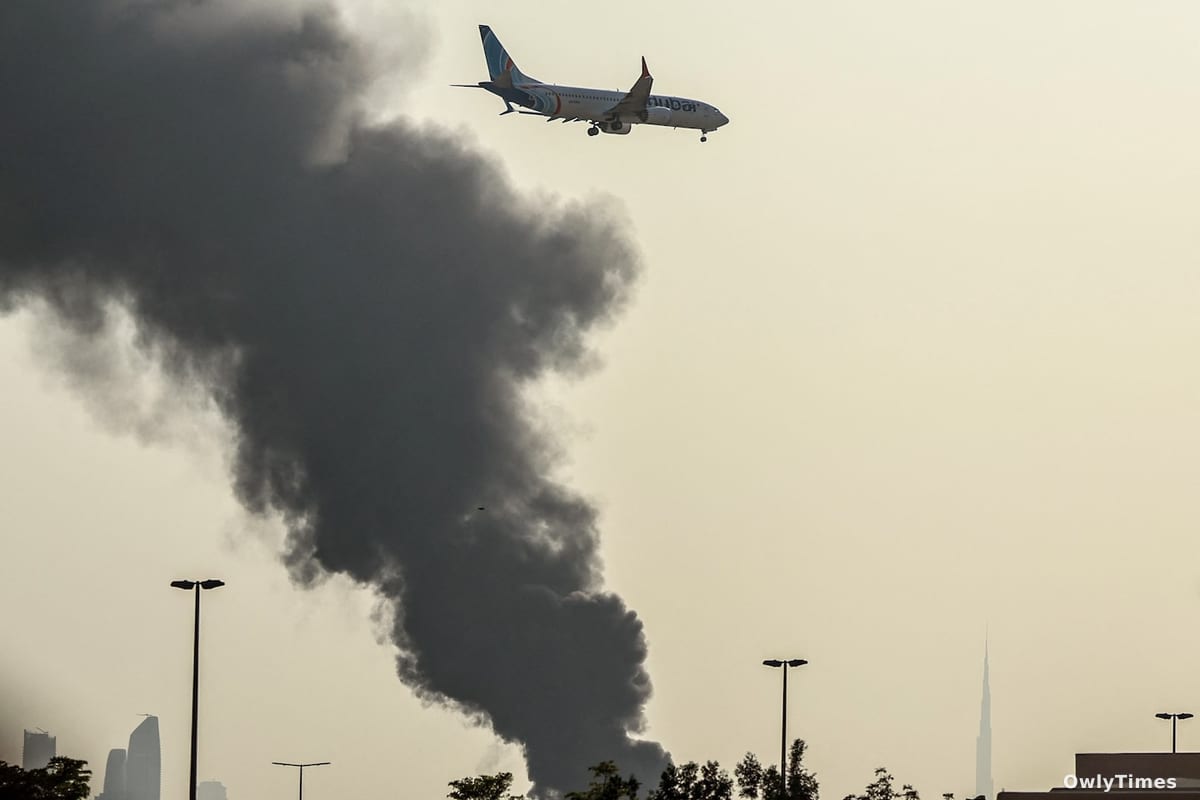
The image of a plane landing amidst smoke near Dubai International Airport on March 16th, as captured by the AFP/Getty Images photograph accompanying Kupchan’s analysis, is symbolic of a deeper vulnerability. Dubai, positioned as a regional hub for trade, finance, and tourism, is uniquely exposed to disruptions in regional stability. While the airport itself remained operational, the broader economic impact is substantial. Logistics companies are reporting a 20% increase in insurance premiums for shipments transiting the region, and tourism bookings have fallen by 35% according to data from STR, a hotel data analytics firm. This isn’t a temporary dip; it reflects a fundamental shift in risk perception. Dubai’s success has been predicated on its role as a safe haven within a volatile region – that perception is now demonstrably damaged.
What This Means for Your Wallet
The conflict in Iran isn’t just a geopolitical crisis; it’s a financial headwind. While US consumers will feel the pinch at the gas pump, the real consequences will be felt in emerging markets dependent on energy imports and foreign investment. The question investors should be asking isn’t if the conflict will end, but when and what the terms of any resolution will be. Specifically, watch for the trajectory of oil prices after a ceasefire is declared. A sustained price above $90 per barrel – a level not seen consistently since 2023 – will signal that the inflationary pressures are baked in, and that the era of cheap energy is definitively over. For consumers, this means bracing for higher prices across a range of goods and services, and for investors, it means reassessing portfolio allocations to account for increased geopolitical risk and the potential for continued volatility in the Middle East.