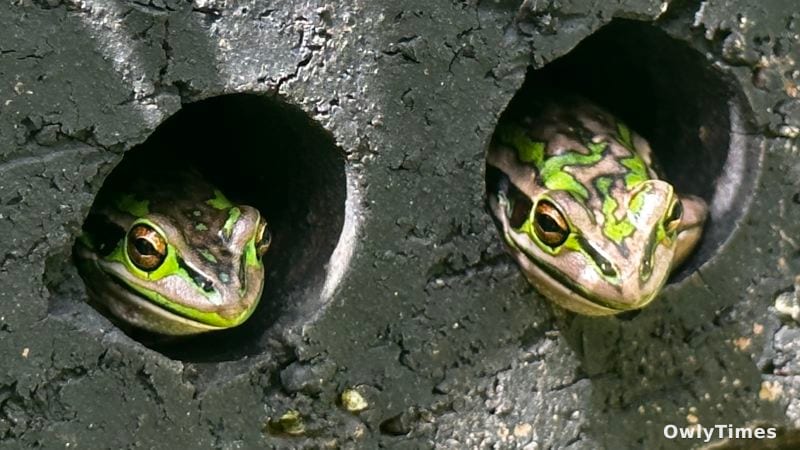

The urgency surrounding amphibian declines isn’t simply about losing a charismatic group of animals; it’s a stark warning about the fragility of ecosystems and the speed at which a single pathogen can unravel millennia of evolution. While headlines proclaim “frog saunas” as a novel solution to a devastating fungal disease, the story is far more nuanced. Anthony Waddle’s work at Macquarie University in Sydney, Australia, isn’t about building miniature spas for frogs, but about leveraging fundamental principles of disease ecology – specifically, temperature dependence – to buy these creatures time. The real breakthrough isn’t the bricks and greenhouse plastic, but the demonstration that targeted, temporary elevation of body temperature can clear infection and, crucially, build lasting immunity against the chytrid fungus decimating amphibian populations worldwide.
The crisis centers on Batrachochytrium dendrobatidis (Bd), a waterborne fungus that disrupts the skin function of amphibians, leading to cardiac arrest. Waddle’s research, published in Nature, builds on decades of work understanding Bd’s lifecycle. The fungus thrives in cooler temperatures, explaining why outbreaks coincide with colder seasons. His “saunas” – simple structures that raise frog body temperatures to around 30 degrees Celsius (86 Fahrenheit) – exploit this vulnerability. While many reports focus on the immediate clearing of infection, the study’s most compelling finding is that frogs cured by heat were 23 times more likely to survive reinfection. This isn’t a cure, but a method of priming the immune system, a critical distinction often lost in popular coverage.
Based on the original CNN report.
The plight of the green and golden bell frog in New South Wales exemplifies the scale of the problem. Once abundant, populations have plummeted to just 10% of their historical levels over the last three decades. However, framing this solely as a local Australian issue obscures the global reach of chytrid. Bree Rosenblum, an evolutionary biologist at the University of California, Berkeley, emphasizes that the fungus has been found on every amphibian-inhabiting continent, having likely spread through the wildlife trade and human movement. Her genetic work reveals that Bd isn’t a single entity, but a collection of lineages, complicating efforts to develop a universal solution. The disease is estimated to have driven around 90 species to extinction and pushed over 500 into decline globally, a figure that underscores the severity of the situation.
The “frog sauna” approach, while ingenious, isn’t a panacea. Waddle himself acknowledges its limitations. The method won’t work for all species; raising the body temperature of alpine-dwelling frogs, like Australia’s endangered corroboree frog, would be fatal. Scalability is another hurdle. Deploying these structures across a species’ entire range requires significant resources and community involvement. Furthermore, the focus on temperature as a solution risks overshadowing the importance of addressing underlying stressors like habitat loss and pollution, which weaken amphibian immune systems and make them more susceptible to infection. The success of the saunas also hinges on the frogs choosing to use them, relying on their natural attraction to warmth.
Beyond the immediate application of heat therapy, researchers are exploring more radical interventions. Jonah Piovia-Scott at Washington State University has demonstrated the effectiveness of antifungal baths using itraconazole, improving survival rates of vulnerable froglets by fourfold. However, he stresses this is a temporary measure, a “Band-Aid” solution. Simultaneously, Waddle is investigating the potential of synthetic biology – genetically engineering frogs to resist the fungus. This approach, while promising, is fraught with ethical and practical challenges, as highlighted by the IUCN’s recent policy on the subject. The question isn’t simply can we genetically modify frogs, but should we, and what unintended consequences might arise?
The long-term objective, shared by Rosenblum, Waddle, and Piovia-Scott, is to allow amphibians to evolve natural resistance to chytrid. This requires buying them time – through interventions like saunas and antifungal treatments – while simultaneously addressing the broader environmental pressures that exacerbate the crisis. The fact that some amphibian populations are already showing signs of recovery, not because the fungus has weakened, but because the frogs have adapted, offers a glimmer of hope. However, this adaptation requires a viable population to begin with. The critical question now is whether we can implement these interventions quickly enough, and on a large enough scale, to prevent further extinctions and allow the evolutionary process to run its course. Will we see a widespread adoption of these techniques, or will the silence of disappearing frogs become the defining sound of this era of extinction?





