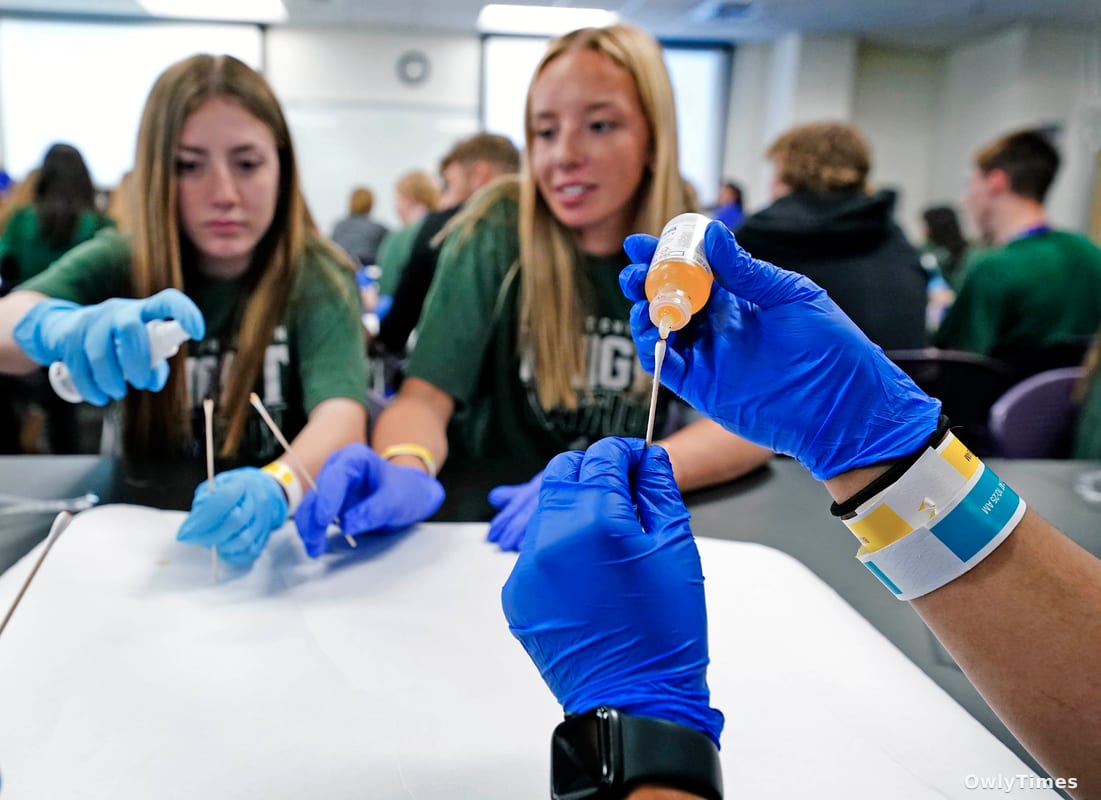

The persistent allure of crime scene investigation, fueled by decades of popular television, often overshadows the painstaking, probabilistic nature of forensic science. Grand Canyon University’s Forensic Science Day, which hosted approximately 2,600 high school and community college students on Thursday, isn’t simply about recreating dramatic scenes; it’s about exposing the next generation to the rigorous methodology underpinning the search for truth in the justice system. While headlines might focus on the “fun” of identifying synthetic blood or deciphering digital clues, the event’s true value lies in demystifying the scientific process and illustrating the crucial distinction between a possible lead and definitive proof.
The day’s activities, ranging from blood spatter analysis to cyber forensics and even a K-9 unit demonstration, offered a broad overview of the field. Ella Hodges, a GCU senior forensic science major, articulated the core appeal: “The most exciting thing here is just getting to see behind the scenes of what real forensic science processors do, things that are commonly completed in day-to-day activities.” Students, like those at South Point High School, engaged in hands-on exercises, such as the Kastle-Meyer reagent test, designed to detect the presence of blood. Graduate assistant Kaitlyn West explained the procedure – a color change to pink indicates a positive result – but crucially, the event also highlighted the potential for false positives. This isn’t a detail often emphasized in popular portrayals of forensic science. Substances as common as horseradish, potatoes, and even bleach can trigger the same reaction, demonstrating the need for confirmatory testing and careful interpretation.
Reporting from news.gcu.edu informs this analysis.
This emphasis on nuance is particularly important given the historical misapplications of forensic techniques. Alexis Cho, a GCU senior, presented a capstone project on bite mark analysis, a method increasingly scrutinized for its unreliability. Cho’s research underscored the distorting effects of skin elasticity and swelling, as well as the difficulty in differentiating between human and animal bite marks. She cited the case of Ray Krone, wrongly convicted and sentenced to death row based on flawed bite mark evidence before being exonerated by DNA testing. Krone’s case serves as a stark reminder that forensic science isn’t infallible, and that relying on a single piece of evidence, particularly one prone to subjective interpretation, can have devastating consequences. The inclusion of this historical context within the event is a deliberate effort to foster critical thinking among aspiring forensic scientists.
Beyond the biological sciences, the Cyber Center of Excellence showcased the growing importance of digital forensics. Students participated in “capture the flag” exercises, simulating investigations into cybercrimes and practicing open-source intelligence (OSINT) techniques. Hanz Murella, a student worker at the center, noted the enthusiasm of the participants, many of whom were encountering these concepts for the first time. This highlights a critical shift in the field: as our lives become increasingly digitized, the ability to recover and analyze digital evidence is becoming paramount. However, the rapid evolution of technology also presents challenges, requiring forensic specialists to constantly update their skills and adapt to new methods of data concealment and encryption.
The inclusion of presentations from professionals like Michael Beddow of the Phoenix Police Crime Lab further bridged the gap between academic study and real-world application. Beddow’s discussion of firearm examination, including the techniques used to recover deliberately obscured serial numbers, demonstrated the ingenuity and persistence required in modern forensic investigation. The fact that criminals attempt to erase serial numbers, believing it renders a firearm untraceable, underscores a fundamental misunderstanding of the science involved – a misconception Beddow directly addressed. This proactive debunking of common myths is a valuable component of the event.
Limitations to consider: Forensic Science Day, while impactful, is inherently a recruitment event for GCU’s forensic science programs. The presentations and activities are designed to showcase the university’s strengths, and may not fully represent the breadth and complexity of the field as practiced in diverse settings. Furthermore, the event’s focus on hands-on activities, while engaging, necessarily simplifies complex scientific principles. The synthetic blood analysis, for example, provides a basic understanding of presumptive testing but doesn’t delve into the intricacies of confirmatory tests or the challenges of analyzing degraded or contaminated samples.
Looking ahead, the next crucial research steps involve refining forensic techniques to minimize error rates and enhance reliability. Specifically, there’s a pressing need for standardized protocols for bite mark analysis, coupled with rigorous statistical validation of any conclusions drawn from such evidence. In digital forensics, research must focus on developing tools and methods to combat increasingly sophisticated cybercrimes and protect the privacy of individuals while ensuring the admissibility of digital evidence in court. Perhaps the most important question to watch for is how quickly forensic science education can adapt to the accelerating pace of technological change – will training programs be able to equip future investigators with the skills they need to stay ahead of emerging threats? The success of the next generation of forensic scientists will depend not only on their enthusiasm, as Hanz Murella observed, but also on their commitment to rigorous scientific methodology and a healthy skepticism towards even the most established techniques.





