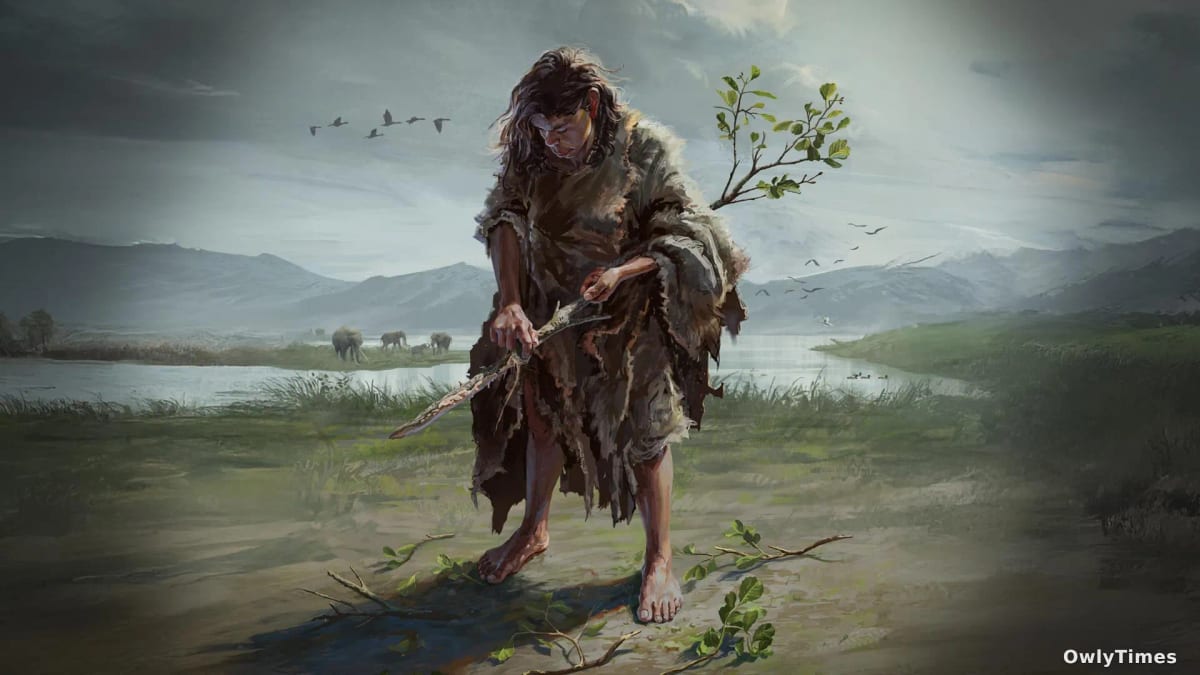

Why does the human species display such a stubborn, overwhelming preference for the right hand? While the phenomenon of left-handedness persists in roughly 10% of the population across every human culture and century, the dominance of right-handedness has long been an evolutionary riddle. Previous attempts to solve this mystery—often citing language, tool use, or even aggressive posturing—have struggled to account for why our species stands so far apart from our primate relatives.
According to the report from Popular Mechanics, researchers have finally moved beyond these traditional, often anecdotal explanations. Anthropologists Thomas A. Püschel and Rachel M. Hurwitz of Oxford University, alongside evolutionary biologist Chris Venditti of the University of Reading, utilized a new, statistically rigorous approach. By applying phylogenetic comparative methods to 41 different species of monkeys and apes, the team tested whether factors like diet, habitat, or social systems could explain why humans are such outliers.
The study, recently published in PLOS Biology, reveals that while popular narratives often link handedness to complex behaviors like tool-making or social interaction, those traits fail to predict hand preference across the primate order. The data shows that while chimps, gorillas, and red-tailed monkeys exhibit weak to moderate right-hand biases, and some species like orangutans lean left, none reach the extreme, consistent right-handedness seen in humans. The study highlights that humans only truly deviate from the primate pattern when we look at two specific, interlinked evolutionary shifts: the adoption of bipedalism and the expansion of the human brain.
There are significant limitations to consider when interpreting these results. While the researchers modeled the evolutionary relationships between 41 species, their findings represent an inference of ancestral traits rather than direct observation of early hominins. Furthermore, while the study points to a strong correlation between bipedalism and hand-use, it remains a challenge to fully disentangle how much of this handedness is a hard-wired genetic outcome versus a developmental response to environmental pressures. As the researchers themselves noted, their work provides a better identification of drivers for variation, yet it does not entirely resolve the question of why the 10% minority of left-handers remains such a consistent feature of our biological landscape.
What the study actually found, in contrast to older theories that focused on isolated traits, is that our "right-handed exceptionalism" is a byproduct of a specific evolutionary trajectory. The authors argue that walking upright—bipedalism—freed the hands, which intensified the selective pressure for a stronger, more reliable hand preference. Meanwhile, the subsequent tripling of brain size in our ancestors likely solidified the directionality of that preference. The team suggests that while early ancestors like Australopithecus and Ardipithecus likely possessed only a slight right-hand preference, the bias became significantly more pronounced as Homo erectus and Neanderthals emerged.
Moving forward, the next step for this field will involve refining the modeling of brain-size evolution in relation to specific manual tasks. Because the researchers identified that our unusual gait was the primary driver of handedness strength, and brain complexity was more closely linked to directionality, future research will likely focus on the timing of these two events in the fossil record. The next reading of phylogenetic data in relation to cranial capacity will be critical in determining whether this model holds up as we continue to map the complex history of human development.