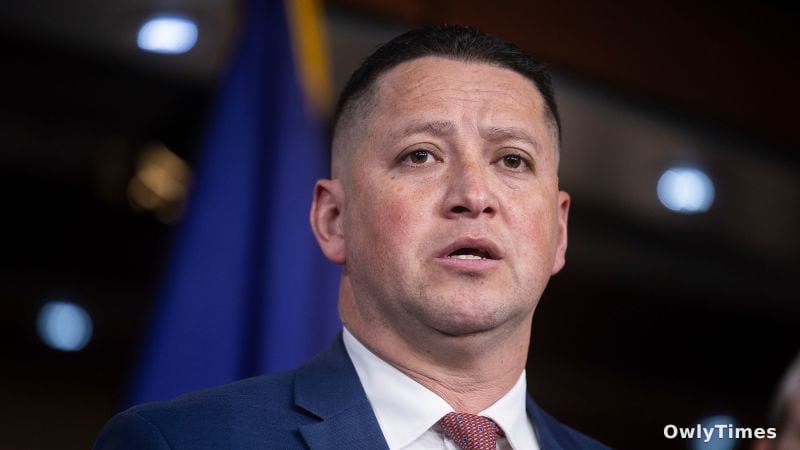

The Calculus of Containment: Johnson Navigates a Republican Fracture
Mike Johnson’s decision to publicly defer to ongoing investigations regarding Tony Gonzales isn’t a matter of procedural fairness, but a cold calculation of power. The Speaker is walking a tightrope, attempting to contain a scandal that threatens to further erode his already razor-thin majority while simultaneously avoiding a precedent that could invite challenges to other members – and, crucially, to himself. The strategic imperative isn’t about defending Gonzales’s character, but preserving the functionality of a House Republican caucus perpetually on the brink of implosion. Johnson’s insistence on letting “the system play out” is a delaying tactic, buying time to manage a crisis that exposes deep fissures within the party.
See the original CNN story for the full account.
The immediate stakes are clear: the March 3rd Texas primary. Gonzales faces a formidable challenge from Brandon Herrera, a YouTube personality capitalizing on the scandal and the existing discontent with the incumbent. Calls for Gonzales’s resignation from figures like Lauren Boebert and Nancy Mace aren’t driven by moral outrage, but by opportunistic positioning. Boebert, herself no stranger to controversy, is signaling alignment with the more conservative base, while Mace is likely gauging the political temperature for future moves. The fact that top House Republicans are “closely tracking” the allegations, yet hesitant to demand resignation, underscores the fragility of their position. Losing Gonzales would shrink an already precarious majority – currently operating with only a one-vote margin, compounded by multiple vacancies – to a point of near-paralysis.
This situation echoes historical precedents where party leadership prioritized stability over ideological purity. Consider the handling of scandals involving members during the Clinton impeachment era. While Democrats vocally condemned the impeachment proceedings, they were equally focused on preventing a full-scale collapse of the House’s ability to govern. The parallel isn’t about the nature of the accusations, but the political calculus: a functioning, albeit fractured, majority is preferable to chaos. Johnson’s invocation of the George Santos case – his opposition to Santos’s expulsion before a conviction – reinforces this point. He’s establishing a principle, however selectively applied, that due process should precede punitive action, even when public pressure is intense.
Who benefits and who loses in this scenario? Gonzales buys time, though his political future remains deeply uncertain. Brandon Herrera gains momentum, fueled by the scandal and the perceived weakness of the incumbent. Mike Johnson attempts to maintain control, but risks appearing complicit if the allegations against Gonzales are substantiated. The biggest losers are arguably the House Republicans as a whole, whose internal divisions are laid bare for public consumption. The allegations themselves – including text messages reportedly showing lewd exchanges with the staffer who later died by suicide – are devastating, regardless of legal outcomes. The narrative of a compromised member, even if unproven, is a potent weapon for opponents. The fact that Adrian Aviles, the staffer’s husband, alleges his wife confessed to the affair in June 2024, months before her death, adds another layer of complexity and potential legal ramifications.
Beyond Texas, the situation in Florida with Neal Dunn’s potential early retirement adds another layer of anxiety for Johnson. The prospect of losing another seat, coupled with ongoing special elections, highlights the precariousness of the Republican hold on the House. The Speaker’s claim of “intellectual consistency” rings hollow when viewed against the backdrop of selective outrage and strategic maneuvering. The reality is that Johnson is navigating a minefield, attempting to appease multiple factions while safeguarding his own position. The Office of Congressional Conduct investigation, and the ongoing Texas investigation, are not simply about determining facts; they are about providing Johnson with political cover.
The political chess move to watch next isn’t whether Gonzales resigns, but whether Brandon Herrera can successfully weaponize the scandal to attract significant fundraising and mobilize conservative voters. If Herrera demonstrates the capacity to mount a serious challenge, Johnson may be forced to abandon Gonzales, not out of moral conviction, but out of a pragmatic assessment of the electoral landscape. The question is not if the House Republican majority will be further tested, but when and how it will fracture.





