
$35 Buys a Seat at the Table as North Carolina Businesses Confront Global Volatility
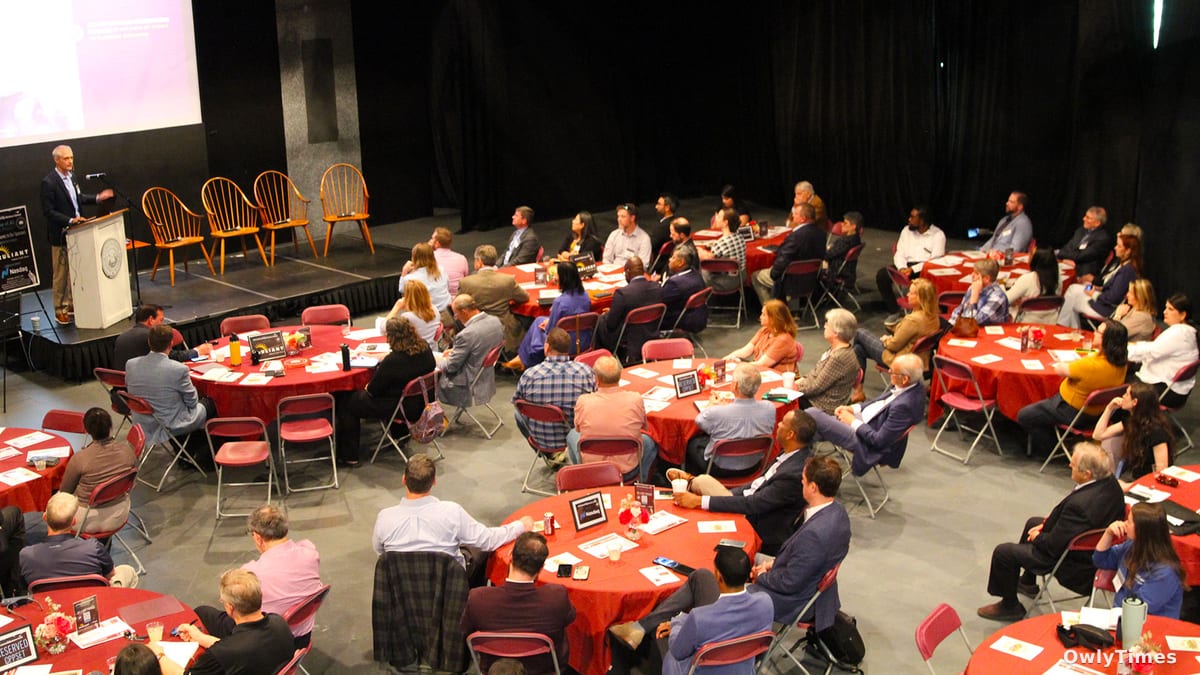
A $35 ticket – the cost of a single admission to the Guilford College Business Summit on March 27 – represents a concentrated effort by North Carolina’s business and academic leaders to quantify and address a growing economic anxiety. While seemingly modest, this price point signals a deliberate attempt to democratize access to a conversation typically reserved for C-suite executives and high-level investors, as organizations across the state grapple with “Managing Uncertainty in a Global Economy.” Follow the money: the event’s sponsorship structure, ranging from the presenting sponsorship by Hugh Normile’s foundation to support from the National Science Foundation, reveals a multi-faceted investment in understanding and mitigating risk.
See the original guilford.edu story for the full account.
The Shifting Definition of “Uncertainty” Across Sectors
The summit’s core premise, articulated by Shaun Howard ’13, MBA ’23, World Wide Category Operations & Planning Manager at Lenovo, is that uncertainty isn’t a monolithic threat. “The definition of uncertainty varies by industry,” Howard states, a point underscored by the diverse panel assembled for the event. This isn’t a generalized hand-wringing session; it’s a targeted attempt to dissect how geopolitical factors, economic headwinds, financial market volatility, and localized community challenges are manifesting differently for manufacturers like Unifi Manufacturing (Brian D. Moore, Executive Vice President & President) and textile producers like Cone Denim LLC (Daren Barnes, Strategic Procurement Manager) versus emerging technology companies like Volvo Energy North America (Anna Axelsson, VP, Head of Battery Industrialization & Logistics). Consider the battery industry, for example: while demand is surging, supply chain disruptions and raw material price fluctuations present a unique set of uncertainties not necessarily shared by a traditional textile manufacturer.
Greensboro’s New Leadership Steps Into a Complex Landscape
The inclusion of Greensboro Mayor Marikay Abuzuaiter, who assumed office in December, is particularly noteworthy. Her welcoming address isn’t merely ceremonial. Greensboro, a city historically reliant on manufacturing and increasingly focused on attracting tech investment, is uniquely positioned at the intersection of these competing economic forces. The city’s economic development strategy will be directly impacted by how businesses navigate these uncertainties. Abuzuaiter’s presence signals a commitment to proactive engagement with the private sector, but also highlights the pressure on local government to create a stable environment for investment amidst global instability. This is a departure from previous administrations, and the market will be watching closely to see how her policies translate into tangible support for local businesses.
Guilford College’s Role as a Hub for Applied Economic Thought
Guilford College’s consistent hosting of this Business Summit – now in its multi-year run – isn’t accidental. The college, under President Jean Bordewich, is actively positioning itself as a thought leader in applied economics, leveraging its Business Advisory Council and the Center for Principled Problem Solving. This isn’t simply about academic prestige; it’s a strategic move to attract students and funding by demonstrating relevance to the regional economy. The college’s partnership with GTCC President Anthony Clarke further emphasizes this commitment to workforce development and bridging the gap between higher education and industry needs. The $35 ticket price, coupled with the NSF’s EPIIC-SPARK initiative support, suggests a deliberate effort to broaden participation beyond traditional corporate sponsors.
What This Means for Your Wallet
The Guilford College Business Summit isn’t a direct predictor of stock prices or interest rates. However, the conversations happening in the Carnegie Room on March 27 will directly influence investment decisions, hiring practices, and ultimately, the prices you pay for goods and services. The key takeaway for consumers and investors is this: the level of uncertainty discussed at the summit will likely translate into continued price volatility and cautious business expansion in the coming months. Watch for companies represented at the summit – Lenovo, Unifi, Volvo, Cone Denim – to publicly articulate their strategies for navigating these challenges in their next quarterly earnings reports. Specifically, are they prioritizing cost-cutting measures, diversifying supply chains, or investing in automation? The answers to those questions will be a leading indicator of the broader economic landscape.