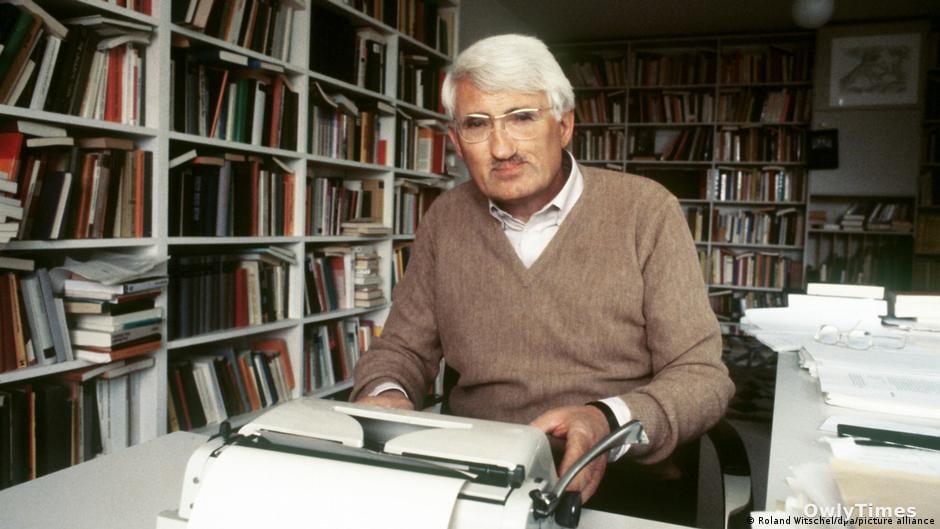

Is the internet, for all its talk of connection, actively dismantling the very foundations of rational discourse that Jürgen Habermas spent a lifetime building? The news of his death at 96 feels less like the passing of a philosopher and more like a warning siren for a world increasingly allergic to nuance. Habermas, who died on March 14, 2026, wasn’t just an academic; he was a cultural architect, arguing that genuine democracy isn’t about voting, it’s about talking – reasoned, empathetic, and publicly accessible conversation. The real story here isn’t the loss of a brilliant mind – it’s the erosion of the “public sphere” he so meticulously theorized, replaced by algorithmic echo chambers and outrage-fueled platforms.
From Post-War Germany to the Digital Agora
Habermas’s life was inextricably linked to the failures of communication. Born in 1929, he came of age under the shadow of Nazism, witnessing firsthand how propaganda and suppressed debate could pave the way for unimaginable horrors. This experience fueled his lifelong commitment to a “communicative rationality,” a belief that truth emerges not from power or coercion, but from open, unforced agreement. His seminal work, The Structural Transformation of the Public Sphere (1962), wasn’t a nostalgic longing for some idealized past, but a diagnosis of how the spaces for genuine public debate – coffee houses, salons, newspapers – were being eroded by commercial interests and state control. He wasn’t predicting the internet, but he was certainly anticipating the forces that would threaten a truly informed citizenry.
This piece references the dw.com report.
He continued to challenge authority throughout his life, supporting democratic protest and offering sharp critiques of German reunification, arguing it prioritized economic expediency over social justice. His later work increasingly focused on the dangers of rising right-wing politics and the resurgence of nationalism, themes that feel tragically prescient today. It’s easy to dismiss these critiques as the concerns of an ivory tower intellectual, but Habermas consistently grounded his philosophy in the concrete realities of political life. He understood that ideas don’t exist in a vacuum; they shape, and are shaped by, the world around us.
The Public Sphere Under Siege
What would Habermas make of Twitter, now X, or TikTok? Probably not much. He envisioned a public sphere built on reasoned argument, informed by facts, and accessible to all. Instead, we have platforms optimized for virality, where emotional appeals trump evidence, and algorithms prioritize engagement over truth. The sheer scale of online communication is part of the problem. In 1962, a newspaper editor had a gatekeeping function, a responsibility to verify information and present diverse perspectives. Today, anyone with an internet connection can broadcast to millions, regardless of their credibility or intentions. The result is a cacophony of voices, drowning out reasoned debate and fostering polarization. Consider that in 2024, a MIT study found that false news stories spread six times faster on social media than factual ones – a statistic that would have undoubtedly horrified Habermas.
This isn’t simply a matter of “bad actors” or misinformation campaigns. The very architecture of these platforms incentivizes conflict. Outrage generates clicks, clicks generate revenue, and revenue dictates design. The “public sphere” isn’t being eroded by deliberate malice, but by the relentless logic of capitalism. This is where the disconnect lies: Silicon Valley talks about “connecting the world,” but it’s actually building machines that are exceptionally good at dividing it. The focus on personalization, while seemingly benign, creates filter bubbles that reinforce existing beliefs and shield users from dissenting viewpoints.
Beyond Critique: A Call for Digital Literacy
Habermas wasn’t a Luddite. He understood the potential of technology to expand access to information and facilitate communication. But he also recognized that technology is never neutral. It embodies values, reflects power structures, and shapes human behavior. His work, therefore, isn’t just a critique of the digital age, it’s a call for digital literacy – a critical awareness of how these technologies operate and how they influence our thinking. We need to move beyond simply consuming information online and start actively questioning its source, its context, and its underlying assumptions.
The challenge isn’t to abandon the internet, but to reclaim the public sphere within it. This requires a fundamental shift in how we design and regulate these platforms, prioritizing reasoned debate over viral engagement. It also requires a renewed commitment to civic education, teaching citizens how to navigate the digital landscape with critical thinking skills. The German government, in 2025, allocated €50 million to digital literacy programs in schools – a small step, but a significant acknowledgement of the problem.
Looking ahead, I predict that the next major battleground in the culture wars won’t be about political ideology, but about the control of algorithms. Watch for increasing pressure on tech companies to reveal how their algorithms work and to demonstrate that they aren’t actively promoting misinformation or polarization. The question isn’t whether we can restore the “public sphere” Habermas envisioned, but whether we can prevent the digital world from becoming a permanent obstacle to rational discourse.





