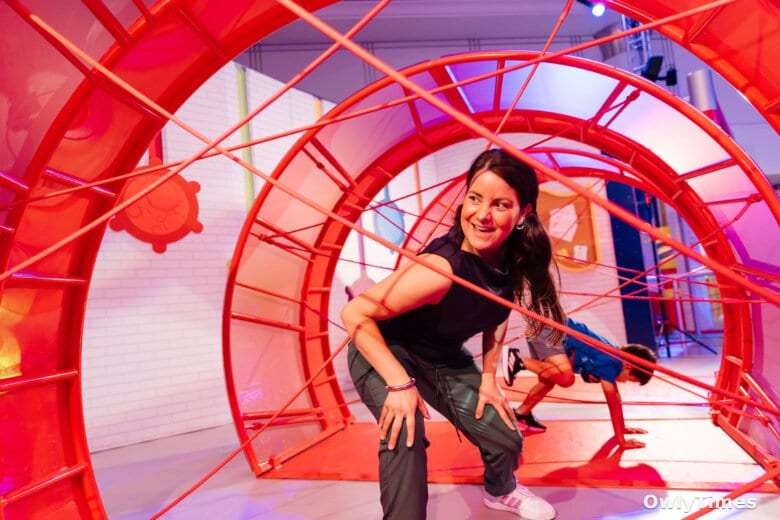

The scent of chocolate hangs heavy in the air, even before you reach the entrance. Not from a bakery, or a chocolatier, but from a 21,000-square-foot immersive experience dedicated entirely to the world of Hershey’s. On March 6th, the former Pottery Barn at Tysons Corner Center will officially become the Hershey Super Sweet Adventure, a candy-themed playland complete with a Twizzlers maze and cannons launching balls into Reese’s Peanut Butter Cup-shaped holes. But this isn’t just about satisfying a sweet tooth; it’s a stark illustration of a retail landscape undergoing a seismic shift, a desperate bid to redefine the purpose of the American shopping mall.
For decades, malls were the heart of American social life, a predictable ecosystem of anchor stores and smaller retailers. Now, they’re facing an existential crisis. The rise of online shopping, accelerated by the COVID-19 pandemic, gutted foot traffic and left gaping vacancies. But the story isn’t simply one of decline. It’s a story of reinvention, of recognizing that people aren’t going to malls to shop anymore – they’re going for experiences. As Jie Zhang, a retail and marketing professor at the University of Maryland’s Robert H. Smith School of Business, explains, “Nationwide, we’re seeing a variety of entertainment establishments now setting up shops in shopping malls, using the spaces that have been vacated by traditional retailers.” The numbers bear this out: malls adding entertainment and dining options are seeing significant rebounds in foot traffic, a lifeline thrown to a struggling industry.
This piece references the wtop.com report.
Tysons Corner Center, owned by Macerich, isn’t alone in this transformation. Alongside Hershey’s sugary wonderland, the mall is also welcoming the Sloomoo Institute, a slime-centric attraction where visitors can literally immerse themselves in gooey, colorful fun. Potomac Mills, a Simon Malls property, is doubling down with indoor pickleball courts, waterless slides, and an air-soft shooting range. Even sporting goods retailers are getting in on the act, with DICK’S Sporting Goods launching “House of Sport” mega stores featuring climbing walls and batting cages. These aren’t add-ons; they’re fundamental shifts in strategy. The old 70/30 retail-to-nonretail space allocation is being flipped, with experts now advocating for closer to a 50/50 split.
Beyond the headlines of slime and pickleball, a deeper cultural current is at play. We’re living in an “experience economy,” where consumers prioritize memories and personal enrichment over material possessions. This isn’t a new phenomenon, but it’s been amplified by social media, where sharing unique experiences is currency. Kelly Easterling, senior vice president at Original X Productions (the company behind Hershey Super Sweet Adventure and immersive experiences like the Friends and The Office exhibits), frames it as a desire for connection: “We’re really inviting families to come in and explore together and have an adventure together, create memories and trigger those imaginations.” This speaks to a broader societal yearning for shared experiences, for a break from the isolating effects of digital life.
The success of these ventures isn’t solely about attracting local families. Karen Robinovitz, co-founder and CEO of Sloomoo, estimates that 50% of their audience are tourists, injecting valuable revenue into the local economy. This highlights a crucial point: malls are attempting to reposition themselves as destinations, not just convenient shopping stops. They’re competing with theme parks, museums, and other leisure activities for a share of the consumer’s time and wallet. The closure of retailers like andThat! and Buy Buy Baby, making way for Slick City Action Park at Potomac Mills, isn’t a sign of failure, but a calculated move towards a more sustainable future.
Jie Zhang remains optimistic, predicting that many malls will successfully transform over the next 10 to 20 years, evolving from shopping centers to activity hubs. But the question remains: will this be enough? Can the nostalgic pull of the mall be resurrected through a combination of slime, pickleball, and chocolate? And, crucially, will these experiences be enough to justify the massive investment required for these transformations, or are we witnessing a last-ditch effort to save a dying breed? The fate of the American mall, and the future of retail itself, may well depend on the answer.