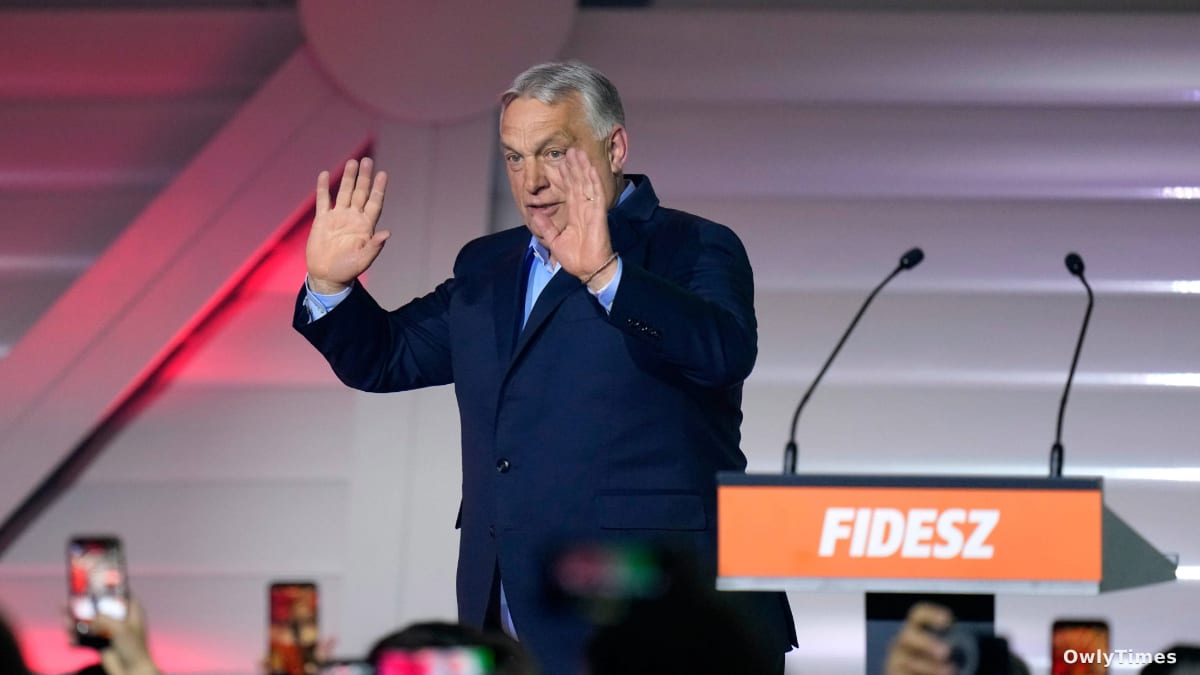

The strategic calculus of political survival often relies on the assumption that a state-controlled information apparatus acts as a gravitational force, pulling the electorate toward a desired outcome regardless of objective reality. In the case of Hungary’s April 2026 parliamentary election, the incumbent Fidesz party, led by Prime Minister Viktor Orbán, operated under this exact premise. By deploying a vast, state-backed disinformation machine, the administration attempted to secure a victory through manufactured fear, specifically regarding non-existent military conscription policies. However, the resounding victory of newcomer Péter Magyar and his party, Tisza, reveals a critical shift in the power dynamics of modern electorates: the diminishing returns of state-sponsored propaganda when it fails to address the material concerns of the citizenry.
The Limits of State-Sponsored Narrative Control
The primary beneficiary of the old order was Fidesz, which leveraged dozens of government-controlled outlets and aligned influencers to amplify claims that their opposition intended to send young Hungarians to fight in Ukraine. Conversely, the losers in this tactical gamble were the architects of that very disinformation, whose reliance on manipulative videos and alarmist rhetoric ultimately failed to insulate the party from the consequences of a shifting political mood. When the state treats disinformation as a primary campaign tool rather than a supplementary tactic, it risks alienating voters who, after four years of war, prioritize the stability of the health care system and the economy over high-stakes, securitized fear-mongering.
Questioning the Efficacy of External Interference
The narrative of all-powerful foreign interference also faced a reality check during the 2026 cycle. While international observers often fixate on the "hybrid warfare" capabilities of Russian-linked groups, the evidence from the ground suggests a different story. Campaigns attributed to the Storm-1516 group—such as the attempt to link Tisza vice-president Ágnes Forsthoffer to the Jeffrey Epstein circle via forged emails—proved largely impotent. These operations reached a maximum of 100,000 users, a negligible figure that highlights a contradiction in current policy thinking: by exaggerating the reach of external actors, stakeholders risk lending credibility to fringe efforts that are, in reality, far less effective than domestic propaganda networks.
AI as an Emotional Tool Rather Than a Deceptive One
The integration of generative AI into the campaign landscape further complicates the relationship between technology and voter behavior. Both Fidesz and opposition entities utilized AI to produce highly emotional content, such as the widely circulated video of a Hungarian soldier on the front lines. While critics often conflate AI-generated content with simple deception, the campaign suggests that these tools are more frequently used to illustrate political messages designed to trigger visceral, long-lasting emotional responses rather than to trick viewers into believing a falsehood is literal truth. This distinction is vital for future regulation, as it moves the focus away from the medium of the message and toward the intent of the manipulator.
The Unintended Consequences of Ad Bans
A significant pivot in the digital landscape occurred in October 2025, when Meta and Google implemented a ban on political advertising in Europe. Conventional wisdom predicted that this move would empower extremist content and disinformation by stripping away the ability of nuanced campaigns to compete for attention. Yet, the Hungarian election produced the opposite result. With the "carpet bombing" of pro-government ads removed from platforms like YouTube, the playing field leveled, allowing Tisza to generate more organic engagement than the traditionally well-funded Fidesz. This outcome suggests that when the digital noise floor is lowered, the supposed inevitability of disinformation winning the attention race is stripped away. The next reading of online engagement metrics for emerging political movements will show whether this shift toward organic reach represents a permanent realignment of the European information ecosystem.





