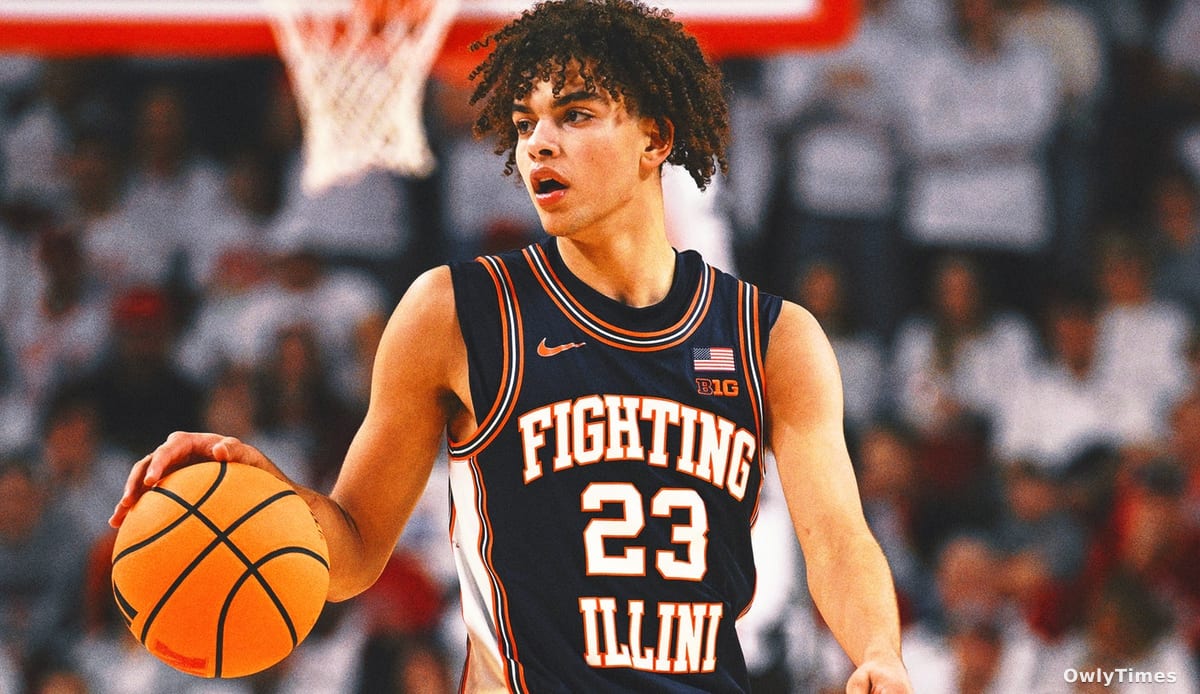

The fluorescent lights of the State Farm Center in Champaign, Illinois, will be glaring Friday night, not just on the court where the #7 Illinois Fighting Illini host the #6 Michigan Wolverines, but on a larger narrative unfolding within college basketball. It’s a game with championship implications, a potential Final Four preview, and, crucially, a stark illustration of how the numbers don’t always tell the whole story. While sportsbooks have Michigan as a 2-point favorite – with a hefty total of 157.5 hinting at a high-scoring affair – the real drama lies in the overlooked resilience of the Illini and the precarious nature of relying solely on metrics in a sport built on momentum and, sometimes, sheer luck.
The Illusion of Control in College Basketball Betting
The rise of advanced analytics in sports has been relentless, and college basketball is no exception. KenPom, a widely respected statistical ranking system, currently places Illinois as the nation’s top offense. That’s a powerful data point, and one that’s driving some analysts to predict a shootout. But focusing solely on offensive efficiency obscures a crucial detail: Illinois has been unlucky. Three of their February losses came in overtime, games decided by the thinnest of margins. These weren’t blowouts; they were coin flips that landed tails. To suggest, as some do, that Illinois’ record doesn’t reflect their true potential is not simply a hot take, it’s a recognition that randomness plays a significant role, especially in a conference as brutal as the Big Ten.
Original reporting: foxsports.com.
This isn’t just about one game. It’s about a broader trend in sports betting where public perception, fueled by easily digestible statistics, often lags behind the reality on the ground. The market, in this case, seems to be heavily weighting Michigan’s overall strength and overlooking the fact that Illinois, despite those agonizing overtime defeats, is a team capable of dictating the pace and exploiting defensive weaknesses. The Wolverines, meanwhile, are chasing an outright Big Ten title and attempting to break a nine-game losing streak against their rivals, adding layers of psychological pressure that statistics can’t quantify.
Free Throws and Forgotten Streaks
Beyond the KenPom rankings and the point spread, a more granular detail could swing this game: free throw shooting. Illinois boasts an impressive 79.8% accuracy from the line, ranking 20th nationally. Michigan, comparatively, struggles at 72.5%, landing them at 152nd. In a game projected to be close – and the 2-point spread suggests it will be – those missed free throws could be the difference between a championship-clinching win for Michigan and a crucial momentum boost for Illinois heading into the NCAA Tournament. This isn’t a novel observation; astute bettors are always looking for these subtle advantages. But it highlights a critical point: the margins in elite college basketball are razor-thin, and seemingly minor discrepancies can have outsized impacts.
The Illini’s offensive versatility is another key factor. Five players on Brad Underwood’s roster have attempted over 100 three-pointers this season, demonstrating a well-rounded attack that forces defenses to stretch and rotate. This spacing is designed to pull Michigan’s formidable big men away from the basket, disrupting their interior dominance. It’s a strategic counter to Michigan’s strengths, and a testament to Underwood’s coaching acumen. FOX Sports’ analysis correctly identifies this as a favorable matchup for Illinois, recognizing that their offensive style is specifically designed to challenge the Wolverines’ defensive scheme.
What This Means for the Future of College Basketball Coverage
The narrative surrounding this game – and college basketball in general – is shifting. We’re moving beyond simple win-loss records and towards a more nuanced understanding of underlying performance metrics and situational factors. But the danger lies in becoming too reliant on the numbers, losing sight of the human element – the pressure, the fatigue, the sheer unpredictability of a live sporting event. The fact that Illinois is undervalued, despite being the nation’s top offense and possessing a clear advantage in free throw shooting, speaks to a broader issue: the market often reacts slowly to changing information and is susceptible to recency bias.
This game isn’t just about bragging rights or tournament seeding. It’s a test case for how we evaluate college basketball teams in the age of advanced analytics. Will the market continue to prioritize overall rankings over situational advantages? Will bettors recognize the value in teams that have been unlucky but are fundamentally sound? The outcome on Friday night will offer a valuable lesson, not just for those with money on the line, but for anyone interested in the evolving landscape of college basketball coverage. The question isn’t simply who will win, but why they win, and whether the story the numbers tell aligns with the reality unfolding on the court.

