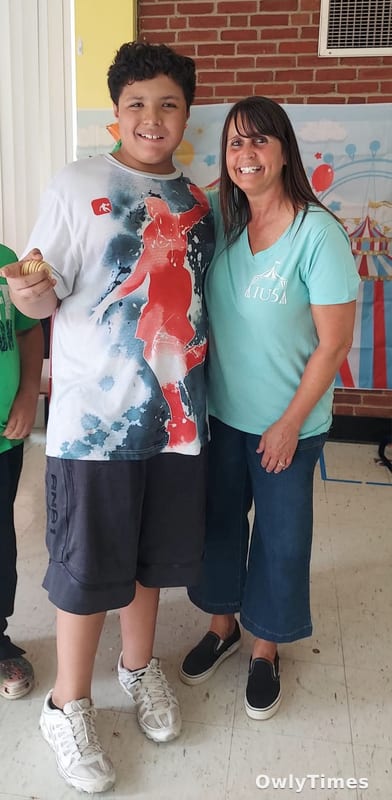

The intersection of early childhood intervention and long-term academic achievement is rarely as vividly illustrated as in the current trajectory of Isaiah Keys, a freshman at Warren High School. While national conversations often focus on standardized testing or curriculum reform, the more profound scientific question concerns how early developmental support systems—specifically those targeting neurological and physical hurdles—can pivot a child’s future. Keys, currently participating in an online education contest, represents a compelling case study in the efficacy of sustained developmental support.
Navigating Early Developmental Hurdles
Keys’ journey began with significant medical challenges, including a diagnosis of level 3 autism, as well as being born with club foot and torticollis. By the age of one month, he underwent his first surgery, followed by additional procedures at age 4. During his earliest years, Keys faced a lack of verbal communication until age 5 and struggled with focus. However, his mother, Stacy Butterfield, and his former teacher, Alice Fadale, observed an extraordinary capacity for information retention during this period. The intervention provided by the IU5 Early Intervention program served as the foundational structure that allowed Keys to transition from early non-verbal behaviors to the honor-roll status he holds today.
Beyond Initial Prognoses
The current media focus on Keys centers on his potential to win the "America’s Favorite Student" contest, which carries a prize of $20,000 for educational investment, an appearance in Reader’s Digest, and a trip to The Planetary Society in California to meet Bill Nye The Science Guy. While headlines naturally gravitate toward the competitive nature of the contest and the allure of meeting a celebrity educator, the underlying reality is a narrative of neuroplasticity and the success of targeted pedagogical adaptation. Fadale notes that once educators moved beyond traditional expectations and began offering activities specifically designed to engage Keys’ higher-level functioning, his behavioral outcomes shifted significantly. This transition underscores a critical principle in developmental science: standardized expectations can sometimes obscure a child’s true cognitive potential if the delivery method of education is not aligned with their specific neurological profile.
Limitations to Consider
It is vital to maintain perspective on the scope of such successes. While Keys’ story is an inspiring example of how early support can mitigate the limitations associated with level 3 autism and early physical trauma, it is not a universal blueprint. The "village" approach cited by Butterfield—involving teachers like Dena Pearson and Jillian Johnson, who helped channel his energy—reflects a high level of community and institutional commitment that is not always equally distributed across all school districts. The challenge for researchers remains determining which specific components of these diverse interventions are the most replicable for students lacking similar support networks.
The Path Through Competition
The competitive nature of this contest provides a measurable, if limited, indicator of public engagement with Keys' story. As of the current standings, Keys is ranked second in the quarterfinals. The upcoming schedule for this process will serve as a bellwether for his advancement: the quarterfinal round concludes on May 7, with semifinals running from May 8 through May 14, and the final round beginning on May 15. The progression through these dates will reveal the community’s sustained investment in his candidacy, offering a tangible metric of support for a student whose academic path has already defied initial developmental predictions.