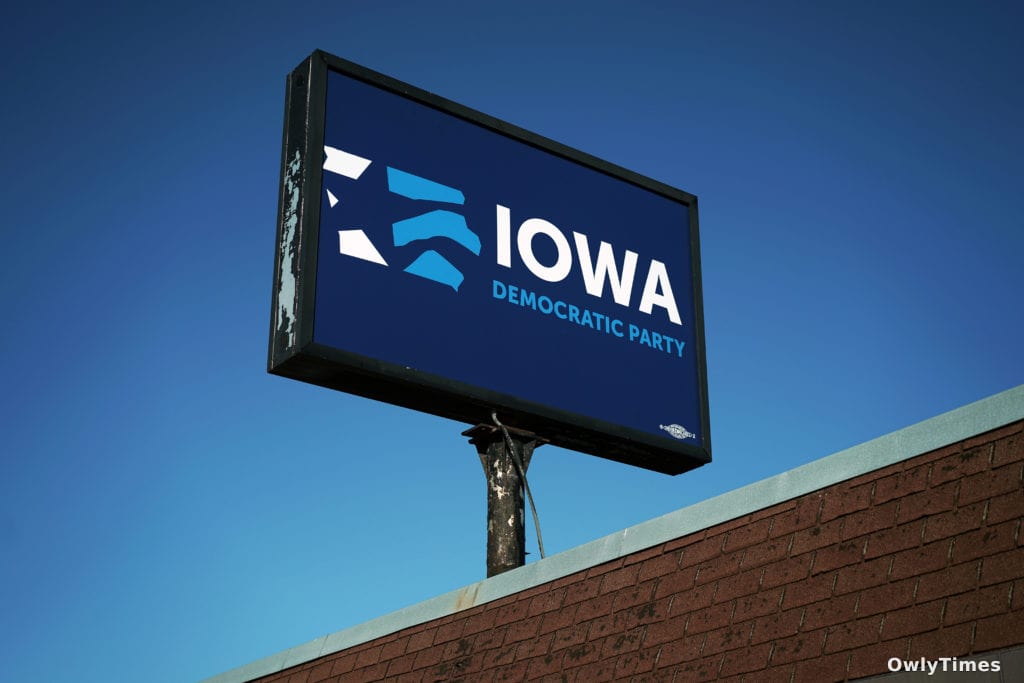

The strategic calculus governing Iowa’s political landscape is shifting from a narrative of Republican inevitability to one of calculated vulnerability. While Donald Trump secured double-digit victories in the state during his previous presidential bids, the Democratic Party is betting that the cumulative weight of local economic strain and dissatisfaction with national leadership has created a reopening in a state long considered lost. By pivoting away from purely anti-Trump rhetoric and leaning into a populist economic framework, Democrats are attempting to re-engineer their appeal to the rural and small-town demographics that abandoned them for the former president’s brand of disruption.
The Infrastructure of a Comeback
The scale of the Democratic effort is perhaps the clearest indicator that the party views Iowa as a viable investment rather than a symbolic gesture. The state party, led by chair Rita Hart, plans to deploy 60 field organizers by June—a nearly twofold increase compared to the midterm elections during Trump’s first term. This ground game, bolstered by an additional 24 staffers focused on a coordinated campaign for governor and congressional seats, signals a transition from defensive posturing to active electoral competition.
Who benefits from this surge? Candidates like state auditor Rob Sand, who is running for governor, stand to gain the most from this organizational muscle. Sand enters the cycle with a significant war chest, ending last year with $13 million in his campaign account. His strategy—emphasizing his rural roots, Christian faith, and bowhunting, alongside a platform that includes term limits and a ban on congressional stock trading—is designed to decouple local candidates from the national party’s brand. By framing the current political system as one that favors incumbents over problem-solvers, Sand is testing whether an anti-establishment message can succeed when delivered by a Democrat.
The Economic Friction Point
The tension between the two parties centers on the tangible cost of living. Democrats are banking on a populist message that highlights the squeeze on farmers facing high prices for diesel and fertilizer, alongside the ripple effects of plant closures and disappearing healthcare infrastructure in rural areas. Candidates like Josh Turek and Zach Wahls, both seeking the Democratic nomination for U.S. Senate in the June 2 primary, are explicitly distancing themselves from the national party’s perceived coastal leanings. Turek, styling himself as a "prairie populist," and Wahls, who carries the endorsement of several labor unions, are arguing that the political class has failed working-class voters.
Conversely, Republicans maintain that these efforts are a performative "political born-again experience" that ignores the fundamental ideological divide. Jeff Kaufmann, chairman of the Republican Party of Iowa, argues that the party’s long-term trust in Trump’s protectionist tariff policies and his aggressive stance on the war with Iran remains the primary driver of voter loyalty. For Republicans, the state’s current status—where all six members of the federal delegation are Republican—is a reflection of deep-seated values that a single campaign cycle cannot easily erase.
The Indicators to Watch
The urgency of the Republican response suggests that the "red" status of the state is being stress-tested. The White House has dispatched Vice President JD Vance to visit on Tuesday to support Rep. Zach Nunn, whose district covers Des Moines and its surrounding rural centers. This movement, combined with the fact that both Gov. Kim Reynolds and Sen. Joni Ernst are opting out of reelection bids, leaves an unusual number of open, competitive seats on the board.
The political chess move to watch next is the outcome of the June 2 primary. The success or failure of Turek and Wahls to energize the base will determine if the Democratic investment in field organizers translates into actual voter turnout. As the party attempts to bridge a gap of roughly 200,000 registered voters statewide, the primary results will serve as the first measurable signal of whether the populist pivot can effectively reclaim the ground lost since 2008.





