
The political calculus behind the ongoing friction over offshore wind projects is no longer a simple partisan binary. While President Donald Trump has centered his platform on the aggressive cancellation of offshore wind energy initiatives, the strategy is colliding with the hard economic realities of local districts held by his own party. By targeting these multi-billion dollar infrastructure projects, the former president is inadvertently pressuring vulnerable Republicans who must balance national party orthodoxy against the immediate financial interests of their constituents.
The Economic Stakes in Coastal Virginia
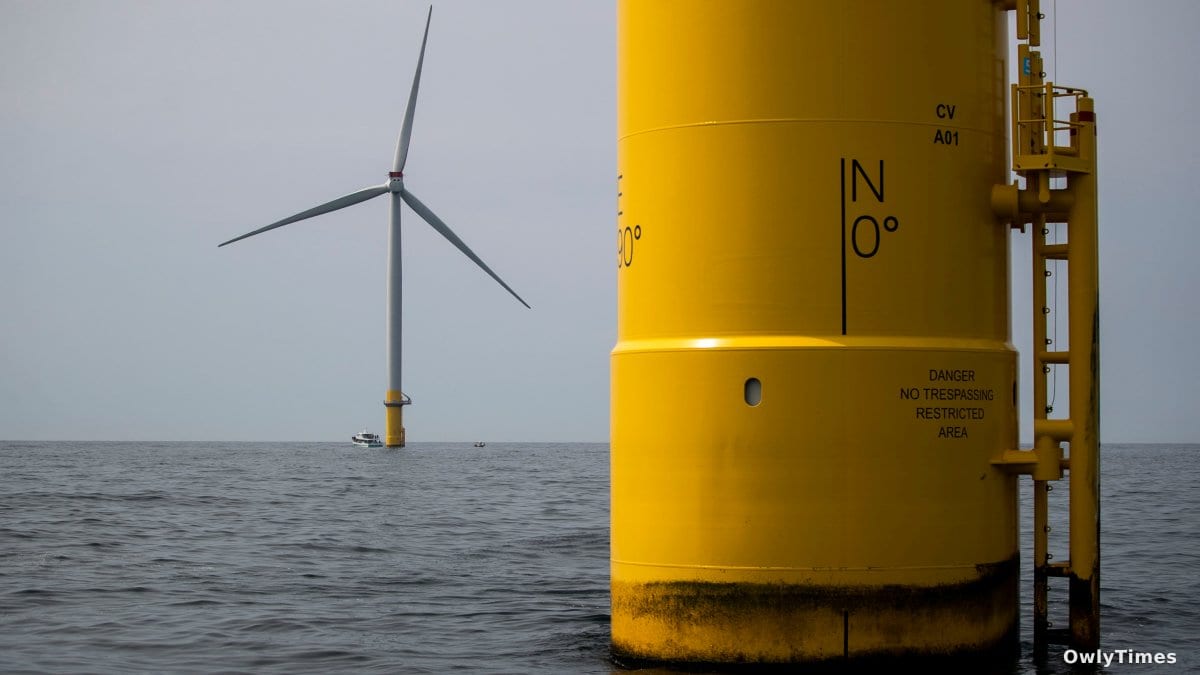
The friction is most visible in the district of Jen Kiggans, a congresswoman representing a coastal region in Virginia. At the heart of this tension is an $11.5 billion wind farm project, a massive capital investment that carries the promise of creating 1,000 jobs. For a representative in a competitive coastal district, such a figure represents more than just energy policy; it is a tangible economic anchor. When the national party leadership calls for the termination of such projects, they are effectively asking incumbents like Kiggans to campaign against the very infrastructure projects that provide local employment and regional development.
Scrambled Incentives and Electoral Risk
The conflict highlights the increasingly scrambled politics of clean energy during an election year where the Republican Party faces a genuine risk of losing control of the House. For Kiggans, the calculus is further complicated by recent shifts in the electoral landscape. On Tuesday, Virginia voters approved a new congressional map that significantly alters the composition of her district, rendering it more Democratic than in previous cycles. This legislative change forces a delicate balancing act: maintaining the support of the conservative base while navigating an electorate that may view the cancellation of local economic drivers as a strategic error.
Who Benefits and Who Loses
In this power dynamic, the beneficiaries and the losers are not divided along traditional party lines. The primary losers in a scenario where these projects are canceled are the local contractors and the workforce that relies on the $11.5 billion investment for long-term stability. Conversely, the political beneficiaries of this push are those within the national party who prioritize a unified, anti-green-energy platform to consolidate base support. However, this comes at the expense of local representatives who find their primary task—delivering regional economic wins—directly undermined by national rhetoric. This mirrors the historical political tension seen during the 2008 financial crisis, when local representatives were similarly forced to choose between the national party’s sweeping fiscal mandates and the survival of their specific local economic ecosystems.
Shifting Maps and Future Volatility
The decision to reshape the congressional map in Virginia serves as the most immediate trigger for this political instability. As the new map takes effect, the next reading of the district’s electoral margins will determine whether representatives like Kiggans can continue to defy national party mandates on energy policy. The survival of these offshore wind projects now rests on whether Republican leadership views the preservation of these districts as more critical than the ideological purity of their energy platform. The upcoming election results will serve as the ultimate referendum on whether local economic projects can survive the pressure of national partisan agendas.





