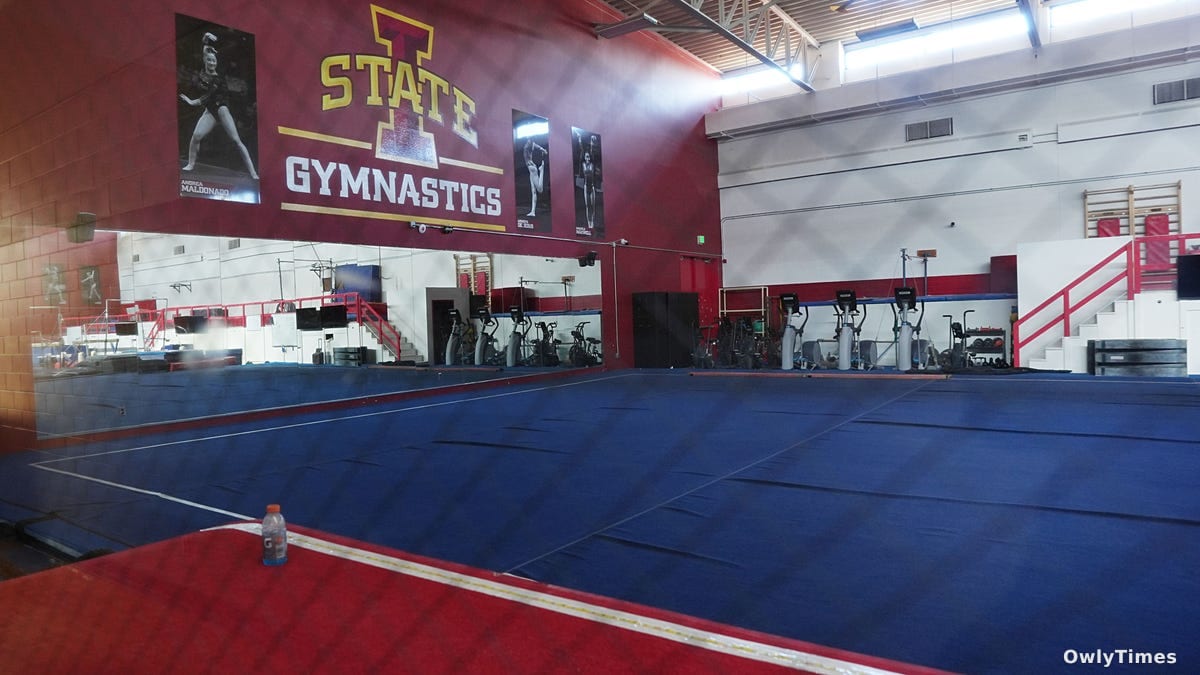

The air in Beyer Hall hung thick with confusion on February 8th. Iowa State gymnasts, expecting a routine practice, instead found themselves facing Shamaree Brown, Senior Associate Athletics Director, with news that would shatter their season – and potentially, their futures. The remainder of the gymnastics season was canceled, a decision delivered not with explanation, but with a statement about “health, safety, and overall welfare.” But beyond the official language, a chilling silence descended, leaving athletes, alumni, and fans grappling with a question no one seemed willing to answer: what really happened?
This isn’t simply a story about a canceled season; it’s a microcosm of the seismic shifts rocking college athletics, where financial pressures and the evolving landscape of athlete compensation are forcing difficult choices, often at the expense of non-revenue sports. The abrupt end to the Iowa State gymnastics program, following a February 5th forfeit against West Virginia due to “not enough student-athletes available,” isn’t an isolated incident. It’s a symptom of a system straining under the weight of a projected $147 million budget deficit through 2031, a figure presented to the university’s Board of Regents last summer. The new era of Name, Image, and Likeness (NIL) deals, capped at $20.5 million this year and rising, demands resources that many athletic departments simply don’t have, forcing a brutal prioritization of football and men’s basketball – programs that, notably, didn’t lose money in the latest financial report.
Based on the original USA Today report.
The lack of transparency surrounding the cancellation has fueled a firestorm of speculation. One parent, speaking anonymously out of fear for her daughter’s career, voiced the anxieties echoing through the program: “My concern is that my daughter has no idea what her future holds… How many years she has left of gymnastics, where she's going to be going to school, what's going to go on?” This isn’t just about lost competitions; it’s about disrupted lives, uncertain scholarship opportunities, and the emotional toll of having a passion project abruptly halted. The university’s response, described by alumni as “vague,” has only amplified the fear. Josie Te Slaa, a former Cyclone gymnast, emphasized the need for support, advocating for counseling and team meetings to help athletes navigate this unprecedented situation.
What’s particularly striking is the swift mobilization of Iowa State gymnastics alumni. More than 100 former gymnasts, led by Shea Mattingly, drafted a statement demanding accountability and transparency, emailing it directly to university administrators including Jamie Pollard, the athletic director, and interim university president David Spalding. Their frustration isn’t just about the current crisis; it’s about a perceived disregard for the program’s legacy and the well-being of its athletes. “The silence is killing it,” Mattingly stated, “and I think that’s what’s scary. People just speculating. That’s where we’re just trying to get answers.” This isn’t a passive plea for nostalgia; it’s a forceful demand for the university to demonstrate its commitment to the student-athletes it recruited. The alumni aren’t simply asking what happened, but why – and what steps are being taken to prevent this from happening again.
The financial realities paint a stark picture. Iowa State gymnastics lost over $1.4 million in the last fiscal year, generating $287,392 in revenue against $1.69 million in expenses. While the athletic department overall reported a slight surplus, the looming budget deficit casts a long shadow over all non-revenue sports. Adding to the complexity, Nick Joos, an Iowa State spokesperson, confirmed the school is seeking NCAA waivers to allow athletes to retain a year of eligibility, a process with no guaranteed timeline. Meanwhile, access to the team’s training facilities has been restricted, citing “concerns that were raised” – concerns that remain frustratingly unspecified. The result? At least half of the team has reactivated their recruiting profiles on Instagram, signaling a potential exodus as the transfer portal opens on March 30th.
Even Ashley Miles Greig, in her third season as head coach, remains largely silent. Despite a challenging 20-42 record and a national ranking of 59th – the lowest among Power Five conference programs – her contract extends through June 30, 2026, and her employment status remains unchanged. The question isn’t necessarily about her coaching performance, but about the larger forces at play, and whether the program, under any leadership, can survive in the current financial climate. The situation at Iowa State isn’t just about gymnastics; it’s a bellwether for the future of college athletics. Will universities continue to prioritize revenue-generating sports at the expense of others, sacrificing opportunities for student-athletes and eroding the very fabric of collegiate competition? And, crucially, will the NCAA’s evolving rules and regulations provide adequate protection for programs facing existential threats? The coming months will reveal whether Iowa State gymnastics can be salvaged, but more broadly, they will determine what kind of athletic landscape awaits the next generation of student-athletes.

