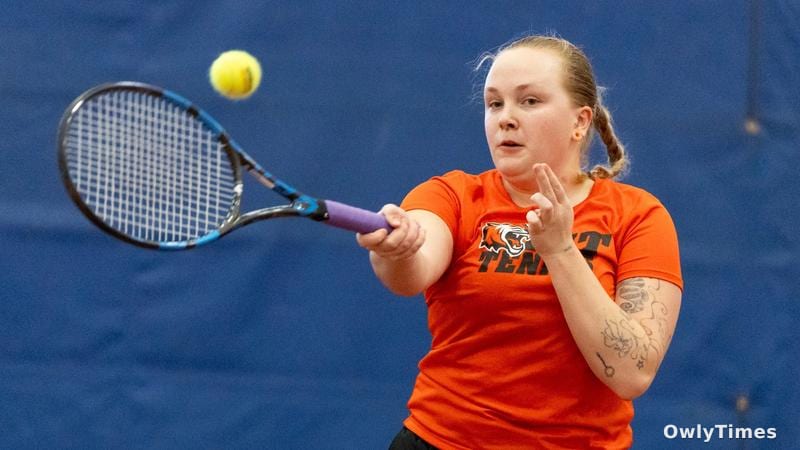

The late afternoon sun cast long shadows across the RIT tennis courts on Sunday, but the warmth couldn’t penetrate the chill of a 7-0 defeat at the hands of Hamilton College. It wasn’t the scoreline alone that lingered in the air, but the quiet frustration of a team battling for momentum in a season already defined by close calls and hard-fought matches. While a shutout might seem like a straightforward loss, a closer look reveals a story about the particular pressures facing women’s collegiate athletics – the constant negotiation between individual brilliance and collective success, and the uphill battle for visibility in a landscape often dominated by men’s sports.
A Single Victory in a Sea of Setbacks
The lone bright spot for the RIT Women’s Tennis team came in doubles play, where junior Kira Kronenberg and sophomore Emily Greb secured a 7-5 victory over Priyanka Challapalli and Hannah Walpole. It’s a small win, easily lost in the final score, but it speaks to a potential synergy within the team. Kronenberg and Greb’s success wasn’t a fluke; it was a demonstration of focused partnership, a crucial element in a sport that often demands both individual skill and seamless coordination. Yet, that momentum couldn’t translate to singles play, where both Greb and sophomore Melanie Saborio fell in grueling three-set matches. These weren’t blowouts; they were contests decided by razor-thin margins, highlighting the competitive parity within the Liberty League and the mental fortitude required to close out tight sets.
See the original ritathletics.com story for the full account.
The Three-Set Grind and the Cost of Consistency
The fact that two matches went the distance is telling. Three-set matches are often the crucible of collegiate tennis, testing not just physical endurance but also a player’s ability to adapt, overcome adversity, and maintain focus under pressure. Losing two of those, as RIT did, isn’t necessarily a reflection of a skill deficit, but a vulnerability in consistency. In women’s collegiate tennis, where funding and resources often lag behind their male counterparts, the demands on student-athletes are immense. They’re expected to excel academically, maintain a rigorous training schedule, and navigate the emotional toll of competition – all while often lacking the dedicated support staff available to larger programs. This creates a pressure cooker environment where even minor lapses in concentration can prove decisive.
Beyond the Scoreline: The Visibility Gap
The RIT-Hamilton match, reported by the RIT Sports Network and concluding with a decisive 7-0 score, exemplifies a broader trend in collegiate sports coverage. While the RIT network provides valuable coverage for its athletes, the overall visibility of women’s tennis – and women’s sports in general – remains significantly lower than that of men’s programs. A 2023 study by the Tucker Center for Research on Girls & Women in Sport found that women’s sports receive only around 20% of all sports media coverage, despite comprising approximately 40% of all collegiate athletes. This disparity isn’t just about fairness; it impacts recruitment, sponsorship opportunities, and the overall perception of women’s athletic achievement. A win, or even a hard-fought loss like Sunday’s, deserves more than a brief recap – it deserves a platform to showcase the dedication, skill, and resilience of these athletes.
What This Means for the Future of Collegiate Tennis
The RIT Women’s Tennis team’s next match is Saturday against The College of New Jersey. But the story isn’t just about their next opponent; it’s about the larger conversation surrounding equity and opportunity in collegiate athletics. Will athletic departments prioritize increased coverage and investment in women’s programs? Will media outlets actively seek out and amplify the stories of female athletes? The outcome of these questions will determine not only the future of women’s tennis, but the broader landscape of collegiate sports, and whether the next generation of female athletes will have the resources and recognition they deserve. The real match isn’t just on the court; it’s a fight for visibility, funding, and a level playing field.