
$20 Billion in Lost Revenue: How Iran’s Potential Aviation Boom Hangs on a Regime’s Collapse
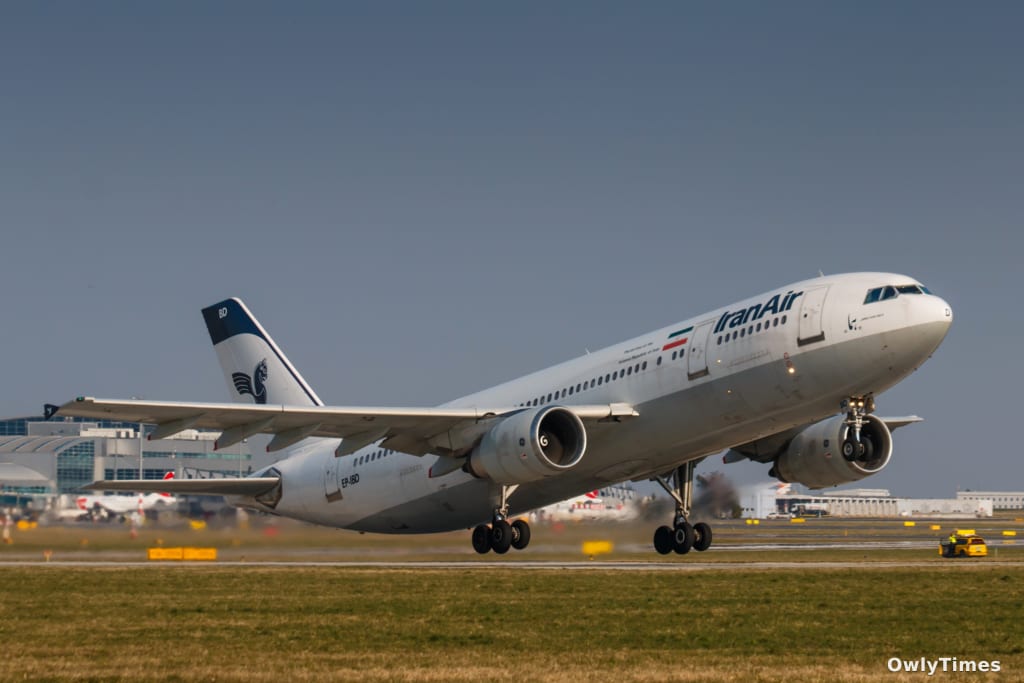
The average age of a commercial aircraft in Iran is over 20 years – a statistic that, while stark, barely scratches the surface of the opportunity, and the crisis, unfolding within the nation’s aviation sector. Recent escalations in protests, coupled with a brutal crackdown by the Iranian Revolutionary Guards resulting in the deaths of several thousand protestors and subsequent flight suspensions by foreign carriers, aren’t simply a humanitarian tragedy; they represent a potential $20 billion unlock in pent-up travel demand, contingent on a swift and comprehensive regime change. This isn’t merely about replacing aging planes; it’s about positioning Iran as a pivotal transit hub between Asia and Europe, a market currently dominated by Dubai and Doha.
Original reporting: aerospaceglobalnews.com.
The suspension of flights, beginning last weekend, is a direct economic consequence of the political instability. Lufthansa, for example, rerouted flights from Germany to Mumbai and Hyderabad, adding both cost and time to journeys. This disruption isn’t isolated. It’s a symptom of a broader systemic risk that has long suppressed Iran’s aviation potential. While the regime’s fall is far from certain, the emergence of Crown Prince Reza Pahlavi, currently in exile in the United States, promising a return to Western relations and free elections, has ignited speculation about a rapid transformation – and a corresponding aviation overhaul. Behramjee Ghadially, a network and fleet planning expert with experience at Gulf Air, Arik Air, Kuwait Airways, and Air Senegal, estimates that a post-regime Iran could see a surge in demand necessitating a complete fleet modernization and a strategic network expansion.
Ghadially’s analysis, shared with Aerospace Global News, isn’t a pie-in-the-sky vision. It’s a data-driven roadmap built on Iran’s inherent advantages. The country’s geographical location, straddling Asia and Europe, presents a natural advantage for transit traffic. However, that advantage is currently squandered by an outdated fleet and limited network. Currently, Iran Air, Mahan Air, and Iran Airtour Airlines primarily serve routes within the Middle East and Turkey. Beyond that, the network is sparse. In July 2026, Cirium data shows limited Asian connections, with routes to Bangkok and Kuala Lumpur only recently reinstated after suspension. This contrasts sharply with the potential. Ghadially points to a diaspora spread across the globe – the United States, Canada, Germany, the UK, Australia – fueling significant demand for routes that are currently underserved, forcing travelers to connect through hubs like Istanbul, Dubai, and Doha. The current situation means an estimated $1.15 billion in potential revenue is lost annually to these competing hubs, based on 2024 passenger data.
The scale of the required transformation is immense. Ghadially proposes a phased approach, beginning with airline consolidation – merging the three state-run carriers into a single Iran Air entity – to streamline operations and brand recognition. Crucially, he advocates for a focused fleet expansion, rejecting the “Disneyland-type airline fleet planning” of Iran Air’s 2016 order for nearly 200 aircraft from Boeing and Airbus. That order, he argues, lacked commercial justification and created unnecessary complexity. Instead, he proposes a streamlined fleet of Boeing 787-9s, Airbus A321XLRs, Airbus A321neos, and Embraer E190/E195 E2s, optimized for long-haul, regional, and domestic routes respectively. This revised fleet plan, totaling approximately 100 aircraft, would require an estimated $8-10 billion in investment, but Ghadially argues the long-term benefits – reduced maintenance costs, operational efficiency, and network flexibility – outweigh the initial expense.
However, even with a new fleet and a streamlined airline, success isn’t guaranteed. Ghadially emphasizes the critical need to address the human resource gap. Years of emigration have depleted the pool of skilled aviation professionals, from pilots and engineers to ground staff. Attracting foreign labor, or incentivizing the return of Iranian expatriates, will be essential. He suggests offering rotation cycles and investing in housing infrastructure to make Iran an attractive destination for aviation professionals. Furthermore, renegotiating bilateral air service agreements is crucial to ensure a level playing field for a resurgent Iran Air against larger, more established carriers. Revising visa policies – offering visa-on-arrival to most nationalities – and reducing airport taxes would further stimulate demand and position Tehran as a competitive transit hub.
The potential economic impact extends beyond passenger revenue. Ghadially highlights the opportunity to re-establish Iran as a significant cargo hub, leveraging its strategic location to facilitate trade between Asia and Europe. He points to the success of Silkway Airlines of Azerbaijan, which has capitalized on Baku’s location with a dedicated freighter fleet. Reviving Iran’s cargo capacity could generate an additional $10 billion in annual revenue, according to Ghadially’s estimates. This requires investment in freighter aircraft and the development of efficient cargo handling infrastructure.
What this means for your wallet: The collapse of the Iranian regime, while a complex geopolitical event, presents a tangible opportunity for lower airfares and increased travel options. If Crown Prince Reza Pahlavi’s promises materialize, and Iran successfully re-integrates into the global aviation market, expect to see increased competition on routes to and from Asia, potentially driving down ticket prices. However, the speed of this transformation is critical. The question investors and consumers should be watching is not if the regime will fall, but how quickly Iran can secure aircraft financing and attract skilled labor to capitalize on the pent-up demand. Will Iran Air be able to secure wet leases in the short term, and navigate the lengthy aircraft delivery timelines, or will the opportunity be lost to competitors? The next six months will be decisive.





