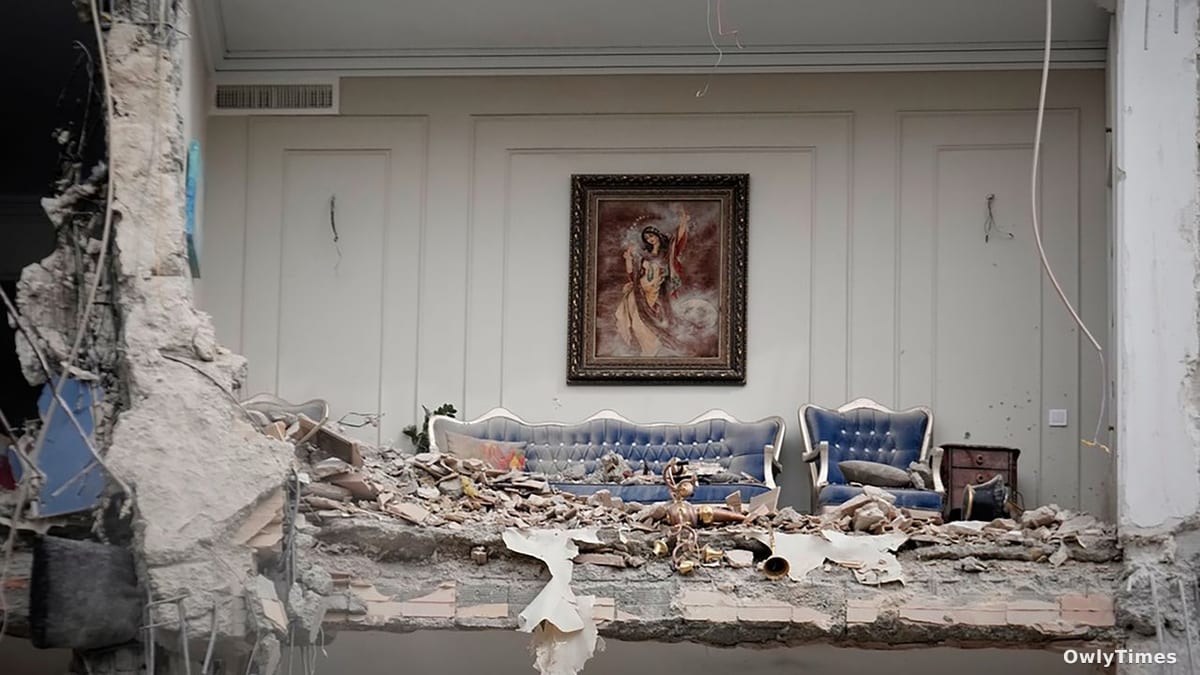

Is the world fixated on the wrong battlefield in the Middle East? Everyone’s talking about military strategy, oil prices, and geopolitical maneuvering around Iran, but the real story here isn’t about containing the regime – it’s about the quiet desperation of a people who, for decades, have been consistently failed by both their government and the international community claiming to want their freedom. We’re watching a crisis unfold through the lens of power politics, while ignoring the human cost, and, crucially, the simmering potential for genuine change from within.
Reza Aslan, an Iranian American author and scholar, finds himself caught between two worlds as conflict escalates in his homeland. Born to a rug merchant from Mashhad, a city of three and a half million and home to Iran’s holiest shrine, Aslan’s personal connection to the unfolding tragedy isn’t academic – it’s visceral. The January protests in Mashhad, brutally suppressed by the Islamic Republic, weren’t just news headlines; they were a harbinger of the current unrest, and a reminder of the risks faced by those daring to challenge the status quo. Aslan’s own history – a decade spent as a foreign correspondent in Tehran for the Washington Post, followed by imprisonment in Evin Prison alongside his wife, Yeganeh, during nuclear negotiations in 2014 – underscores the precariousness of dissent within Iran. He’s seen firsthand how the regime uses hostages as bargaining chips, a practice continuing today with at least six Americans currently wrongfully detained.
Based on the original newyorker.com report.
The narrative coming out of Washington often frames Iran as a monolithic enemy, a state actor to be contained or coerced. But Aslan’s experience, and the fragmented messages he receives from family and friends inside Iran via WhatsApp, Signal, and Instagram, paint a far more complex picture. It’s a society grappling with the mundane realities of wartime – wearing shoes indoors in case of glass shattering from explosions, rationing bread, and navigating checkpoints – alongside a growing, if cautiously expressed, hope for change. The nonchalance with which his cousin in Tehran described an exploding building in an Instagram Story – “Stressful, though” – is chilling, but the accompanying sentiment, “Why won’t it end?” is a plea for relief that resonates far beyond one family.
This isn’t simply about a desire for regime change orchestrated from the outside. Aslan highlights a long-standing yearning for integration with the world, a desire for the social liberties denied to Iranians for decades. The memory of the 1970s, when Iranian women embraced Western fashion and a significant portion of foreign students in the U.S. were Iranian, serves as a poignant reminder of what’s been lost. The current administration’s attacks on U.S. universities and the travel ban have actively undermined the very “American soft power” that Iranians once coveted. The idea that liberation will come from American or Israeli air strikes, while appealing to some, is a dangerous fantasy born of decades of disappointment. As Aslan points out, the chaos and violence that followed the U.S. invasion of Iraq – fueled by Iranian proxies – served as a stark warning.
The fundamental flaw in U.S. policy, as Aslan argues, has been a focus on crippling the government instead of empowering the Iranian people. For generations, Washington has prioritized vengeance over understanding, failing to recognize that its greatest leverage lies with a population that overwhelmingly believes in the “American brand.” This disconnect is compounded by a lack of diplomatic ties and a consistent inability to accurately assess the shifting dynamics within Iranian society. The hawkish rhetoric of figures like John Bolton and Mike Pompeo, who view regime change as the ultimate goal, demonstrates a profound misunderstanding of the Iranian people’s aspirations.
The optimistic messages Aslan receives – the quiet celebrations following the deaths of hardline officials like Ali Larijani – are significant, but fragile. They represent a glimmer of hope amidst the devastation, but they are easily extinguished by renewed repression. The regime will likely exploit the current crisis to consolidate its power, intensifying surveillance and cracking down on dissent, as evidenced by recent executions of protesters. A return to negotiations, as suggested by Donald Trump, will likely result in a superficial agreement focused on nuclear enrichment and missile production, while ignoring the fundamental needs and desires of the Iranian people.
The most likely outcome isn’t liberation, but a grim continuation of the status quo. The regime will declare victory, the cycle of violence will continue, and the hopes for a just future will dwindle. The U.S. will declare a manufactured victory and move on, leaving Iranians to navigate a more oppressive reality. But here’s what to watch for: in the next six months, pay attention not to the official statements coming from Washington or Tehran, but to the subtle shifts in online discourse within Iran. Are VPNs becoming more sophisticated, or more easily controlled? Is the language of dissent becoming bolder, or more coded? The future of Iran won’t be decided by bombs or sanctions, but by the ability of its people to find spaces – digital or otherwise – to organize, to resist, and to keep the flame of hope alive.





