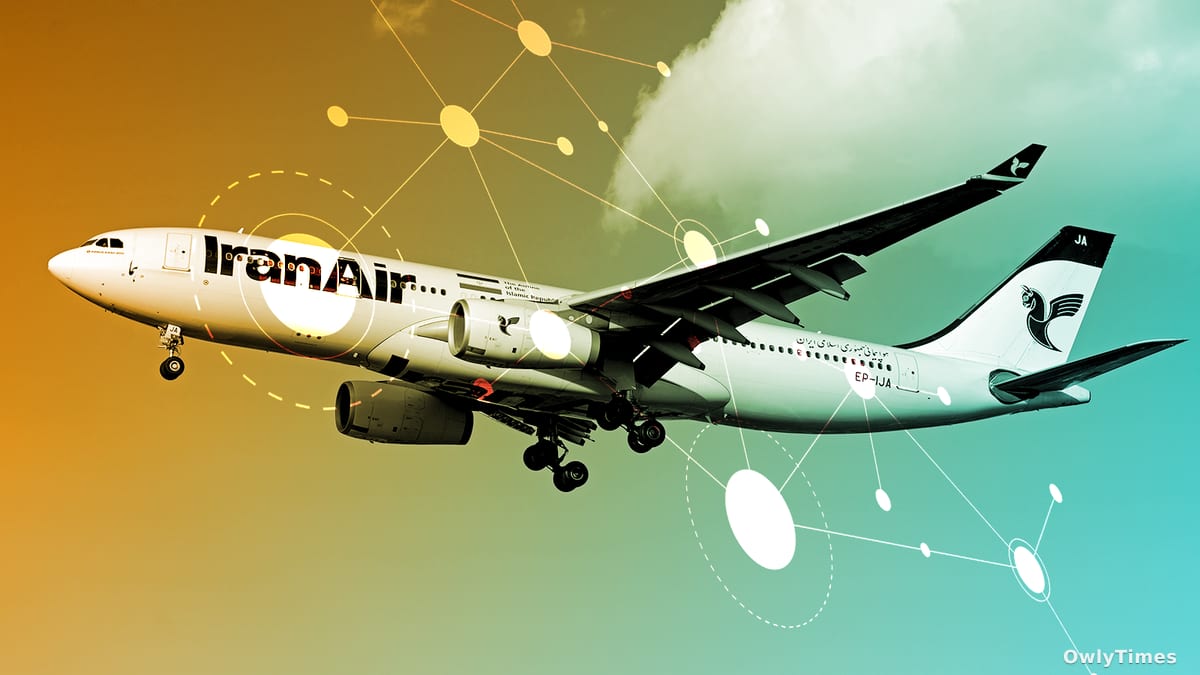

$32 Million in Iranian Exports Still Reaching Europe Despite Sanctions
$32 million. That’s the estimated value of Iranian goods – ranging from petrochemicals to nanotechnology – that continue to flow into Western Europe via a largely unscrutinized network connected to Iran Air, despite recent sanctions aimed at crippling the airline’s operations. While the EU and UK sanctioned Iran Air last fall following US action in September, citing its support for Iran’s Islamic Revolutionary Guard Corps and its role in supplying Russia with critical components during the Ukraine war, a Kharon investigation reveals a sophisticated system remains operational, raising questions about the effectiveness of current enforcement. Follow the money, and it leads directly to a web of General Sales Agents (GSAs) and affiliated companies, anchored by Adineh Travel, that are actively circumventing restrictions.
The core issue isn’t simply that Iran is still trading with Europe – limited trade has persisted despite sanctions for decades – it’s how that trade is happening. Previous sanctions targeted airlines like Mahan Air, focusing on the carriers themselves. However, the network built around Adineh Travel, operating as Iran Air’s representative in Germany, France, and Italy under various aliases, has so far escaped similar penalties. This represents a critical oversight, as Adineh Travel doesn’t just handle bookings; it coordinates cargo, manages revenue, and acts as the logistical backbone for Iranian exports. This is a 180-degree shift from the direct targeting of airlines, and it’s proving remarkably effective.
Based on the original kharon.com report.
At the center of this network is Davoodi, an Iranian businessman, and his Italian wife, Maria Cristina Fareri. They control Adineh Travel and Persit Star S.r.l., an Italy-based import-export company with a direct office in Iran. Persit Star isn’t a passive intermediary; it actively imports Iranian products – including advanced materials like nanotechnology – and distributes them internationally. The company’s website openly advertises Adineh Travel’s services, a blatant signal of their interconnectedness. This isn’t a case of indirect association; it’s a deliberately constructed system designed to exploit loopholes in existing sanctions.
The reach of this network extends beyond Italy. Persit Star collaborates with companies in the UAE (AKH Building Materials) and Iran (Negin Stone), and even co-owns AA Trading S.r.l. in Italy with Davoodi. These entities function as both distributors and “showroom locations” for Negin Stone, while National Flower Co. LLC in the UAE specializes in logistics between China and Iran, handling goods like automobile parts. A recent Instagram post jointly published by DM Fartak International Air Cargo – managed by Davoodi – and Persia Safar explicitly offered cargo-shipping solutions via Adineh Travel, further cementing the network’s operational links. This level of open collaboration suggests a degree of confidence that current sanctions are insufficient to disrupt their activities.
The protest campaign launched by Persia Safar on its Telegram channel, using the hashtag “#no_to_sanctioning_Iran_Air,” underscores the economic stakes involved. While framed as opposition to sanctions, it’s a clear indication of the network’s reliance on Iran Air for its continued operation. The fact that this protest was amplified alongside logistical offers from affiliated companies highlights the coordinated nature of the effort. The US has already signaled a renewed “maximum pressure” campaign on Iran, which could broaden the scope of secondary sanctions to include financial and logistical enablers. However, the question remains: will these expanded sanctions target the individuals and entities – like Davoodi and Fareri – demonstrably facilitating these circumvention efforts, or will the network continue to operate in the shadows?
What this means for your wallet: While these transactions don’t directly impact most consumers today, the continued flow of revenue to Iran’s sanctioned industries indirectly funds activities that destabilize the region and potentially impact global energy markets. Investors should watch for increased scrutiny of European companies with ties to the network identified by Kharon, as they could face future sanctions risk. More broadly, consumers should anticipate potential disruptions to supply chains if the US escalates its “maximum pressure” campaign and successfully shuts down these circumvention routes.





