
The Calculus of Escalation: Israel’s Strikes and the Iranian Succession Question
The reported strikes attributed to Israel, culminating in the death of Ayatollah Ali Khamenei on March 1, 2026, aren’t simply retaliation for the October 7th attacks by Hamas. They represent a calculated, if extraordinarily risky, attempt to reshape the regional power balance by directly confronting the ideological and operational core of Iran’s influence. While the immediate trigger was the Hamas assault – which left over 1,200 Israelis dead and sparked the ongoing conflict in Gaza – the targeting of Khamenei signals a shift from degrading Iran’s proxy capabilities to challenging the legitimacy and stability of the Iranian regime itself. This isn’t about merely deterring future attacks; it’s about exploiting a perceived vulnerability in the succession process and potentially fracturing the network of support Iran provides to groups like Hezbollah and Hamas. The timing, nearly two and a half years after the initial Hamas attack, suggests a reassessment of previous strategies and a belief that a more direct approach is now warranted, or perhaps even inevitable.
Source material: The Washington Post.
The Shifting Sands of Regional Alliances
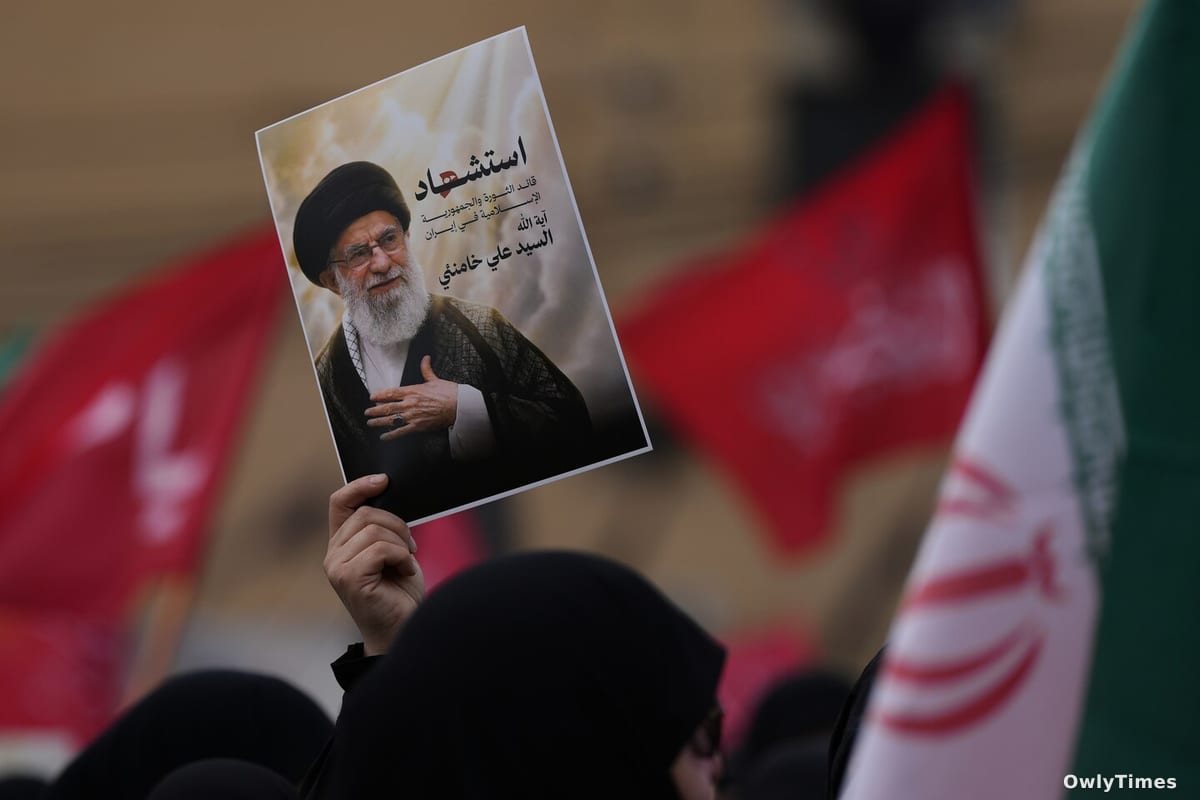
The immediate aftermath reveals a predictable pattern of mourning and defiance. Images circulating from Beirut, like the one captured by Hassan Ammar of an AP photographer showing a Hezbollah supporter displaying Khamenei’s portrait, underscore the deep ideological ties that bind these groups to Iran. However, the public display of grief also serves as a rallying cry, and a test of cohesion. The question isn’t whether Iran and its proxies will respond – they almost certainly will – but how and to what extent. A full-scale regional war is not the desired outcome for any party involved, including Israel, but the calculated risk is that a limited escalation, aimed at destabilizing the Iranian regime internally, is preferable to the long-term prospect of a perpetually funded and armed network of adversaries. Who benefits and who loses here is complex. Israel gains a short-term strategic advantage if it can weaken Iran’s regional influence, but risks a wider conflict. Iran loses face and potentially internal stability, but could emerge stronger through nationalist fervor. The United States, while publicly maintaining a degree of distance, is likely privately assessing the potential for a more moderate Iranian leadership to emerge from the ensuing power struggle.
Echoes of 1982 and the Lebanese Civil War
This situation bears a striking, if unsettling, resemblance to Israel’s invasion of Lebanon in 1982, ostensibly to expel the Palestine Liberation Organization (PLO) but ultimately aimed at dismantling the infrastructure supporting it. Then, as now, Israel sought to address a threat emanating from Lebanese territory by targeting the underlying state sponsor – in that case, Syria. The 1982 invasion, however, devolved into a protracted occupation and a brutal civil war, ultimately failing to achieve its strategic objectives and arguably exacerbating regional instability. The parallel isn’t perfect; Iran is a far more formidable adversary than Syria ever was. But the risk of mission creep, unintended consequences, and a descent into prolonged conflict remains acutely present. The key difference is the direct targeting of the Iranian leader, a move that significantly raises the stakes and introduces a level of unpredictability not seen in 1982.
The Succession Vacuum and Internal Iranian Dynamics
The death of Ayatollah Khamenei creates a significant power vacuum within Iran. While a successor is expected to be named – likely from within the Council of Guardians – the process is fraught with potential for internal conflict. The hardline faction, which has consistently advocated for a more aggressive foreign policy, will likely attempt to consolidate its control. However, there are also elements within the regime that favor a more pragmatic approach, recognizing the economic and political costs of continued confrontation. This internal struggle presents an opportunity for Israel, and potentially the United States, to subtly influence the succession process, perhaps by signaling support for more moderate candidates. The Arabic inscription on the portrait held in Beirut – “Martyrdom of the leader of the Islamic revolution in Iran, sayyed Ayatollah Ali Khamenei” – is a potent symbol, but it also masks the internal divisions that are likely to intensify in the coming weeks. The economic impact on Iran is also crucial; sanctions have already crippled the Iranian economy, and further instability could lead to widespread unrest.
The Next Chess Move: Monitoring the Council of Guardians
The immediate political chess move to watch is the composition and actions of the Council of Guardians in selecting Khamenei’s successor. Will the selection process be transparent, or will it be shrouded in secrecy, indicating a power struggle behind the scenes? More importantly, will the new Supreme Leader signal a continuation of Khamenei’s hardline policies, or will they offer any indication of a willingness to de-escalate tensions? The response from Hezbollah and Hamas in the coming days will also be critical. A coordinated, large-scale attack on Israel would signal a unified front and a determination to avenge Khamenei’s death. A more muted response, however, could indicate internal divisions or a reluctance to risk a full-scale war. The world is now watching not just for military escalation, but for the subtle shifts in power within Iran itself – shifts that will determine the future of the region.





