
The coordinated strikes against Iran, culminating in the reported death of Supreme Leader Ayatollah Ali Khamenei, weren’t a spontaneous reaction, but a calculated gamble to fundamentally alter the regional power balance. The speed and breadth of the operation – targeting leadership, naval assets, drone facilities, and missile infrastructure simultaneously – signals a pre-planned campaign designed not merely to degrade Iranian capabilities, but to induce a leadership crisis and potentially force a renegotiation of Iran’s regional posture. This isn’t simply about preventing Iran from acquiring a nuclear weapon; it’s about dismantling the infrastructure of its hardline foreign policy.
The Calculus of Decapitation and Disruption
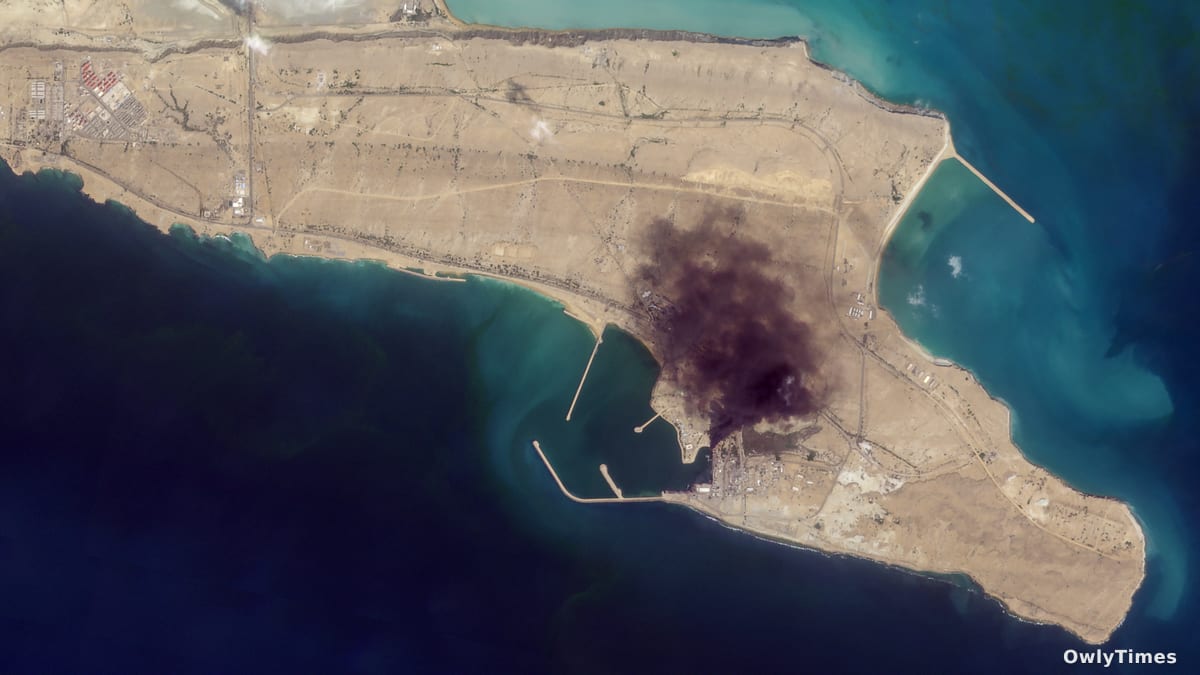
The immediate impact is destabilizing, but predictable. The killing of Khamenei, confirmed by satellite imagery showing damage to his compound in Tehran, creates a power vacuum within the Iranian theocracy. While a successor will inevitably emerge, the ensuing struggle for control will divert attention and resources away from external aggression. The simultaneous attacks on military assets – the reported sinking of nine Iranian naval vessels by U.S. forces, the destruction of vessels at Konarak naval base documented by Planet Labs PBC and Vantor satellite imagery, and the damage to drone and missile facilities – are designed to cripple Iran’s ability to retaliate effectively or project power in the region. The strikes on hardened aircraft shelters and mountain tunnels housing long-range missiles demonstrate a clear intent to neutralize Iran’s most potent offensive capabilities. Who benefits and who loses is stark: Israel and the U.S. gain a temporary advantage in regional security, while Iran suffers a crippling blow to its military and political authority. Gulf states, particularly those targeted by Iranian drones – evidenced by damage to Dubai’s Burj Al Arab – find a brief respite, though remain vulnerable.
Based on the original NPR report.
Historical Echoes of Preemptive Strikes
This operation bears a striking resemblance to Israel’s 1981 raid on Iraq’s Osirak nuclear reactor, a preemptive strike designed to prevent Saddam Hussein from developing nuclear weapons. Like the Osirak raid, the current strikes are predicated on the belief that diplomacy has failed and that military action is necessary to address an existential threat. However, the scale is vastly different. Osirak was a single, targeted operation; this is a multi-faceted campaign across an entire country. Another parallel can be drawn to the opening stages of the 2003 invasion of Iraq, where the initial objective was the removal of Saddam Hussein and the dismantling of his regime’s military infrastructure. The key difference here is the stated objective isn’t regime change – at least, not publicly. The White House official’s statement about eventually talking to Iran’s interim leadership suggests a preference for a modified, rather than completely overthrown, Iranian government.
The Satellite View of a Widening Conflict
The reliance on commercial satellite imagery from companies like Planet Labs PBC, Airbus, and Vantor is a defining characteristic of this conflict. Unlike previous engagements, where information was tightly controlled by military sources, the public now has near-real-time access to evidence of the damage inflicted. This transparency – or at least, the availability of information – serves multiple purposes. It allows for independent verification of claims, potentially mitigating accusations of exaggeration or misinformation. It also exerts pressure on Iran to acknowledge the extent of the damage and the severity of its situation. The images of burning vessels, destroyed drone bases, and damaged missile tunnels are powerful visual representations of Iran’s vulnerability. Esmail Baghaei’s defiant statement about continuing to fight “foreign aggression” rings hollow when juxtaposed with the concrete evidence of devastation.
Beyond Retaliation: The Looming Question of Succession
While Iran’s retaliatory drone and missile attacks on Israel and U.S. installations are expected, the more critical question is what happens within Iran following Khamenei’s death. The 40 days of mourning declared by Iran are a period of intense political maneuvering. The struggle to succeed Khamenei will likely pit hardliners against pragmatists, with potentially far-reaching consequences for Iran’s foreign policy. Will a more moderate faction emerge, willing to engage in dialogue with the West? Or will a hardline successor double down on confrontation? The political chess move to watch next isn’t Iran’s military response, but the internal power dynamics unfolding in Tehran. Specifically, who will control the Iranian Revolutionary Guard Corps – and to what extent will that control be contested – will dictate the trajectory of this conflict.





