
The Calculus of Escalation: Funding the Iran Conflict as Domestic Political Leverage
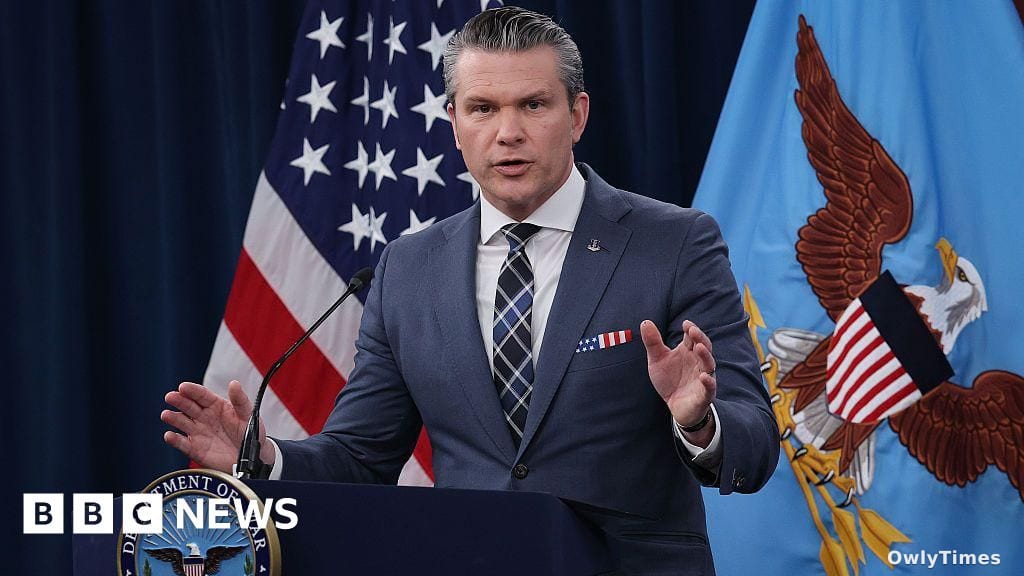
The White House’s request for an additional $200 billion to fund military operations in Iran isn’t simply about replenishing depleted resources; it’s a calculated gamble to reshape the domestic political landscape ahead of a contentious midterm election. The timing – coupled with the admission from Defense Secretary Pete Hegseth that “it takes money to kill bad guys” – reveals a strategic willingness to weaponize national security spending, even as public approval of the conflict wanes. The $200 billion figure, as Speaker Mike Johnson subtly acknowledged, is unlikely arbitrary, but rather a deliberate attempt to force a Congressional showdown and define opposing parties by their willingness to support military action.
The immediate trigger for the request is the escalating cost of the conflict, already totaling $11.3 billion in its first week alone. The damage to a US F-35 fighter jet – estimated to cost up to $77 million – underscores the tangible financial risks of continued engagement. However, framing the request solely as a response to battlefield losses obscures a deeper motivation: the administration is explicitly linking the Iran conflict to previous aid packages, specifically to Ukraine. President Trump’s comment about ammunition “taken down by giving so much to Ukraine” isn’t a policy justification, but a rhetorical maneuver to pit competing foreign policy priorities against each other and appeal to a segment of the electorate wary of endless overseas commitments. This echoes the historical tactic of leveraging wartime spending to simultaneously address domestic concerns and consolidate political power, a pattern seen during the Vietnam War when the Johnson administration attempted to fund both the conflict and the “Great Society” programs.
Based on the original the BBC report.
Who benefits and who loses from this funding request is sharply delineated. The clear beneficiaries are defense contractors, poised to receive a massive influx of capital. Lockheed Martin, the manufacturer of the F-35, stands to gain significantly, as does the broader aerospace and defense industry. Politically, a ‘yes’ vote on the funding bill allows Republican lawmakers to demonstrate unwavering support for the military and national security, a key tenet of their base. Conversely, Democrats face a difficult position. While opposing the war outright risks appearing weak on national security, approving the $200 billion request opens them up to accusations of hypocrisy, given their previous advocacy for social programs and criticism of excessive military spending. The pointed comparison drawn by Democrats – a $35 billion extension of health insurance subsidies versus the $200 billion war fund – highlights this contradiction. The administration’s cuts to foreign aid, totaling $175 billion through the Department of Government Efficiency, further complicate the narrative.
The legislative battle over this funding request will be particularly fraught given the proximity to the midterm elections. The administration is betting that it can force Democrats into a corner, compelling them to either support the war or be branded as obstructionists. This strategy mirrors the tactics employed during the Cold War, where presidents routinely used the threat of Soviet aggression to rally domestic support for increased military spending and suppress dissent. However, the current political climate is markedly different. Public disapproval of the war in Iran is significant, and lawmakers – particularly those in swing districts – will be under intense pressure to justify such a substantial expenditure. Congressman Jim Himes’s pointed remark about being consulted “at the takeoff” underscores the resentment brewing among some Democrats who feel sidelined by the administration’s unilateral decision to initiate strikes.
The administration’s stated objectives – “destroy Iran’s ballistic missile capacity, annihilate their navy, ensure their terrorist proxies cannot destabilize the region, and guarantee that Iran can never possess a nuclear weapon” – are ambitious and suggest a prolonged engagement. Pentagon officials anticipate a conflict lasting between four and six weeks, but the potential for escalation, including the deployment of ground troops, remains a distinct possibility. The question now isn’t simply whether Congress will approve the $200 billion request, but whether the administration will use the ensuing debate to further consolidate its political position, even at the risk of deepening domestic divisions and prolonging a costly and unpopular war. The next political chess move to watch is whether President Trump will offer any concessions on domestic policy – perhaps a scaled-back version of the health insurance subsidies – in exchange for securing bipartisan support for the Iran funding bill.





