
The strategic calculus in Washington has shifted from the battlefield to the balance sheet as the financial toll of the war in Iran becomes an unavoidable variable in the upcoming midterm elections. By forcing the Pentagon to attach a specific dollar amount to the conflict, lawmakers have transformed a tactical military engagement into a domestic political liability for the administration. The move to disclose these costs signals that the legislative branch is reasserting its oversight power, turning the fiscal data into a blunt instrument to challenge the executive’s foreign policy objectives.
A Price Tag for Global Strategy
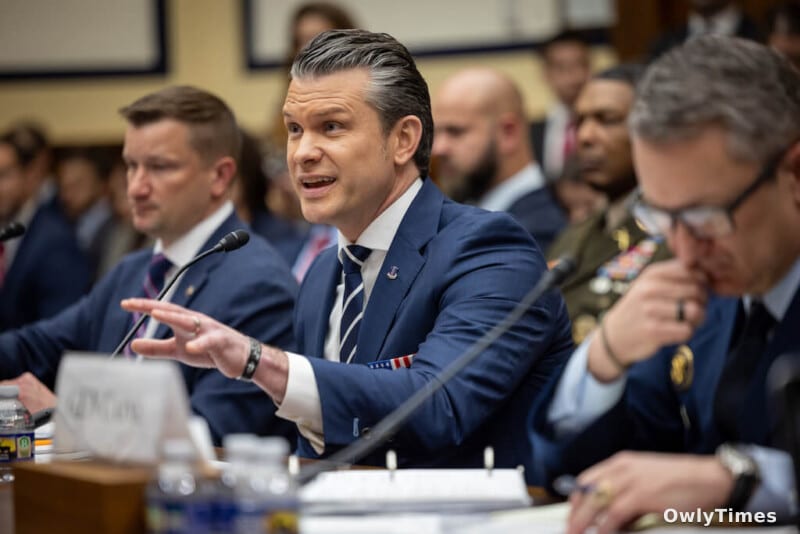
During an April 30, 2026, hearing at the Rayburn House Office Building, the administration finally yielded to sustained pressure for transparency. Jules Hurst, the acting comptroller at the Pentagon, revealed that the United States has spent an estimated $25 billion on the war to date. This disclosure represents the first official public accounting of the conflict’s cost, a figure that provides immediate ammunition for critics who have struggled to quantify the war's economic footprint.
When contextualized, the scale of this expenditure becomes clear: the $25 billion price tag is roughly equivalent to the entire annual budget of NASA. Despite the magnitude of this investment, Hurst offered limited clarity on where the funds are actually landing. He noted that the majority has been consumed by munitions, yet he failed to clarify if this estimate accounts for long-term expenses, such as the potential reconstruction of military infrastructure across the Middle East. For Democratic Representative Adam Smith, this lack of granularity is a point of contention, highlighting the ongoing friction between the Pentagon’s operational secrecy and the congressional demand for fiscal accountability.
The Political Cost of Conflict
Who benefits and who loses in this fiscal standoff? The administration is clearly on the defensive, as the $25 billion figure acts as a catalyst for broader grievances regarding the economy. Democrats are successfully linking the conflict to the rising cost of living, leveraging the fact that disruptions to global oil and gas supplies have pushed domestic gasoline prices to their highest levels in nearly four years. As inflation concerns collide with war spending, the political center of gravity is moving away from the administration’s security narrative.
The historical precedent of the Vietnam War suggests that once a conflict begins to be defined by its domestic economic impact rather than its strategic goals, public support tends to erode rapidly. This trend is already manifesting in the data: a recent Reuters/Ipsos poll indicates that support for the war has fallen to 34%, down from 38% in March. President Donald Trump is seeing his approval ratings mirror this downward trajectory, suggesting that the "cost" of the war is no longer just a line item in the budget—it is a weight on his political standing.
Defense Strategy Amidst Mounting Pressure
Secretary of Defense Pete Hegseth remains the administration’s primary firewall against these criticisms. At the hearing, he framed the $25 billion not as a waste, but as a necessary premium to prevent Iran from obtaining a nuclear weapon. By posing the rhetorical question, "What would you pay to ensure Iran does not get a nuclear bomb?" Hegseth is attempting to shift the debate back to national security imperatives, even as the conflict—which began on February 28—remains fraught with risk.
Despite a fragile ceasefire currently holding, the human and material stakes remain high. The Pentagon has bolstered its regional presence with three aircraft carriers, while the human toll has reached 13 U.S. troops killed and hundreds wounded. The next reading of the Reuters/Ipsos poll will show whether Hegseth’s focus on nuclear containment can stabilize the administration's sliding approval ratings, or if the fiscal burden of the war will continue to dominate the voter’s calculus heading into the midterms.