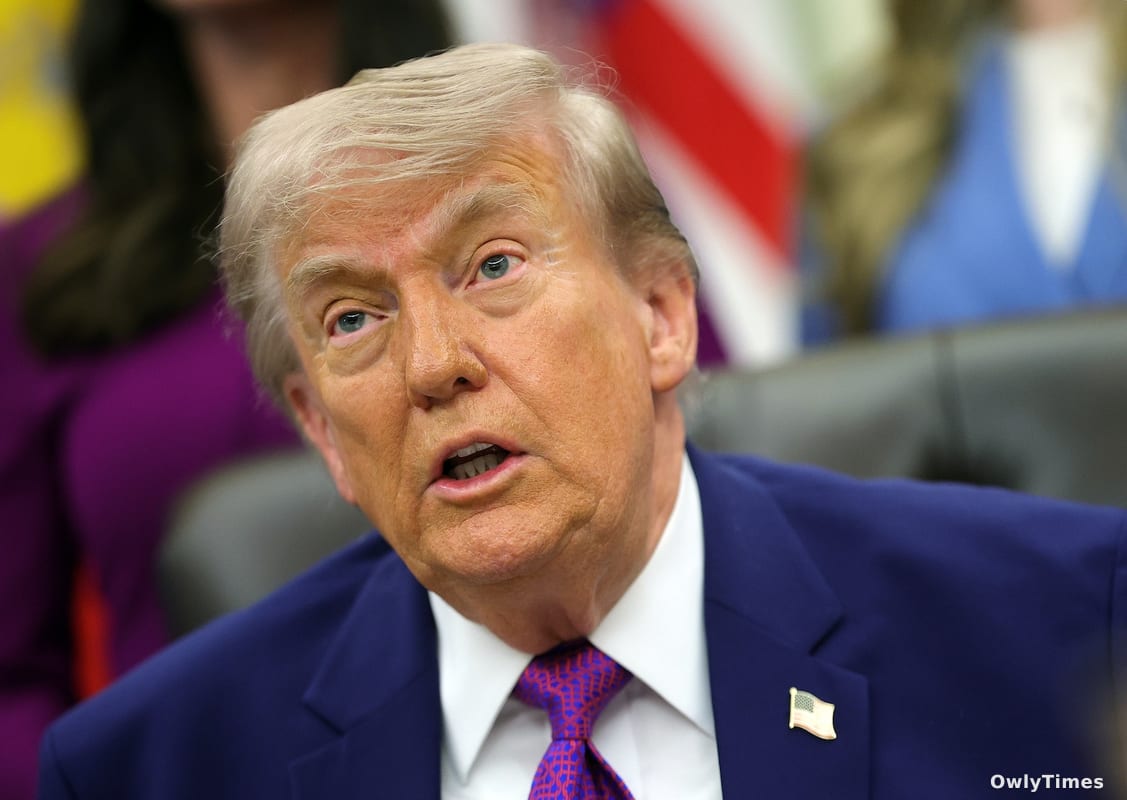

President Donald Trump's recent declaration to suspend the federal gas tax for an unspecified period represents a strategic maneuver to alleviate mounting political pressure. The decision, announced on May 11, 2026, directly responds to the persistent rise in pump prices, a consequence of the ongoing Iran war, which has demonstrably impacted his public approval. This move is a classic example of a sitting administration attempting to mitigate immediate economic pain points for consumers, aiming to stabilize approval ratings by addressing a highly visible cost-of-living issue.
The Calculus of Consumer Relief vs. Revenue Loss
The proposal to pause the federal gas tax is ostensibly designed to provide immediate financial relief to drivers. With gas prices climbing, illustrated by a customer seen pumping gas at a Chevron station in Los Angeles on May 4, captured by Justin Sullivan for Getty Images, the political imperative to act is clear. However, the strategic calculus is fraught with challenges. The primary tension lies in the mechanism of implementation: while the intention is to pass savings directly to consumers, the actual enforcement of this would be difficult. Historically, reductions in fuel taxes have often been absorbed, at least partially, by oil companies and distributors rather than fully translating into lower prices at the pump. This creates a scenario where the federal government foregoes significant revenue, but the intended beneficiaries—drivers—might not experience the full benefit.
Congressional Hurdles and Enforcement Challenges
The suspension of the federal gas tax is not a unilateral executive action; it "would require congressional approval," as detailed in the Washington Post report. This immediately transforms a presidential declaration into a legislative battleground. For Congress to approve such a measure, it would need to navigate not only the political will but also the practicalities of a federal revenue shortfall. The federal gas tax primarily funds the Highway Trust Fund, essential for maintaining and improving the nation's transportation infrastructure. A suspension, even for an "unspecified period," would necessitate identifying alternative funding sources or accepting a degradation of infrastructure projects, creating a new set of political and economic dilemmas.
The "who benefits and who loses" framework becomes particularly intricate here. Drivers are positioned as the clear beneficiaries, assuming the savings reach them. However, if the enforcement mechanism to ensure these savings are passed on proves ineffective, oil companies could see an increase in profit margins without a corresponding reduction in consumer costs. The federal government, meanwhile, stands to lose billions in revenue, potentially impacting crucial public services and infrastructure development. This dynamic pits the short-term political expediency of lowering pump prices against the long-term fiscal health of the nation and the integrity of its transportation funding.
The Looming Congressional Showdown
The political chess move to watch next hinges entirely on Capitol Hill. The immediate trigger is the response from U.S. Congress. Will lawmakers prioritize the immediate electoral benefit of a gas tax holiday, or will they balk at the fiscal implications and the enforcement challenges? Any congressional deliberation will likely expose the deep divisions over economic policy and the role of government intervention. The precise mechanisms proposed for ensuring consumer benefit, if any, will be key to understanding the true impact of this strategic play. Without a clear and enforceable plan, this proposal, though politically astute in its timing, risks becoming a symbolic gesture with limited practical effect for the average American driver.