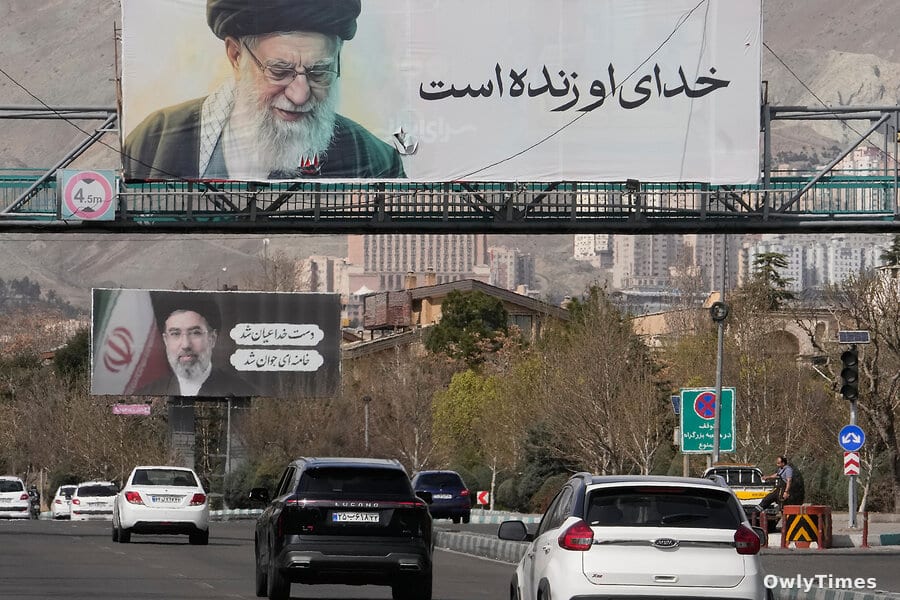

The strategic calculus behind the current posture of Iran’s leadership is defined by a paradox: the more the United States and Israel degrade the Islamic Republic’s military hardware, the more they embolden the most radical elements of its political hierarchy. While President Donald Trump frames the recent “decapitation” strikes as a successful move toward “regime change” and a more “reasonable” Iranian state, the reality on the ground in Tehran suggests the opposite. The systematic removal of older, more cautious military and political figures has not created a power vacuum; it has cleared the path for a younger, battle-hardened cadre of the Islamic Revolutionary Guard Corps (IRGC) that views restraint as a strategic error.
The Rise of the Unrestrained Guard
Who benefits from this shift? The hard-line faction of the IRGC, led by figures like Brig. Gen. Ahmad Vahidi, has gained the upper hand by positioning itself as the only true defender of the state against external aggression. By framing the war—which has seen the U.S. fire more than 17,000 munitions and Israel 19,000 since Feb. 28—as a historical and existential struggle, these commanders are effectively insulating themselves from the diplomatic concessions sought by civilian leaders like parliament speaker Mohammad Baqer Qalibaf. The loss of 3,636 lives, including 1,701 civilians and 254 children, according to the Human Rights Activists News Agency, has provided the IRGC with a potent narrative of martyrdom to justify their rejection of the ceasefire terms negotiated in Pakistan by U.S. Vice President JD Vance.
The losers in this internal power dynamic are the institutional diplomats. When Foreign Minister Abbas Araghchi announced via X that the Strait of Hormuz was “completely open,” he was swiftly undermined by an IRGC naval radio broadcast explicitly rejecting his authority in favor of the new supreme leader, Ayatollah Mojtaba Khamenei. This public contradiction reveals a regime struggling to balance its desperate need for economic relief with the militant posturing required to maintain its domestic base.
A Legacy of Confrontation
The current generation of commanders, as noted by Narges Bajoghli of Johns Hopkins University, represents a shift from the cautious, older guard to a younger cohort that gained experience fighting in Iraq, Lebanon, and Syria. This experience has left them with the firm conviction that they can engage the world’s most powerful militaries without being deterred. This is not a new phenomenon; it echoes the historical tendency of revolutionary movements to consolidate power through militant rhetoric during times of existential threat. The IRGC’s move to lower the recruitment age to 12 is a clear signal that they are preparing for a long-term, high-intensity conflict rather than a negotiated peace.
The Economic Chokepoint
The Strait of Hormuz remains the primary leverage point in this geopolitical chess match. With the U.S. naval blockade imposed by Mr. Trump on April 13, the region has become a flashpoint for direct kinetic engagement. The U.S. reports seizing an Iranian cargo ship, while the IRGC continues to target commercial vessels. While analysts like Sanam Vakil of Chatham House argue that the IRGC acts as the “bad cop” in a broader negotiation process, the military’s current mandate to protect regime security through an offensive, rather than defensive, posture makes any lasting deal increasingly precarious.
The next reading of the IRGC’s actions in the Strait of Hormuz will indicate whether the civilian leadership in Tehran can maintain control over the military, or if the “unrestrained” wing of the IRGC has successfully locked the state into a permanent posture of confrontation. As Secretary of Defense Pete Hegseth continues to monitor the regime’s efforts to “dig out” their disabled missile launchers, the gap between official diplomatic messaging and the reality of the IRGC’s naval maneuvers will determine the durability of the current, fragile ceasefire.





