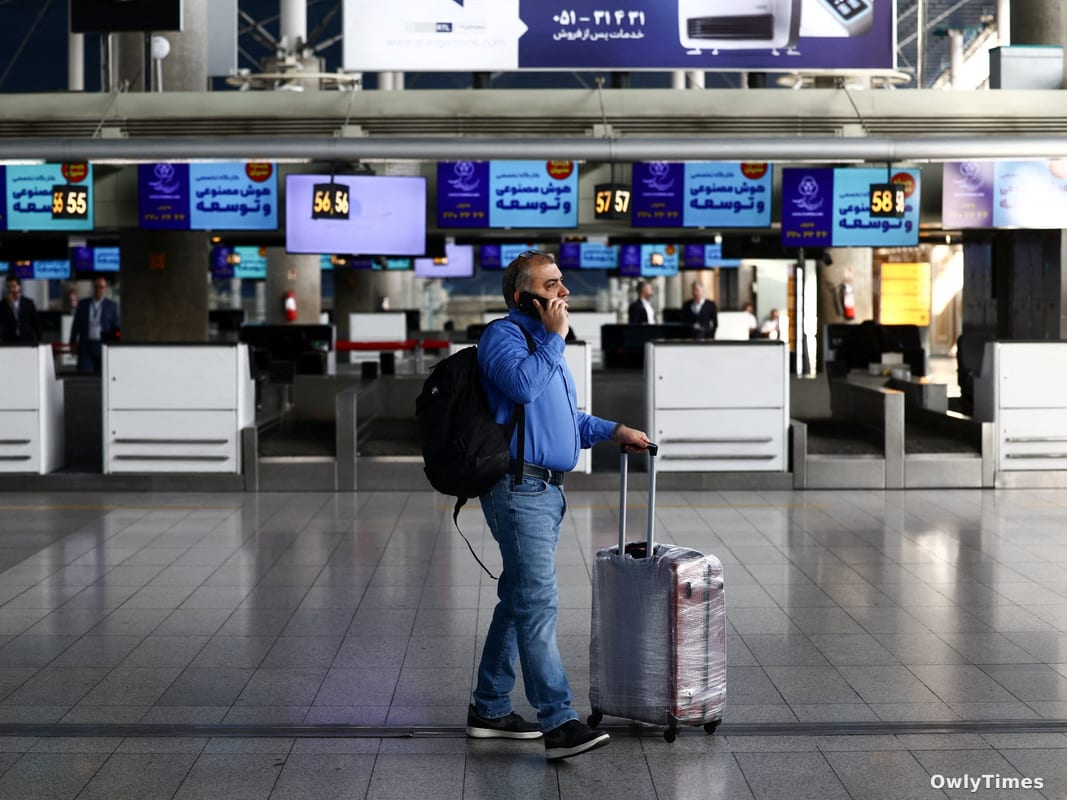

56 days is the exact duration of the operational silence that descended upon Iran’s skies following the military strikes by the United States and Israel. As of this Saturday, that hiatus has officially ended, with Imam Khomeini International Airport in Tehran resuming commercial flights to Istanbul, Muscat, and Medina. While the resumption of service signals a tentative step toward normalcy, the underlying financial and logistical damage to the global aviation sector suggests the crisis is far from over.
The Strategic Pivot to Eastern Corridors
The reactivation of Iran’s aviation network is not a return to pre-conflict status quo, but a calculated pivot. Mohammad Amirani, CEO of the Iran Airports and Air Navigation Company, has explicitly stated that the country’s eastern geography—bordering Turkmenistan, Afghanistan, and Pakistan—will now serve as the primary hub for domestic and transit traffic. By prioritizing provincial nodes such as Mashhad, Zahedan, Kerman, Yazd, and Birjand, Tehran is attempting to reconfigure its transit architecture while its western borders remain fraught with diplomatic and security uncertainty.
Follow the money in this regional shift, and it becomes clear that Iran is desperate to re-attract transit fees and restore its status as a viable aviation corridor. State-run IRNA news service has confirmed that Iran Air has resumed its inaugural route to Mashhad, with follow-up flights scheduled for Baku, Najaf, Baghdad, and Doha. However, the success of this plan hinges on the stability of a fragile ceasefire and ongoing, high-stakes negotiations between Tehran and Washington currently hosted in Pakistan.
The Jet Fuel Contagion in Europe
While Tehran focuses on local transit, the broader economic shockwave of the conflict has hit European carriers with full force. The disruption of transit through the Middle East, coupled with the blockade of the Strait of Hormuz, has constricted the global supply chain for refined petroleum products. The result is a looming jet fuel deficit that is forcing European regulators to consider emergency imports from the United States and the implementation of strict minimum reserve quotas.
The numbers provide a stark warning for the aviation industry. Fatih Birol, head of the International Energy Agency, recently estimated that Europe possesses roughly six weeks of jet fuel reserves remaining. This supply crunch is no longer a theoretical risk; it is actively dictating corporate strategy. On Thursday, the Lufthansa Group announced a reduction of 20,000 short-haul flights through October, citing the dual pressures of elevated oil prices and insufficient fuel inventory.
Investor Implications and Market Outlook
For the average traveler and the savvy investor, this period of volatility serves as a stress test for global logistics. When the world’s busiest air travel regions effectively shut down—as seen following the February 28 attacks—the ripple effects do not dissipate once airspace partially reopens. The industry is currently contending with the high costs of supply chain restructuring and the compounding effects of rising fuel surcharges on ticket pricing.
What this means for your wallet is an era of continued uncertainty in travel costs and flight reliability. The next reading of the European jet fuel reserve levels, coupled with the official status of flight schedules into October, will serve as the primary indicators for whether the aviation sector enters a period of stabilization or faces a deeper, structural contraction. Until the supply chain for refined fuel clears the bottlenecks created by the Strait of Hormuz blockade, the premium on air travel is unlikely to retreat.





