
Is the escalating conflict in the Middle East truly about Iranian aggression, or is it a meticulously crafted narrative obscuring a far more unsettling reality? The headlines scream of Iranian threats and Israeli retaliation, of a spiraling war fueled by decades of animosity. But the real story here isn't simply a regional power struggle – it's the unraveling of a carefully constructed geopolitical order, and the increasingly visible cracks within the U.S. establishment itself. The recent events – the killing of top Iranian officials Ali Larijani and Gholamreza Soleimani by Israel, the resignation of Joe Kent, Director of the National Counterterrorism Center, and President Trump’s frustrated pleas for NATO support – aren’t isolated incidents. They’re symptoms of a deeper fracture, one that threatens to redraw the map of the Middle East and expose the limits of American influence.
The resignation of Joe Kent is particularly telling. It wasn’t a quiet departure; it was a public denunciation of the war as unjustified, driven by “pressure from Israel and its powerful American lobby.” This is a remarkably blunt assessment from a senior official within the Trump administration, and it cuts to the core of the debate surrounding the conflict. While the official line emphasizes Iranian provocation, Kent’s statement suggests a deliberate escalation, one predicated on external influence rather than genuine national security concerns. To put this in perspective, a director of the National Counterterrorism Center resigning over policy disagreements is almost unheard of, signaling a level of internal dissent rarely seen publicly. The fact that President Trump dismissed Kent as “very weak on security” only reinforces the perception of a widening gulf between the administration’s public rhetoric and the concerns of those closest to the intelligence.
Drawn from NPR.
Israel’s targeted killings of Larijani and Soleimani represent a significant escalation, and a calculated risk. Larijani, a former parliament speaker and key advisor, was seen by many as a potential future leader of Iran, and a figure with whom the West could potentially engage. His removal eliminates a potential channel for dialogue, further solidifying the narrative of inevitable confrontation. Soleimani, commander of the Basij forces, was targeted for his role in suppressing protests, but his death also serves to inflame tensions and rally hardliners within Iran. The Israeli defense minister, Israel Katz, openly stated the killings are part of an ongoing effort to eliminate the regime’s leadership, a chilling admission that reveals a long-term strategy of destabilization. The human cost is already staggering: approximately 1,300 killed in Iran, 912 in Lebanon, and 12 in Israel since February 28th, alongside 13 U.S. service members killed and roughly 200 wounded. These aren’t just numbers; they represent shattered lives and communities irrevocably altered.
The refusal of NATO allies to assist in securing the Strait of Hormuz, a critical waterway for global oil trade, is another critical data point. President Trump’s outrage – labeling the decision a “very foolish mistake” – highlights the growing disconnect between the U.S. and its traditional allies. European nations, like the U.K., Germany, and Spain, are explicitly stating they “will not be drawn into the wider war,” prioritizing their own national interests over American demands. This isn’t simply about disagreement over strategy; it’s about a fundamental shift in the transatlantic relationship, a reluctance to be pulled into another costly and potentially endless conflict in the Middle East. The fact that Estonia was one of the few to even consider the request underscores the isolation of the U.S. position. This isn’t the unified front we’ve seen in past crises.
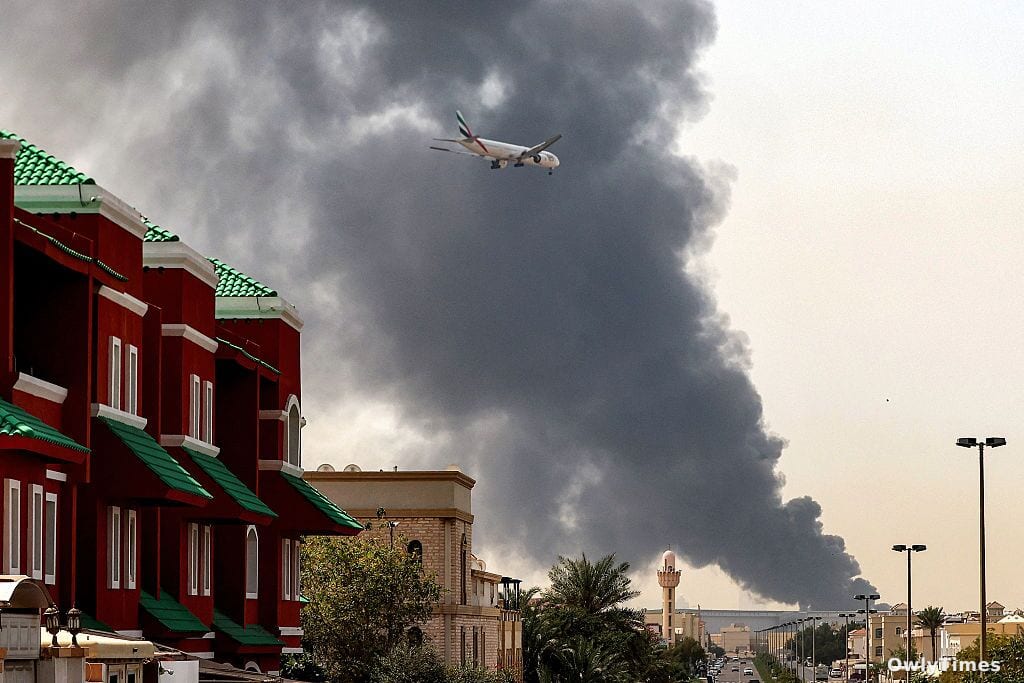
The attacks on the U.S. Embassy in Baghdad and the tanker near Fujairah, coupled with the missile interception in Abu Dhabi resulting in a civilian fatality, demonstrate the conflict is rapidly expanding beyond direct Israeli-Iranian clashes. These incidents signal a dangerous escalation of proxy warfare, with Iran-backed militias increasingly targeting U.S. interests in the region. The Iraqi government’s acknowledgement of these attacks, and the ongoing exchanges between the U.S. military and these militias, paint a picture of a country caught in the crossfire, teetering on the brink of further instability. The U.S. is attempting to project strength, but the reality is a diminishing capacity to control events on the ground.
The situation isn’t simply about military might or geopolitical strategy. It’s about the erosion of trust, both within the U.S. government and between the U.S. and its allies. The narrative of Iranian aggression is convenient, but it obscures the complex web of factors driving this conflict, including decades of U.S. intervention, the unresolved Israeli-Palestinian conflict, and the ambitions of regional powers. The question isn’t if this situation will escalate, but when and how. Watch closely for a significant incident – a major attack on U.S. assets, a miscalculation leading to direct military confrontation, or a further fracturing of the NATO alliance – that forces a reckoning. The next six months will determine whether the Middle East descends into a full-scale regional war, or whether a fragile, and unlikely, path to de-escalation can be forged. And the ordinary consumer, already feeling the pinch of rising energy prices, should prepare for the very real possibility of a sustained economic shock if the Strait of Hormuz remains closed for an extended period.





