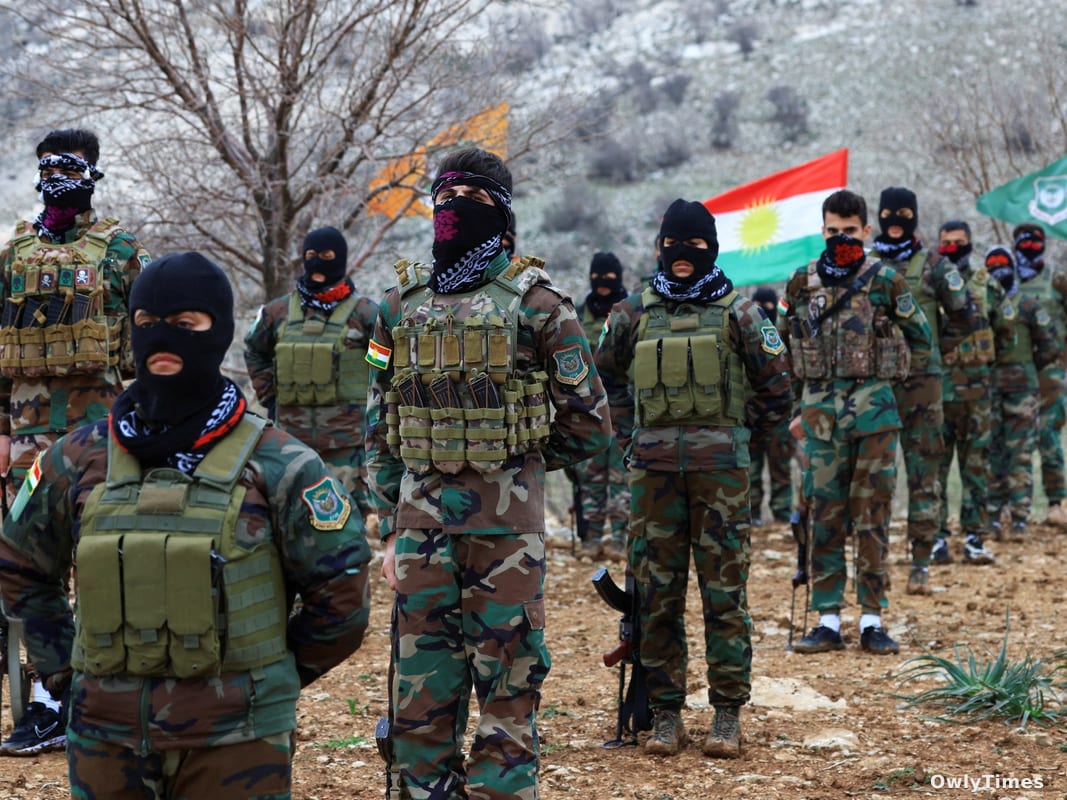

The calculated gamble to openly acknowledge US involvement in arming Iranian opposition groups, revealed by Donald Trump in a Fox News interview, isn’t a confession – it’s a post-facto justification for a pre-planned escalation. The timing, coinciding with the 38th day of the US-Israel war on Iran and ongoing negotiations with Iranian officials, reveals a strategic calculus: to establish maximal leverage through demonstrable destabilization, even if it means sacrificing the credibility of diplomatic overtures. This isn’t about suddenly “rescuing” Iranian protesters; it’s about creating conditions where a weakened, internally fractured Iran is more amenable to external pressure, and potentially, regime change. As of today, at least 2,076 people have been killed in Iran and 26,000 injured since the conflict began.
Trump’s assertion – that the US sent “a lot of guns” to Iranian protesters via Kurdish intermediaries – immediately invites scrutiny, not for its novelty, but for its brazenness. While the US has a long history of covert operations aimed at regime change, publicly admitting to arming opposition groups during active conflict is a departure. This isn’t simply about supporting a popular uprising; it’s about taking ownership of a failed attempt to trigger one. The claim that the Kurds “kept” the weapons suggests a frustration that the intended destabilization didn’t materialize as quickly or effectively as anticipated. This narrative conveniently shifts blame for the lack of widespread revolt away from the US and onto the Kurdish groups themselves.
The context of the December 2025 protests is crucial. Beginning with shopkeepers in Tehran protesting a deepening economic crisis and the plummeting value of the Iranian rial, the demonstrations rapidly expanded, attracting hundreds of thousands and evolving into calls for broader governmental change. Iranian authorities responded with brutal force, particularly on January 8th and 9th, resulting in thousands of deaths – estimates range from 5,000 according to UN Special Rapporteur Mai Soto, to as high as 20,000. The subsequent internet blackout, condemned by Amnesty International, underscores the regime’s attempt to suppress information and conceal the extent of the crackdown. Trump’s framing of the current military action as a response to this crackdown, a desire to “free” Iranians, conveniently ignores the US’s prior role in potentially exacerbating the situation.
Who benefits and who loses from this disclosure? Israel benefits by having the US publicly validate the narrative of a destabilized Iran, justifying continued military pressure. The Trump administration benefits from reinforcing its “tough on Iran” image, appealing to domestic constituencies and potentially bolstering support for further escalation. Iranian hardliners benefit from confirming their long-held belief that internal unrest is orchestrated by foreign powers, solidifying their control and justifying further repression. The clear losers are Iranian civilians, caught between a brutal regime and external interference, and any prospect of genuine dialogue. The denials from Iranian Kurdish groups like the Democratic Party of Iranian Kurdistan (KDPI) and Komala Party, while expected, are largely irrelevant; the damage to their credibility – and the potential for Iranian retaliation – is already done.
This article draws on reporting from Al Jazeera.
Historically, this tactic echoes the Cold War era, where both the US and the Soviet Union routinely funded and armed proxy groups to destabilize opposing regimes. The 1953 Iranian coup d'état, orchestrated by the CIA and MI6 to overthrow Mohammad Mosaddegh, serves as a stark precedent. However, the key difference lies in the public admission. During the Cold War, such operations were shrouded in secrecy. Trump’s transparency, while shocking, is a calculated risk – a demonstration of power intended to intimidate Iran and signal resolve to allies. It also serves to muddy the waters, making it difficult to assess the true extent of US involvement and accountability. Neil Quilliam of Chatham House correctly points out that the statement likely reveals more about Trump’s personality than any concrete policy shift, but even a throwaway line from this administration carries significant weight.
The political chess move to watch next isn’t whether the US will launch a ground invasion of Iran – although that remains a possibility, opposed by some Democrats in Congress. It’s whether Trump will attempt to leverage this admission into a renegotiation of the nuclear deal, or demand broader concessions from Iran regarding its regional policies. More specifically, will he attempt to use the narrative of US support for Iranian opposition groups to justify continued destabilization efforts, even as diplomatic channels remain open? The answer will reveal whether this was a calculated gambit to achieve a specific outcome, or simply another impulsive act with potentially catastrophic consequences.





