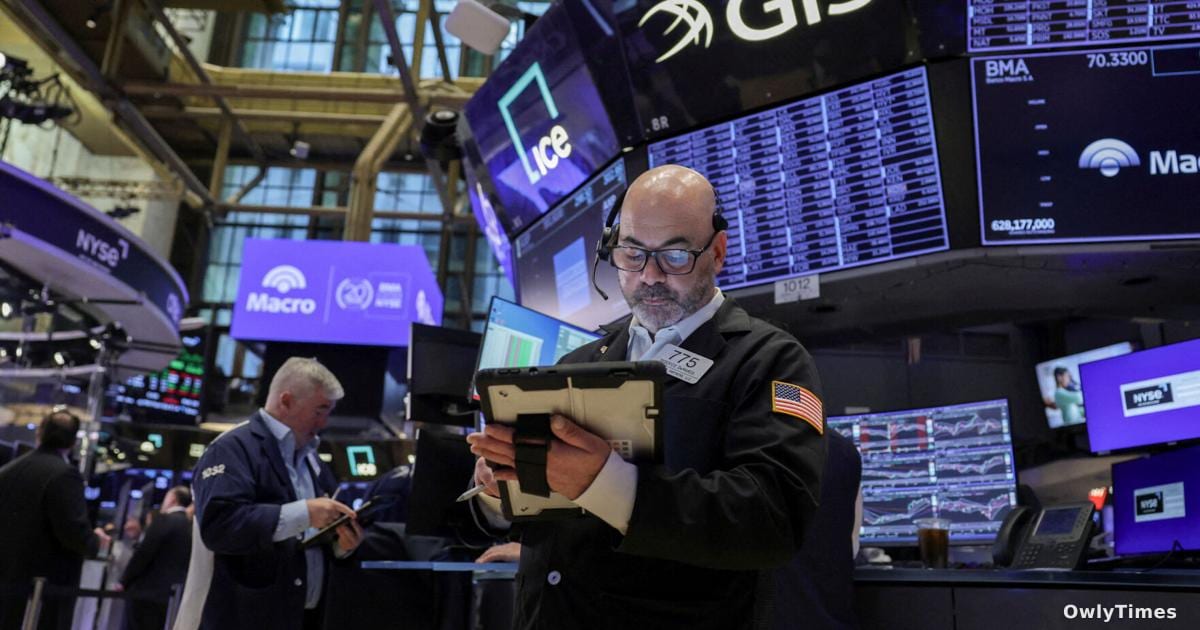

Is your 401k suddenly looking less like a retirement plan and more like a geopolitical risk assessment? Because that’s precisely what it’s become. Friday’s market bloodbath – the Dow officially entering correction territory after a 793-point drop, alongside the S&P 500 and Nasdaq’s fifth consecutive weekly decline – wasn’t just about numbers on a screen. The real story here isn't a temporary market wobble – it's the chilling realization that global instability is now a direct line item on your investment statement.
The immediate trigger, of course, is the escalating conflict in the Middle East. President Trump’s ultimatum to Iran – reopen the Strait of Hormuz or face “destruction” – reads less like diplomacy and more like a dare, and markets responded accordingly. While Secretary of State Marco Rubio confidently predicts a swift resolution without ground troops, that assurance feels increasingly detached from the reality of rising oil prices and a panicked sell-off. Crude oil jumped 5.46% to $99.64 a barrel, and Brent crude rose 4.22% to $112.57, but these gains barely register against the broader anxiety. The fact that these prices are relatively unchanged week-over-week is a deceptive calm before a potential storm.
See the original unionleader.com story for the full account.
This isn’t simply a repeat of past geopolitical shocks. The speed at which anxieties are translating into market action is alarming. The Dow’s 10% drop from its February 10th high isn’t just a statistical threshold; it’s a psychological one. As Ken Polcari of SlateStone Wealth put it, “Clearly, the overall tone has turned very negative and now we have broken down into correction territory.” Polcari anticipates a potential 15-20% drawdown – a sobering thought for anyone nearing retirement or relying on market gains for major life expenses. The CBOE Volatility Index, Wall Street’s “fear gauge,” spiked to its highest level since April 21st, confirming that this isn’t rational correction, it’s genuine panic.
But the impact extends far beyond Wall Street titans. Look at the consumer discretionary sector, which plummeted 3.1% on Friday. Cruise operators like Carnival and Norwegian took a particularly brutal hit, shedding 4.3% and 6.9% respectively, after revising profit forecasts downwards. This isn’t about wealthy investors losing a bit of pocket change; it’s about everyday people seeing their vacation plans – and the jobs that support that industry – threatened by a conflict thousands of miles away. Even Netflix, already notorious for price hikes, just announced another increase to $27 a month, a move that feels less like a business decision and more like a reflection of broader inflationary pressures fueled by the crisis.
The surge in oil and fertilizer prices, directly linked to the disruption in the Middle East, is quietly dismantling the narrative that inflation is “transitory.” The Federal Reserve’s room to maneuver on interest rates has evaporated. Just weeks ago, markets were pricing in two rate cuts this year; now, there’s zero expectation of easing, and a growing 25% chance of a hike by October. Philadelphia Fed President Anna Paulson acknowledges the risks, but offers no concrete policy response. Meanwhile, U.S. consumer sentiment has already dipped to a three-month low in March, signaling that the economic pain is already being felt. This isn’t a future threat; it’s happening now, impacting grocery bills, gas prices, and the overall sense of financial security for millions.
The irony is thick. While President Trump simultaneously threatens Iran and urges tractor companies to lower prices for farmers, the underlying forces at play are far beyond his control – or the control of any single politician. The market isn’t reacting to policy statements; it’s reacting to the fundamental uncertainty of a world on edge. The question isn’t whether this correction will deepen, but when the next escalation will occur. Watch closely for a sustained breach of $100 a barrel for oil – that will be the signal that this isn’t just a correction, it’s the beginning of a much more significant economic shift.





