
The calculated gamble to eliminate Ayatollah Ali Khamenei, coupled with President Trump’s overt call for regime change in Iran, wasn’t a spontaneous escalation – it was a strategic provocation designed to test the limits of Iranian retaliation and reshape the power balance in the Middle East. The move, framed by the administration as a response to Iranian aggression, simultaneously advances a long-held objective of dismantling the Islamic Republic while exploiting a perceived vulnerability created by recent, targeted strikes that weakened Iran’s air defenses and nuclear infrastructure. This isn’t simply about nuclear proliferation; it’s about leveraging military force to force a renegotiation of regional influence, with the U.S. positioning itself as the guarantor of stability – on its terms.
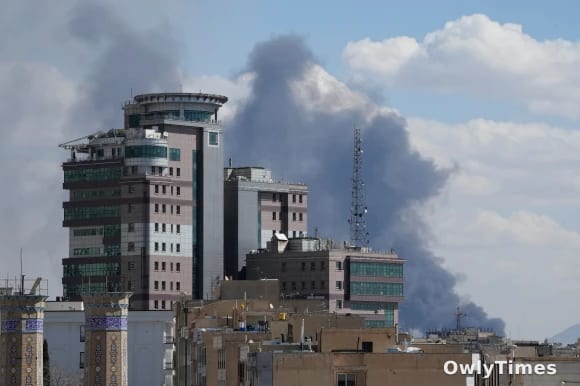
The immediate fallout is stark: at least four confirmed deaths in central Israel following rocket attacks from Iran, and reciprocal strikes targeting key infrastructure within Iran itself, including the national police headquarters and facilities linked to the Revolutionary Guard. This exchange isn’t symmetrical. Israel, backed by U.S. military support and advanced defense systems, can absorb and largely mitigate Iranian attacks. Iran, however, faces a crippling blow to its command structure and a heightened risk of internal instability. Who benefits and who loses is immediately apparent: Israel and the U.S. gain a temporary advantage in military posture, while Iran faces a leadership vacuum and the potential for widespread unrest, despite initial reports of public mourning and even celebration in some areas. The disruption to global markets, particularly the threat to the Strait of Hormuz – through which 20% of the world’s oil passes – is a calculated risk, intended to pressure Iran economically and demonstrate the consequences of continued defiance.
The situation echoes the 1980 Iran hostage crisis and the subsequent “Operation Eagle Claw,” a failed attempt to rescue American diplomats. While the current intervention is far more direct and forceful, the underlying dynamic remains the same: a U.S. administration attempting to project strength and resolve in the face of perceived Iranian intransigence. However, unlike 1980, the U.S. is acting in concert with a key regional ally, Israel, and possesses a significantly more advanced military capability. The key difference, and the source of the current danger, is the explicit call for regime change – a level of direct intervention not seen in decades. This isn’t containment; it’s a deliberate attempt at destabilization. The fact that Trump, who campaigned on an “America First” platform and promised to avoid “forever wars,” is now overseeing such a dramatic escalation underscores the extent to which the strategic calculus has shifted.
Drawn from Florida Politics.
The storming of the U.S. Consulate in Karachi, Pakistan, and the subsequent clashes, are not isolated incidents. They represent a predictable ripple effect, demonstrating the potential for regional contagion. The involvement of other nations – Jordan, Kuwait, Bahrain, Qatar, Saudi Arabia, and even Oman – in intercepting projectiles highlights the broad scope of the conflict and the pressure on Arab states to align with either the U.S.-Israeli axis or risk being caught in the crossfire. Mohammad Bagher Qalibaf’s defiant statement – “You have crossed our red line and must pay the price” – is not merely rhetoric; it’s a signal of Iran’s intent to retaliate, potentially through asymmetric warfare and proxy conflicts. The reported killing of relatives of Khamenei, including a daughter and grandchild, further fuels the cycle of escalation and complicates any potential for de-escalation.
The formation of a governing council in Iran following Khamenei’s death is a temporary fix, masking a deeper power struggle. While the Iranian government projects an image of unity, the absence of a clear successor creates a dangerous vacuum. The reports of civilian casualties, particularly the alleged strike on a girls’ school in southern Iran, are critical. Whether these reports are accurate – and the conflicting statements from Israeli and U.S. officials raise serious questions – will significantly impact the narrative and shape international opinion. The U.S. insistence on intelligence showing Iran’s capacity to rebuild its centrifuge program, despite claims of peaceful intent, serves to justify the intervention and preemptively discredit any Iranian attempts at diplomacy.
The political chess move to watch next isn’t another round of strikes, but the response from within Iran’s Revolutionary Guard. Will they consolidate power around a new leader and pursue a measured retaliation, or will factions within the Guard, fueled by grief and a desire for revenge, push for a more aggressive and unpredictable response? The answer to that question will determine whether this crisis spirals into a full-scale regional war, or settles into a protracted period of shadow warfare and instability.





