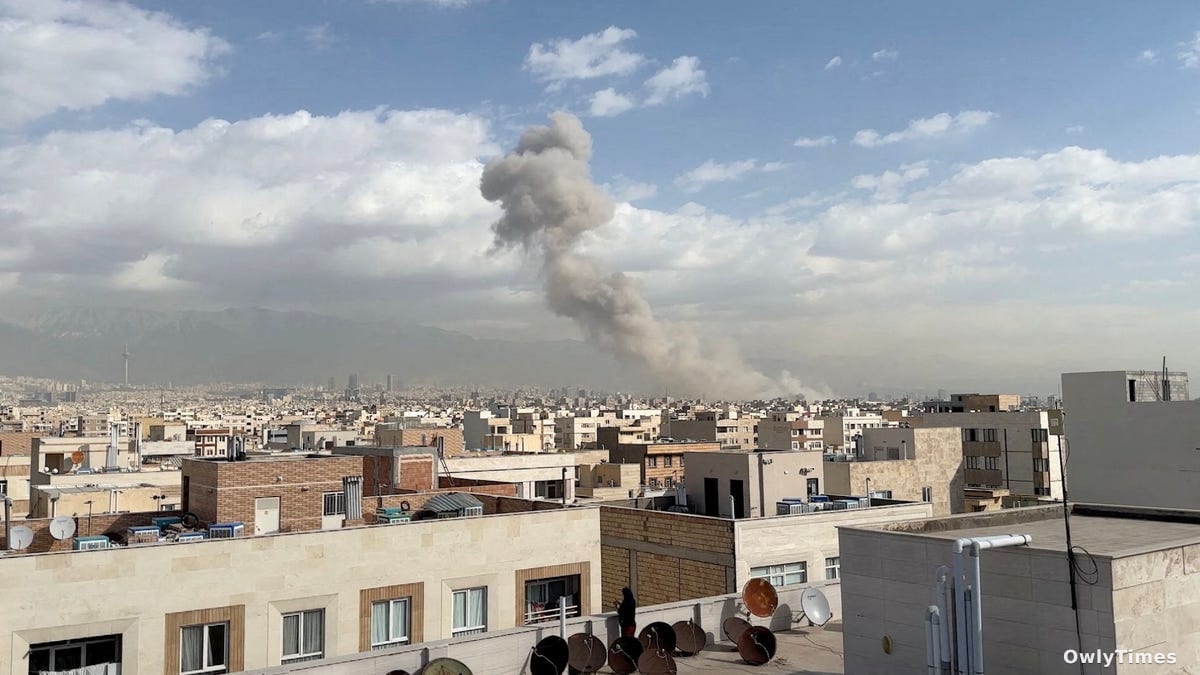

The calculated gamble President Donald Trump took with direct military strikes against Iran wasn’t about immediate nuclear proliferation, but about re-establishing a specific kind of American dominance in the Middle East – one predicated on projecting force rather than negotiating constraints. The swiftness of the response, targeting Iranian leadership directly, signals a deliberate attempt to shock the region and potentially trigger internal upheaval within Iran, mirroring the rhetoric of empowering the Iranian people to overthrow their government. This isn’t a new strategy; it’s a revival of regime-change tactics historically employed by the United States, but with a significantly higher risk of escalation given the current geopolitical landscape.
The immediate fallout within Michigan’s congressional delegation reveals a starkly familiar fault line: a partisan divide mirroring the national debate over executive power and the use of military force. Debbie Dingell’s invocation of the “unconstitutional” nature of the strikes and her call for the Iranian War Powers Resolution echoes a long-standing tension between the legislative and executive branches, a tension particularly acute during periods of prolonged military engagement. This isn’t simply about Iran; it’s about a fundamental disagreement over who controls the war-making authority. The historical precedent here is the War Powers Resolution of 1973, passed in the wake of the Vietnam War precisely to limit presidential authority and force congressional deliberation. Yet, like its predecessors, its effectiveness remains consistently challenged by presidents asserting their commander-in-chief powers.
Reporting from The Detroit News informs this analysis.
Conversely, the enthusiastic support from Republicans like Lisa McClain and Tim Walberg demonstrates a willingness to prioritize perceived national security interests – defined as confronting perceived adversaries – over constitutional constraints. McClain’s invocation of divine blessing and Walberg’s framing of the strikes as “peace through strength” are rhetorical hallmarks of a foreign policy posture that prioritizes military solutions and demonizes opponents. This aligns with a broader trend within the GOP, particularly since the George W. Bush administration, of framing military intervention as a moral imperative. The support from John James, a candidate for Michigan governor, further underscores the political calculation at play: aligning with a strong national security stance is seen as advantageous in appealing to key voter demographics.
The dissenting voices, however, reveal a deeper unease. Elissa Slotkin’s perspective as a former CIA officer is particularly telling. Her critique isn’t a rejection of confronting Iran’s malign activities, but a demand for a clear articulation of why this particular action was taken now, and what the end goal is. This highlights a critical flaw in the Trump administration’s approach: a lack of strategic communication and a reliance on impulsive action. Gary Peters’ pointed reminder of Trump’s withdrawal from the nuclear agreement and the subsequent lack of a coherent strategy underscores the argument that this crisis is, in part, a self-inflicted wound. The withdrawal from the Joint Comprehensive Plan of Action (JCPOA) removed a key constraint on Iran’s nuclear program and created the conditions for the current escalation.
The most forceful condemnation comes from Rashida Tlaib, whose statements directly accuse both the U.S. and Israel of disregard for international law and the will of the American people. Tlaib’s framing of the strikes as serving the interests of a “violent fantasy” and an “apartheid government” is a sharp rebuke of U.S. foreign policy and a clear signal of the growing progressive opposition to military intervention in the Middle East. Her call for a “mass anti-war movement” reflects a recognition that stopping further escalation will require significant public pressure. This position, while representing a minority view within Congress, taps into a deep well of anti-war sentiment among a segment of the Democratic base.
Who benefits and who loses from this escalation? Israel arguably benefits from a demonstration of U.S. commitment to its security, but at the cost of increased regional instability. The Trump administration benefits politically from projecting an image of strength, but risks a protracted and costly conflict. Iran loses face and suffers material damage, but may use the strikes to rally domestic support and accelerate its nuclear program. The broader region, and particularly the civilian populations of countries like Iraq and Yemen, are the ultimate losers, facing the prospect of a wider and more devastating war. The oil-producing Gulf Arab states, despite intercepting missiles, are now demonstrably within range of Iranian retaliation, creating a new level of vulnerability.
The political chess move to watch next isn’t whether Iran will retaliate – that’s almost certain. It’s whether Congress will actually assert its constitutional authority and attempt to constrain the Trump administration’s actions. Specifically, will there be enough bipartisan support to pass the Iranian War Powers Resolution, or will the historical pattern of deferral to the executive branch continue? The answer to that question will determine whether the U.S. is truly on the path to a “forever war” or whether a semblance of congressional oversight can still be salvaged.





