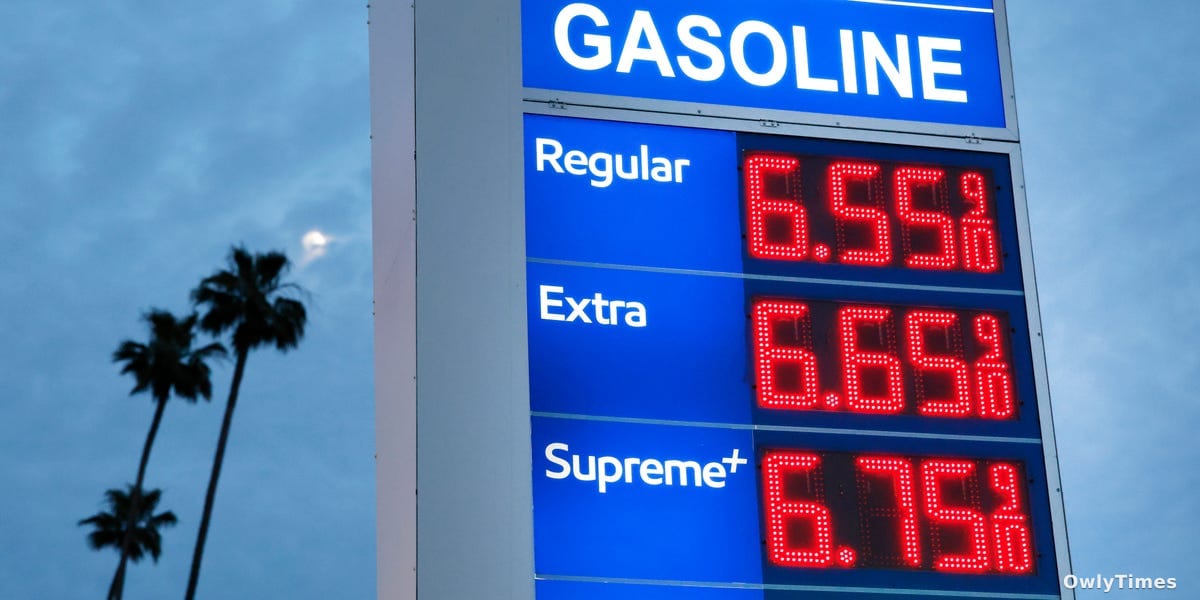

$4.03: That’s where the national average price for a gallon of regular gasoline landed this week, a figure that encapsulates the escalating economic threat posed by the Iran war and disruptions to global supply chains. While headlines focus on geopolitical tensions, the immediate impact is financial, and TS Lombard’s recent analysis reveals a far more nuanced picture than simple price increases. Follow the money – the firm identifies three distinct economic scenarios stemming from constricted flows through the Strait of Hormuz, each with significant implications for US consumers and investors. The core issue isn’t just higher energy costs; it’s the “scarring” effect on supply chains, creating lasting price premiums even if the immediate crisis abates, as noted by Freya Beamish, chief economist of GlobalData TS Lombard.
The Looming Threat of Stagflation
The most concerning scenario outlined by TS Lombard points towards a simultaneous rise in inflation and a descent into recession. This isn’t a novel fear – stagflation haunted the US economy in the 1970s – but the current context amplifies the risk. Elevated oil prices, already pushing gasoline above $4, are expected to permeate other sectors, exacerbating existing inflationary pressures. February’s consumer price growth clocked in at 2.4% year-over-year, a figure already above the Federal Reserve’s target, and the Atlantic Fed estimates first-quarter GDP growth at a modest 1.6%. A further shock to energy prices could tip the scales, triggering a recessionary cycle. This isn’t simply a matter of higher bills; it’s a feedback loop where reduced economic activity further constrains supply, driving prices even higher.
AI’s Double-Edged Sword in a Downturn
Adding a layer of complexity to the recession scenario is the potential impact of artificial intelligence. Beamish argues that adopting AI in response to a recession – as a cost-cutting measure rather than a driver of expansion – could actually worsen the downturn. The logic is stark: businesses facing economic headwinds are more likely to use AI to displace workers, rather than augment their capabilities. This path, once taken, may be irreversible, leading to long-term unemployment and diminished economic potential. This contrasts sharply with the narrative of AI as a productivity booster, highlighting the critical timing of its implementation. The risk isn’t AI itself, but its deployment as a reactive measure during a period of economic fragility.
This piece references the Business Insider report.
The Delayed Surge: A False Dawn?
A more optimistic, though still problematic, scenario involves a temporary re-acceleration of the US economy followed by a renewed surge in inflation in 2027. This hinges on a rapid decline in oil prices back to around $80 a barrel, allowing the US to regain its previous growth trajectory. However, TS Lombard anticipates that this growth will eventually strain the already tight US labor market. The US faces a structural labor shortage, driven by demographic shifts – an aging population, reduced immigration, and declining workforce participation. Increased demand for workers, coupled with limited supply, will inevitably push wages higher, fueling inflationary pressures. Beamish estimates that, regardless of the path taken, US inflation will remain “significantly above target” over the next two years.
The Strait of Hormuz Premium: A New Normal?
Across all three scenarios, the common thread is the “scarring” of supply chains. Even if the immediate crisis in the Strait of Hormuz resolves, TS Lombard predicts a lasting premium on goods that transit the region. This isn’t a temporary spike; it’s a fundamental shift in pricing dynamics. Reduced traffic, increased insurance costs, and heightened geopolitical risk will all contribute to higher transportation expenses, ultimately borne by consumers. This premium isn’t limited to oil; it extends to critical commodities like fertilizer and helium, impacting a wide range of industries. The firm’s analysis suggests that the era of cheap, frictionless global trade may be drawing to a close, replaced by a more fragmented and expensive system.
What this means for your wallet: Watch for the continued evolution of the “shipping cost” line item on everything you buy. It’s no longer a temporary surcharge; it’s becoming a permanent feature of the price landscape. The key question now is whether the Federal Reserve will prioritize controlling inflation, even at the risk of exacerbating a potential recession, or attempt to stimulate growth, potentially unleashing a more sustained inflationary spiral. The answer will determine whether the $4.03 gasoline price is a peak, or merely a preview of things to come.