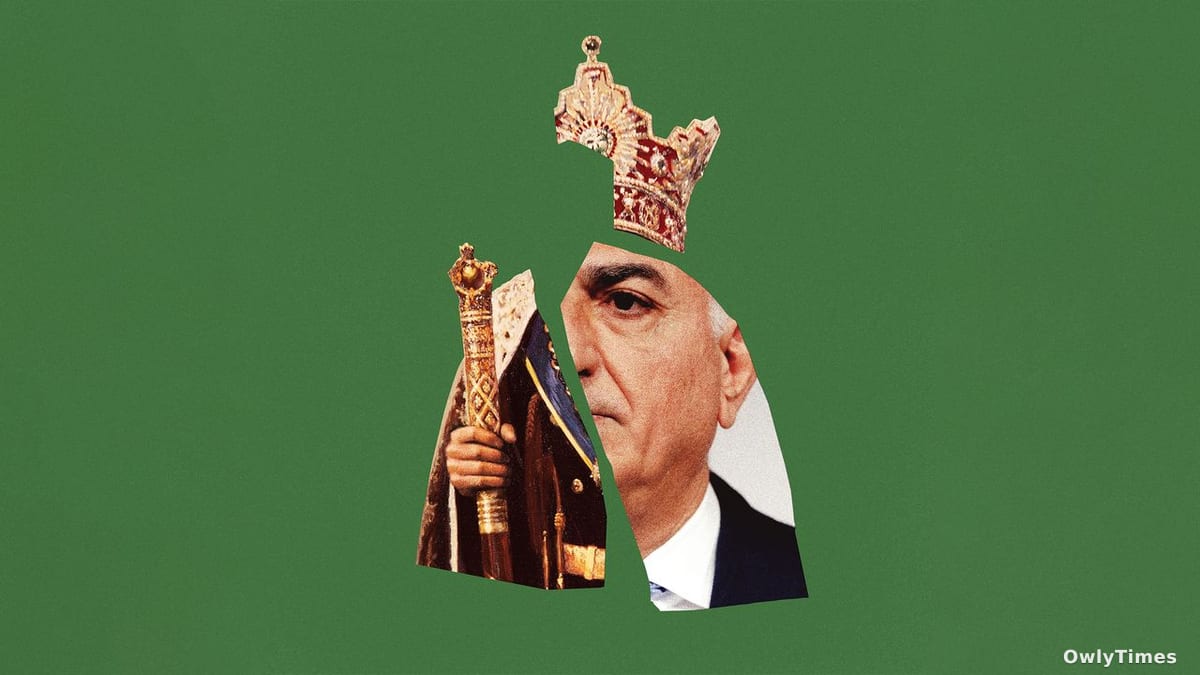

Is the future of Iran being decided in Potomac, Maryland? For two years, the world watched as Reza Pahlavi, son of the deposed Shah, positioned himself as the face of Iranian opposition, seemingly poised to lead a revolution. The narrative was neat: a rightful heir returning to reclaim a throne, fueled by popular discontent and a collapsing regime. The real story here isn't a royal restoration – it’s the dangerous illusion of outsourced revolution, and how easily a yearning for change can be hijacked by figures detached from the realities on the ground.
The protests that erupted across Iran at the end of December 2023, initially sparked by economic desperation – a collapsing rial and soaring food prices – quickly morphed into a direct challenge to the Islamic Republic and Ayatollah Ali Khamenei. Pahlavi seized the moment, issuing a January 6th call to action, urging Iranians to chant against the regime from their homes and streets. The response was unprecedented: demonstrations in over 150 cities, with calls for his return echoing through the capital. For a fleeting three weeks, it appeared the exiled prince had tapped into a national desire. But this surge wasn’t organic; it was carefully cultivated, and ultimately, profoundly miscalculated.
Original reporting: newyorker.com.
For decades, Pahlavi presented himself as a unifying figure, invoking the tradition of Iranian kingship as a historical glue. His strategists, remnants of the ancien régime, believed inclusivity would attract backing from the U.S. and Europe. Yet, as recently as 2022, he was still navigating the fractious world of Iranian diaspora politics, humbled at a Georgetown University forum alongside actresses, soccer players, and Kurdish separatists. The shift came in April 2023, with a declaration on X distancing himself from all dissident groups – a move that effectively crowned himself as the opposition leader. As his former chief of staff, Mehrdad Youssefiani, bluntly put it, his message evolved from “Today, only unity” to “Today only me.” To those he needed to rally, it reeked of imperial ambition, undermining his rhetoric of inclusivity.
This self-promotion coincided with a deepening alliance with Israel. A 2023 visit to Jerusalem, complete with photo ops with Benjamin Netanyahu and visits to Yad Vashem and the Wailing Wall, signaled a clear alignment. While potentially gaining traction with U.S. policymakers eager to see the Islamic Republic dismantled, it risked alienating potential supporters within Iran. Gila Gamliel, the Israeli minister of science and technology, even publicly discussed a peace accord “next year in Tehran,” a statement that, while intended to be aspirational, felt profoundly detached from the lived experience of Iranians. The calculation was simple: aligning with a nation committed to the regime’s destruction outweighed the risk of internal division. It was a gamble predicated on the assumption that any outcome was preferable to the status quo.
The brutal crackdown on protests in early January 2024 – with state security forces using military-style weapons and reportedly killing thousands – should have been a turning point. The regime was teetering, and Donald Trump, in coordination with Israel, appeared ready to intervene militarily. Pahlavi’s team responded with plans to erode the regime’s authority, soliciting defectors through a QR code and even issuing veiled threats to those deemed “accomplices.” But the promised U.S. air strikes never fully materialized, allowing the regime to regroup while Pahlavi, sidelined, became increasingly combative. The pro-Pahlavi demonstration in Munich, with two hundred thousand attendees, felt less like a mandate and more like an echo chamber.
The subsequent Israeli attack on Iran, dubbed Operation Roaring Lion, ostensibly a nod to the monarchy, exposed the hollowness of the entire strategy. A U.S. intelligence report, shown to Trump before the war, concluded that Pahlavi lacked a sufficient network within Iran to lead an overthrow. As Vali Nasr of Johns Hopkins put it, there’s a crucial difference between popularity and a “ground game.” Trump and his aides began dismissing him as the “loser prince.” This wasn’t simply a matter of political miscalculation; it was a fundamental misunderstanding of Iranian society.
The irony is stark. The Shah and Empress Farah Pahlavi fundamentally disagreed on their son’s upbringing, one favoring military discipline and immersion in Iranian society, the other a cloistered existence with French tutors. Even seemingly minor decisions – how he commuted to school – shaped the man he would become. This upbringing, coupled with decades of suburban life in Maryland, created a leader profoundly disconnected from the realities of modern Iran. He admitted in a 2023 podcast that he didn’t even envision returning to Iran permanently, stating, “My children live here…My friends live here.” This isn’t the profile of a revolutionary.
The current U.S.-Israeli war on Iran is the ultimate test, and Pahlavi is failing it. His tepid response to the bombing of a girls’ school in Minab, which killed at least 175 children, speaks volumes. His aides are identifying targets for destruction, while he offers platitudes about a “humanitarian rescue mission.” The situation is fracturing Iranian society, pitting hatred of the regime against loyalty to the nation. Pahlavi has fallen squarely into that fissure, becoming a symbol not of liberation, but of foreign interference.
Here’s what to watch for: in the coming months, as the conflict in Iran escalates, pay attention not to the pronouncements of exiled princes, but to the actions of local resistance networks. The question isn’t whether Reza Pahlavi can lead a revolution, but whether anyone can lead a revolution when the price of leadership is effectively signing off on the destruction of your own country. The real measure of success won’t be the fall of the Islamic Republic, but the shape of the Iran that rises from the ashes – and whether it’s a nation rebuilt by its people, or imposed from abroad.

