
The escalating coarseness of American political discourse isn’t a spontaneous eruption of bad manners; it’s a calculated gamble by a shrinking number of actors who believe maximizing engagement – even negative engagement – translates to power. The willingness of figures like Donald Trump to deploy profanity, and the rapid mirroring of that behavior by others across the political spectrum, isn’t simply a breakdown of civility, but a strategic shift in how politicians perceive the boundaries of acceptable communication. The question isn’t whether the rhetoric is harmful – the data on rising threats and violence suggests it is – but whether the perceived benefits of outrage outweigh the risks.
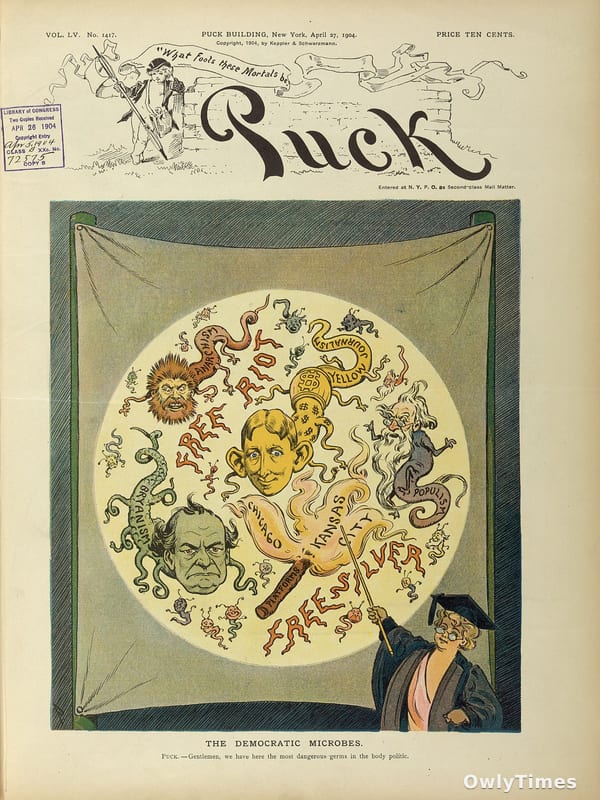
The historical record is replete with examples of brutal political conflict. A vice president killing a former cabinet member in a duel, a congressman beating another unconscious on the Senate floor – these weren’t aberrations, but features of early American politics. However, the current moment is distinct. As Gabrielle Giffords, who retired from the House after being shot in 2011, points out, the speed and reach of social media amplify antagonistic messages, while the increased accessibility of weapons provides a dangerous outlet for radicalized individuals. “Political violence and heated rhetoric have been present throughout our nation’s history,” she told USA TODAY, “However, we are at a uniquely dangerous point: Extreme rhetoric can be used to radicalize people online, and dangerous weapons are more accessible than ever before.” This isn’t simply about louder voices; it’s about a fundamentally altered risk-reward calculation.
The normalization of profanity is a key indicator of this shift. President Trump’s casual use of expletives – urging Republicans not to “f--- around with Medicaid,” dismissing Iranian and Israeli strategies as clueless, or warning Venezuela’s Nicolas Maduro against challenging the U.S. – wasn’t a gaffe, but a deliberate demonstration of uninhibited power. He even critiqued rivals for not swearing effectively, claiming they lacked the authenticity to pull it off. This isn’t about linguistic innovation; it’s about establishing dominance through a rejection of traditional norms. The subsequent adoption of similar language by figures like Danish MEP Anders Vistisen (“f--- off” to Trump) and Democratic leaders like Hakeem Jeffries (“f--- Donald Trump”) demonstrates the rapid spread of this tactic. Who benefits? Those who successfully tap into the energy of outrage, and those who can frame their opponents as equally culpable in the degradation of discourse. Who loses? The possibility of reasoned debate, and the safety of those targeted by the resulting animosity.
Drawn from USA Today.
The spike in threats against public officials underscores the real-world consequences. U.S. Capitol Police recorded 14,938 threats in 2025, a significant increase from the previous peak of 9,625 in 2021, following the January 6th Capitol riot. The attempted assassinations of Donald Trump during his 2024 campaign, and the murder of Minnesota state House Speaker Emerita Melissa Hortman, are stark reminders of the potential for rhetoric to escalate into violence. This isn’t merely a correlation; the accessibility of weapons, combined with the amplification of extremist narratives online, creates a volatile environment where individuals feel empowered to act on their anger. The fact that 54 House members are retiring or seeking other offices, alongside a surge in threats against judges, suggests a growing sense of unease and a reluctance to engage in public service.
However, the current situation isn’t entirely novel. Richard Nixon’s private use of profanity, revealed by the White House tapes, demonstrates that vulgarity has long been a part of the political landscape. Similarly, incidents like Dick Cheney’s crude remark to Patrick Leahy and Joe Biden’s “big f------ deal” comment show that even relatively recent administrations weren’t immune to lapses in decorum. What’s different now is the deliberate and public embrace of this language, and its integration into a broader strategy of disruption and polarization. The historical precedent of the 1882 Chinese Exclusion Act and the 1924 Immigration Act, which imposed strict limits on immigration, also reveals a long-standing pattern of using divisive rhetoric to justify discriminatory policies. Allan Lichtman, a history professor at American University, argues that Trump isn’t an aberration, but rather a culmination of these historical trends.
The political chess move to watch next isn’t whether someone will apologize for their language – that ship has sailed. It’s whether any major political figure will actively renounce the strategy of deliberate provocation. Mitch Daniels, former Indiana governor, suggests that a candidate could demonstrate leadership by explicitly rejecting vulgarity and vilification. But as he acknowledges, “There’s a lot of dice loaded against it.” The question is whether the potential reward – a return to a more civil and productive political discourse – is enough to overcome the perceived risk of appearing weak or out of touch in a climate where outrage is currency. Will a candidate gamble on decency, or continue to play the game of escalating animosity? The answer will reveal much about the future of American politics.





